2026-08-31
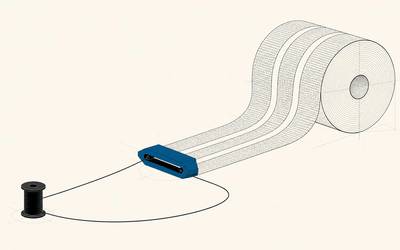
Who Captures the Productivity Gains from AI?
AI can make employees and service providers more productive without leaving them with the economic gain. An analysis through salaries, hourly billing, and competition.
Read →12 min
Operations are shaped by processes, handoffs, decisions, and the information people can reach. I write about finding unnecessary friction in that system, deciding what deserves redesign, and measuring whether the change helped.
AI can make employees and service providers more productive without leaving them with the economic gain. An analysis through salaries, hourly billing, and competition.
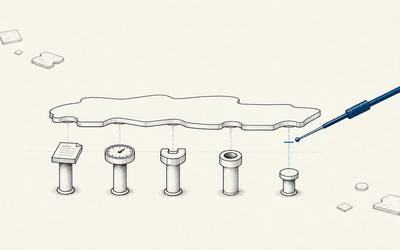
Whether data is sufficient depends on the decision it must support, how current it needs to be, and how the outcome can be verified.

Why do Sales and the teams responsible for leads, pricing, data, and process experience the same company so differently? A field note spanning CRM queues and dealer visits.
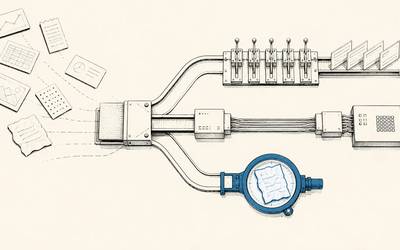
Lead routing, financial disclosures, and bank integrations show where AI adds value—and where rules or conventional software are the better choice.

How should content pruning decisions use Search Console, GA4, editorial value, and strategic fit? This case study follows a real 39-page audit on my site.
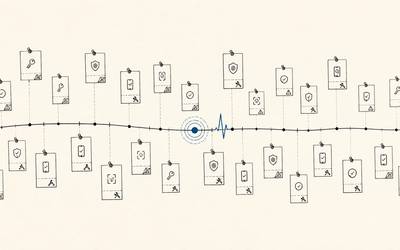
A single bank integration may be straightforward. The real cost is normalising different access models and keeping dozens of connections working as banks change.

A short guide to preserving resource models, HTTP behaviour, error handling, authorization, security, and contract decisions in prompts, reviews, and delivery checks when building REST APIs with AI.
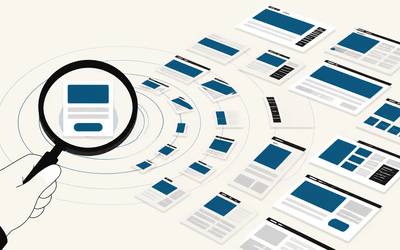
Why website redesigns should separate design, CMS, URL, content, form, and measurement changes, and how progressive redesign reduces migration risk.
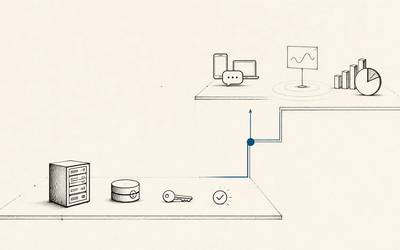
Why keeping technology running and using it to transform the business should not be treated as the same responsibility.

A note on how I built the operational system behind PlusValue's mystery-shopping work, which began as a university final project in 2005.

A positive customer experience does not automatically turn into a review or recommendation. A small observation about follow-up, timing, and how AI changes the cost of building useful software.
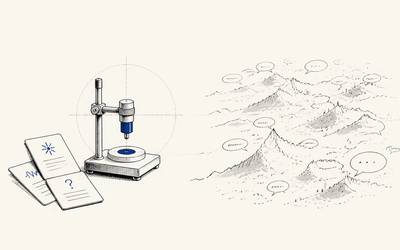
Do AI visibility tools really work? They track selected prompt outputs and trends, not real-user brand visibility or commercial impact on their own.

A closer look at the AI Visibility hype around llms.txt, the information architecture experiment I built, and the difference between a technical hypothesis and a marketing promise.
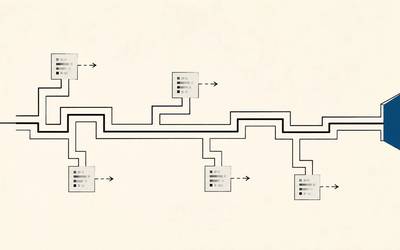
AI is not only accelerating work people already did. It is creating operational capacity companies could never afford to have — and that capacity needs a continuity plan before it becomes structural.

AI is rapidly changing team capacity and software economics. That calls for a fair view of the past—and new expectations for today.

A developer's investigation of paid, free, open-source and custom CMP options for Google Consent Mode v2 while migrating global sites from WordPress to Next.js.
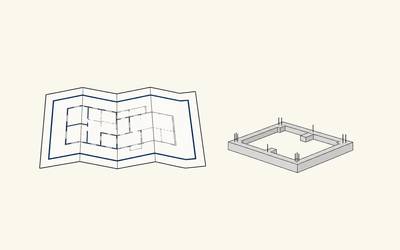
Access to global know-how is a real advantage. But there is an important difference between applying ready-made knowledge and creating it yourself.

Google's Generative AI report made me revise my live-fetch theory. The observed lead over search held, but the data does not prove a separate AI index.

Layoffs are counted. The role a team never opens is not. A CTO and founder's view of how AI can change the hiring decision before it appears in the data.

I kept needing a place to document what I was building — not for an algorithm, not for a launch moment, just for the work itself. So I built one.

How I moved from WordPress to a Nuxt and Cloudflare Pages setup, using AI to reduce publishing friction while retaining editorial and technical review.

AI Visibility tools model a selected set of prompts. Bing's first-party Citation Share data gave me a way to compare that model with what I was seeing across the sites I manage.

I reached a million Google Search impressions with more than 10K clicks a month, yet generated zero dollars. Here is the post-mortem of camiler.org.

Redar is a private decision-support panel for following KAP disclosures and selected open sources without turning dense updates into a public product.
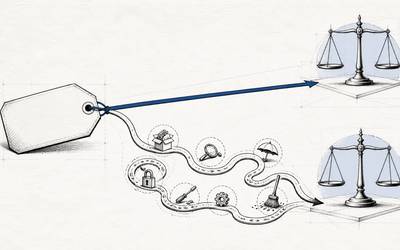
Why I built PeşinTaksit after a checkout choice exposed the gap between payment labels and the decision they represent.
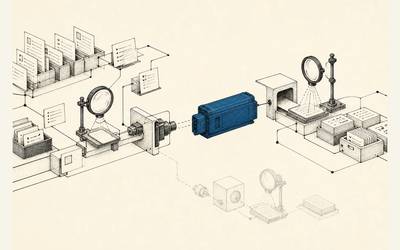
A year of running VaniBot taught us why healthcare chatbots depend on human handoff, internal APIs, multichannel integration, and continuous ownership.

How we replaced manual routing for roughly 100,000 yearly leads with a real-time medical tourism system built around language, country, shift, and capacity rules.

I planned RankExtension to make Search Console easier to work with. I did not launch it, but the need behind it is still part of how I work.
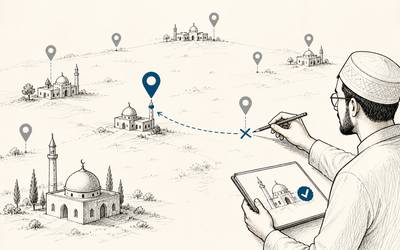
How I built camiler.org with Diyanet data, Google Maps, OpenAI, Fastify, and Nuxt, and why the automated SEO experiment became a human review workflow.