Turkey's First Real-Time Mystery Shopping Reporting Platform
Written by Evren BalPublished · 6 min read

💡 Quick Summary (TL;DR):
- The beginning: PlusValue grew out of a final-year university project that Galip Uyar, İsmail Can Törtop, and I worked on together.
- My role: I built the system that carried the mystery-shopping operation from candidate profiles and assignments to data collection, scoring, and reporting.
- Looking back: Its value was not that it was a software project. It made a field operation more visible, repeatable, and manageable.
My About page describes PlusValue in one short line: between 2005 and 2008, I was its technical co-founder and built the company's CMS, blog, and an online mystery-shopping platform with real-time reporting.
That is accurate, but it compresses a lot. I recently came across a post by my former partner Galip Uyar about how PlusValue began, and it made me want to unpack the story behind that line.
From a final project to a company
Galip's account starts before PlusValue was a company. The three of us chose mystery shopping for our final-year project, then set out to understand how the industry worked: we contacted firms abroad, read whatever material we could find, and ran research to see how familiar Turkish companies were with the idea.
Our first concrete field project was with Mavi Jeans. We designed the questionnaires, sent mystery shoppers to selected stores, interpreted the results statistically, and prepared customer-experience reports. It was the first real experience in which we saw that this was not theory alone: candidates, fieldwork, data, and reporting all had to work together.
As graduation approached, we faced a familiar choice: start looking for jobs or try to turn the work into a profession. On 17 May 2005, a request to meet from Başak Emeklilik made the second path real. That first engagement included both mystery shopping and a benchmarking study, and it provided the funds needed to establish PlusValue Research Centre.
I was there from the start. Galip Uyar, İsmail Can Törtop, and I began with a final-year university project on mystery shopping. We built our understanding of the work together, then settled into a natural division of responsibility: İsmail Can focused more on client relationships and presentations; Galip on managing mystery shoppers and running projects; and I on the technology that would make the operation work.
I do not know whether we understood at the time that this would become a company. But we understood that mystery shopping was not simply a matter of someone visiting a store and filling in a form. It required a candidate pool, a way to match the right person to the right project, location assignments, field data collection, scoring, and a way to turn the result into something a client could use.
The job was not just to put a form online
I initially built our own CMS and blog for the company website. The more consequential work was the operational system behind it.
Built with PHP and MySQL, it initially allowed a few thousand mystery-shopper candidates to log in, create profiles, and keep their information current. The database eventually grew to 14,000 people. We could use those profiles to select suitable candidates for a project and assign mystery shoppers to our clients' locations.
After a visit, the shopper entered the result through a detailed questionnaire. The system used those answers to calculate overall scores and scores across different criteria. It made the results visible in real time at nationwide, regional, and individual-store level, and allowed comparison with previous months.
From today's perspective, that may sound like the obvious shape of such a system. At the time, the important part for me was not a screen or a dashboard. It was connecting the scattered parts of fieldwork into one loop:
candidate profile → project selection → location assignment → field visit
→ questionnaire data → scoring → reporting → next decision
The software did not do the work on its own. Without the mystery shoppers, the team running the projects, and the clients, it would have meant nothing. What it did was connect the information each group produced at a different stage, in a form that could actually run the operation.

Real-time reporting sat at the centre of the work
The system at PlusValue was not a simple portal, an added dashboard, or software that merely collected forms. It turned field data into a live reporting infrastructure that clients could use to make decisions.
In a mystery-shopping operation, the value appears after the fieldwork. You need to see which store has declined, which criterion keeps becoming a problem, or how a region is changing month by month. The platform made those answers visible while the work was still happening, rather than weeks later in a finished report.
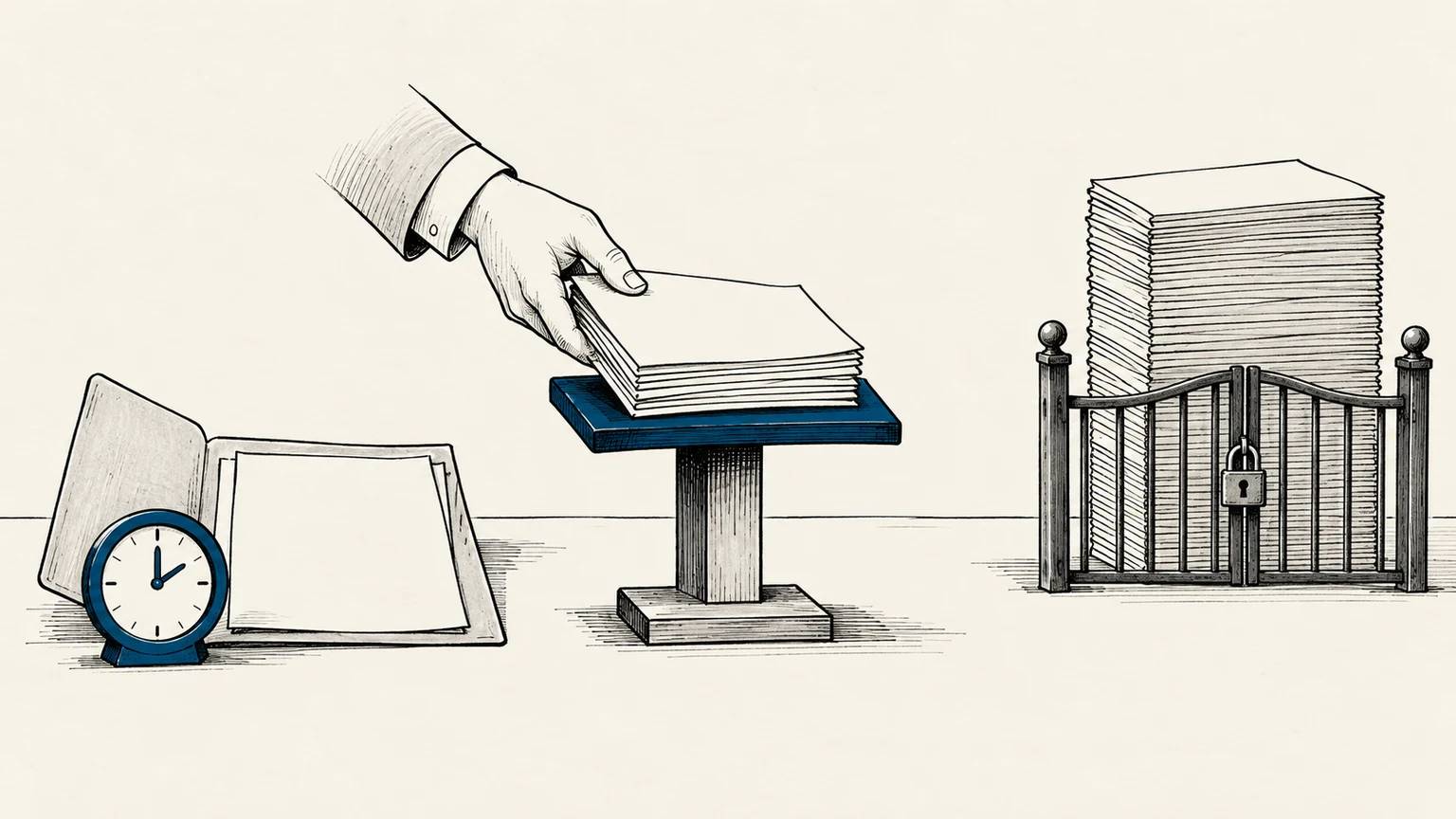
This story should not be judged through today's technology market. In 2005, there was no vast catalogue of SaaS products and ready-made tools for every operational problem. Building our own system was not a strategic choice from a rich menu of “build or buy” options. If we wanted infrastructure that connected the fieldwork, the data, and the reporting, we had to create it ourselves.
What real time meant then
Today, mystery shopping does not have to stop at questionnaires or one or two photographs attached to a form. Smartphones make it far easier to collect GPS location, images, and video; AI can help turn the resulting data into sharper insights during reporting.
None of that makes what we built in 2005 ordinary. The operating model I saw at the time was very different. Even large research firms with years in the sector would run a project for a month, enter the incoming forms into Excel by hand, then prepare long, error-prone reports 15 to 20 days after month-end.
Our system made the data visible in real time, with charts, criterion-level scores, and comparisons with earlier periods. That may be an ordinary expectation today. At the time, it was a major innovation.
What now looks simple meant something else then
This is not a story about romanticising old technology. The fact that I used PHP and MySQL in 2005 matters less than having seen, early on, how software could change the way a business actually operated.
There is another part that I should not romanticise: personal data. A database of 14,000 candidates carried a serious responsibility. I cannot say that we approached it with the maturity I would expect today; we had not built a deliberate discipline around protecting personal data. To the best of my knowledge, we did not lose data to an outside party, but that is not a sufficient standard. If I built the same system today, access, retention, authorisation, and security would be designed in from the beginning.
The phrase “online mystery-shopping platform” in a CV was really the business infrastructure around hundreds, then thousands, of candidates, field visits, questionnaires, and reports. In some ways, it was an early expression of a reflex I still carry when I build a product or internal tool.
Finding Galip's post brought this chapter back into view. Three of us were trying to turn a university project into a real business without significant resources. My part was to build the technical backbone that let that business run.
That is what the short line on my About page is really referring to.
Galip Uyar also tells the origin story of PlusValue in his Turkish-language post, “PlusValue Günleri”.
If this article was useful
Linking to it from a relevant page on your website or sharing it on social media genuinely helps it reach more people. Thank you for your support.
Linking and brand guidelines →
A small experiment
Loading personal metrics…