What Is AI Citation Share? What Bing's Data Actually Reveals
Written by Evren BalPublished · 9 min read
💡 Quick Summary (TL;DR):
- The industry: "AI Visibility" consultants and GEO SaaS tools have emerged claiming to optimize your appearance in AI-generated answers.
- The problem: Most of them track a selected sample of prompts rather than the full population of real user demand. The sample can shape the story the dashboard tells.
- The data: Bing added Citation Share to its first-party AI Performance report, showing a site's share of citations for specific grounding queries across Microsoft's supported AI surfaces.
- The finding: Across the sites I manage, Bing AI citations tracked Bing search strength very closely. Pages that ranked well tended to be cited; pages that ranked poorly usually were not.
- The conclusion: Across the sites I manage, I found no evidence of a separate "AI optimization" shortcut around authority. The dashboard may be new; the hard work underneath it is not.
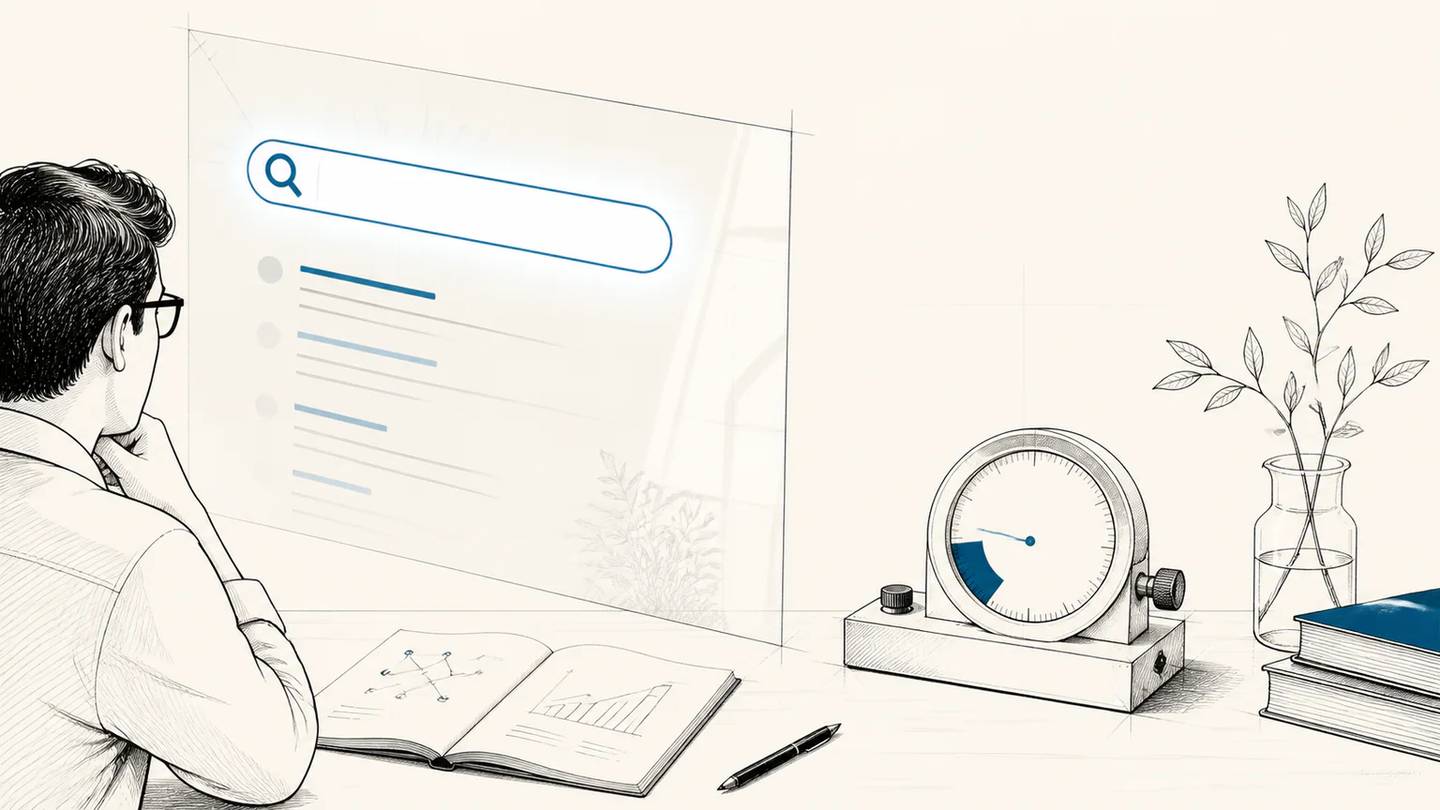
When an "AI Visibility" chart rises, what has actually increased? The chance that a brand will appear in front of users, or its visibility in the prompts selected by the provider?
I have been skeptical about the AI Visibility industry for that reason. The offers seemed too smooth, and the metrics too closed for anyone outside the provider to verify.
Then Bing released Citation Share inside Webmaster Tools, giving me a chance to compare that skepticism with first-party data.
A New Industry Needs New Metrics, Even If They Do Not Measure Real Demand
When ChatGPT started appearing in how people found information, a predictable thing happened: a new consulting category materialized almost overnight. "Generative Engine Optimization." "AI Visibility." A whole vocabulary designed to sound like SEO but applied to large language models.
The pitch is coherent on the surface. If people are asking AI assistants questions instead of Googling them, and the AI is citing certain sources over others, then surely there is something to optimize. Surely the companies that rank highly in AI citations are doing something right, and the others could hire someone to do the same.
Many of the SaaS tools that emerged to serve this demand work in a consistent pattern: they maintain a list of queries relevant to your industry, run those queries against ChatGPT, Perplexity, Claude, and other models on a schedule, and check whether your brand or domain appears in the response. They report your "AI Visibility score" over time and show you whether it's going up or down.
Consultants layer on top of this, telling you what changes drove the improvements and what to do next.
It can sound like a direct measurement. More often, it measures model outputs within a selected sample of prompts.
The Fundamental Problem: A Model Is Not a Measurement
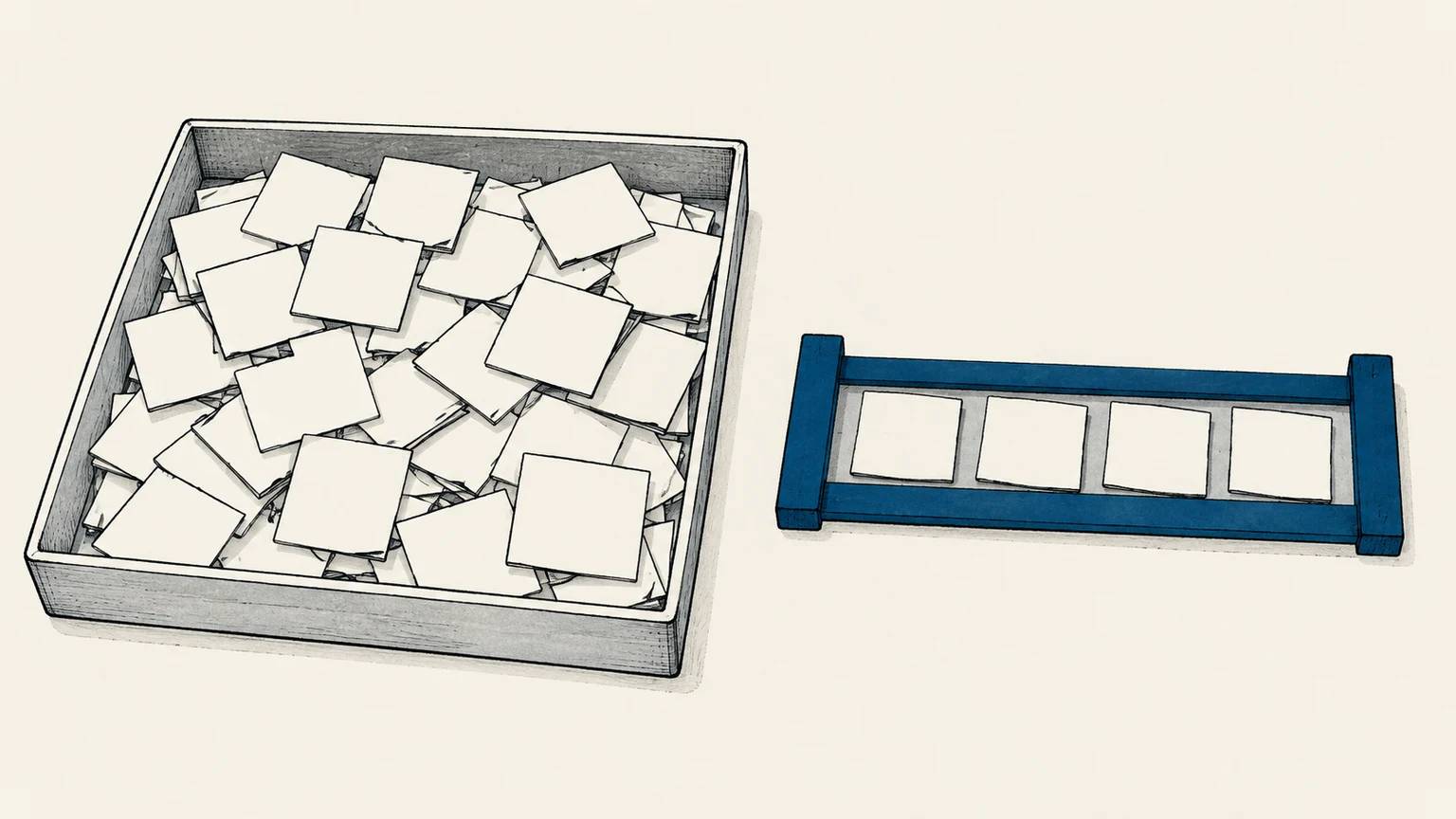
These dashboards usually measure a designed sample, not the full population of prompts that real users submit. The queries may be chosen by the vendor, the customer, or both. Sampling is limited, and large language models are non-deterministic: run the same query twice and the citations may change.
That does not make the sample useless. It makes it a model whose value depends on prompt selection, the AI surface being tested, repetition, and whether the methodology exposes uncertainty. A dashboard that hides those choices can look more precise than the underlying measurement really is.
There is a subtler risk on top of this. A consultant under pressure to demonstrate value can emphasize queries where you already appear. "Look, you're appearing when people ask ChatGPT about topic where you're already authoritative." This may be technically true while revealing very little about the questions your market actually asks.
The problem is not that every third-party number is fabricated. The problem is that the vendor controls the sample, and the sample can control the conclusion.
Bing Citation Share: A First-Party Reality Check
Microsoft launched AI Performance in Bing Webmaster Tools in February 2026. On June 16, it expanded the report with Citation Share, Intents, Topics, and Compare.
According to Bing's documentation, Citation Share is the percentage of citations attributed to your site out of all citations shown for a specific grounding query. The report aggregates activity across Microsoft Copilot, AI-generated summaries in Bing, and select partner integrations. Its grounding queries are grouped retrieval phrases, not the full questions users typed.
That distinction matters. This is not a raw log of every user conversation, and Citation Share does not claim to measure rankings, authority, traffic, or quality. But it is first-party evidence of citation activity inside Microsoft's supported AI surfaces, rather than a prompt sample chosen by an outside vendor.
I looked at this data across the sites I manage. The pattern was apparent and unusually consistent from the start.
What the Data Actually Shows
Across the sites I examined, those with the strongest traditional search presence in a topic category also had the highest AI citation share in that category. For the queries I compared, pages that ranked well in Bing search were also cited in AI responses; pages with weak organic performance received fewer citations.
I found no page that performed poorly in search while appearing frequently in AI citations. Nor did pages that third-party tools described as strong in ChatGPT or Perplexity appear unusually often in Bing's first-party data. That does not prove that the two systems use the same signals. It shows only that, for these sites and queries, the outcomes moved together.
Why This Makes Sense
One plausible interpretation is that traditional search authority and AI citation share draw on overlapping foundations.
AI search systems still need to discover, retrieve, and evaluate sources from the web. Content depth, relevance, links, consistency, and trust do not stop mattering because the final interface is a generated answer instead of a list of blue links.
That does not mean Citation Share itself measures authority; Bing explicitly says it does not. Nor does it prove that AI search and traditional search use identical signals. The narrower point is that, for the sites and queries I examined, the two outcomes moved closely enough together that I found no evidence of an independent shortcut around established authority.

AI systems may still weight clarity, structure, freshness, and other content qualities differently at the margin. Citation patterns will evolve. But in this analysis, the foundational authority layer appeared to be the dominant variable. That layer takes years to build and cannot be created in a consultancy sprint.
A Second Signal: AI Drops Removed Pages Faster Than Search
There was a second pattern in the data I did not expect, and it came out of a change we made to the site itself.
We recently made a deliberate editorial decision to remove a large amount of older content, not because it lacked traffic, but because we judged it was diluting our topical authority. The goal was the opposite of chasing volume: we wanted to rank, and be recommended, for the topics we actually care about, not for a long tail of clutter we no longer stand behind.
Pruning like this has a predictable cost: impressions drop, in both traditional search and AI citations, for the removed pages. That happened. But when I lined the graphs up, the drop appeared in AI citations roughly two weeks earlier than it did in search.
My first hypothesis was that an AI search system found candidate pages in the index but tried to fetch their current contents live at query time. Under that explanation, a removed page could still be in the index yet drop from an AI answer early because the live fetch returned a 404. Bing had not documented this mechanism; it was simply my first explanation for the observation. Even if it were correct, it would not show that new pages can be discovered faster.
Update (2026-06-28): After publishing this piece, I compared the same pattern with data from Google's Generative AI performance report, which Google had announced on June 3 and was rolling out to a subset of sites. A page I had removed back in March retained Google generative-AI linked visibility until mid-May, which contradicts my real, at-query-time fetch explanation. The faster-than-search drop remained visible in both datasets, but the report cannot prove the internal mechanism. I work through the correction in AI Visibility Dropped Before Search: The Google Data That Changed My Theory.
The Caveat Worth Taking Seriously
Bing's data is real, but it is not complete.
Bing Copilot is not ChatGPT.com. Bing's user base, query distribution, and AI model are different from OpenAI's consumer product. I think it is unlikely, but ChatGPT's citation behavior may diverge significantly from what Bing's data shows.
The supported surfaces and query distribution also differ. Citation Share tells you what is happening inside Microsoft's AI ecosystem; it does not cover ChatGPT or Google's AI features.
Google now has a first-party report for impressions in its generative AI features, but not an equivalent query-level Citation Share metric. The two reports illuminate different parts of the picture.
These are real limitations. A first-party but incomplete observation and a vendor-selected model answer different questions. The problem begins when the latter is sold as if it directly measures the population it samples.
What to Do With This
If you have been paying for AI Visibility consulting or a GEO SaaS subscription, the question worth asking is simple: what queries are they measuring, and are those queries ones your actual users are running?
If they cannot show you query-level data derived from real user interactions, rather than their own API sampling, then what you are buying is a model of your AI performance, not a direct measurement of user demand.
In my data, search performance and AI citations moved together. So the default path remains the one that was already correct before the GEO industry existed: publish authoritative content on topics you want to own, earn links from credible sources, and be consistent over time.
Bing's Citation Share is the most useful first-party number I have inside Microsoft's ecosystem. Watch it alongside organic impressions as a lagging check against the authority you appear to have built, not as proof of authority or a dial someone can turn up for you.
The AI Visibility industry will likely persist. There is real demand for reassurance in a shifting landscape, and modeled metrics are very good at providing it.
But my first-party panel said something clear to me: you cannot optimize your way into AI authority you have not earned.
If this article was useful
Linking to it from a relevant page on your website or sharing it on social media genuinely helps it reach more people. Thank you for your support.
Linking and brand guidelines →
A small experiment
Loading personal metrics…