Raising Children in the Age of Artificial Intelligence
Written by Evren BalPublished · 10 min read
💡 Quick Summary (TL;DR):
- The Shift: AI is changing how some work is drafted, checked and delivered. Its effect on entry-level routes will vary by role and employer.
- The Skills: Analytical thinking, adaptability and learning how to learn remain useful foundations alongside subject knowledge.
- The Strategy: Help children engage with technology critically, as one tool among many, rather than treating it as something that happens to them.
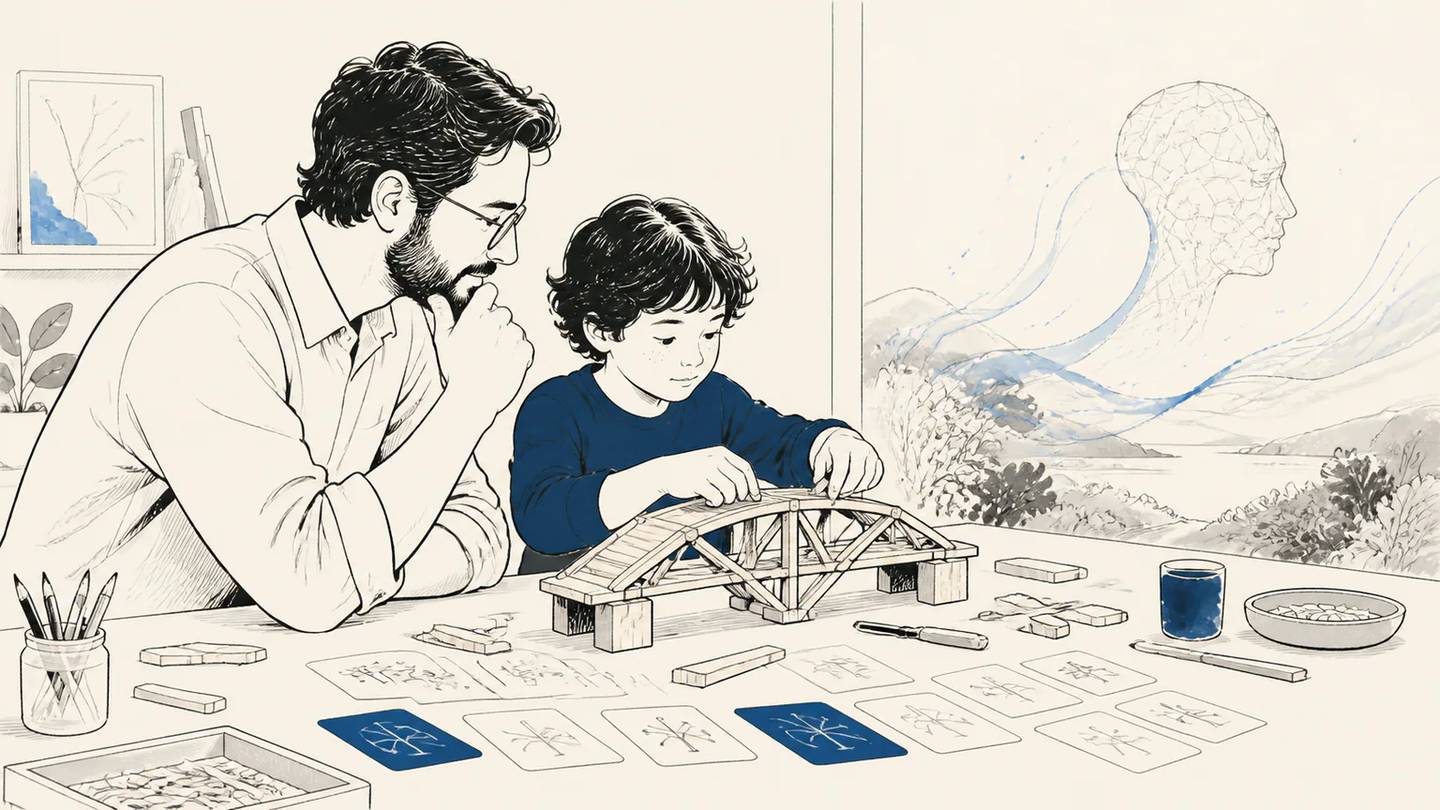
On social media I usually share technical or work-related topics. But behind that “tech guy” image there’s also a dad with a 9-year-old son at home. Most of my day goes into software, data and, over the last few years, artificial intelligence tools. I use ChatGPT, and I actively use – and even integrate – many other AI models into my personal and professional projects. For me, GPT-like systems are not “toys I play with from time to time”. They’ve become tools that sit right in the middle of my daily work.
Let me get one thing straight up front: I’m not a child psychologist. I’m not an expert in child development or parenting methods. This is not a pedagogical article. It’s written from the perspective of a technical person.
What I can say is this:
I see, from the inside, how artificial intelligence is already changing the way we work and the kind of people companies want to hire. And deep down I feel this:
If we prepare our children for the world we grew up in, we’ll be under-preparing them for the world they’re actually going to live in.
What Is Changing in the World of Work?
The change I see begins before job titles: in how work is drafted, checked and delivered. First drafts are becoming cheaper. Judgement, noticing exceptions and taking responsibility for the result are not disappearing.
In the World Economic Forum’s Future of Jobs 2025, 69% of participating employers identify analytical thinking as a core skill. Resilience, flexibility, leadership and social influence also rank highly. This is not a forecast about any individual child’s future. It is a survey of what employers say they expect today.
That is the context in which I want to look more closely at the work I see. My examples are limited to the tools I use and the working environment around me. I cannot reliably say where AI will be in three, five or ten years.
Software: One Senior + AI = a Small Team
I see the impact in software development first-hand. The change is very clear.
A typical scenario used to look like this:
- On a project, there would be one or two “senior” developers.
- Next to them, a few juniors, new hires, maybe an intern.
- Simple tasks, small bug fixes, tiny changes to existing code would go to the juniors.
- They would both get real work done and learn the trade.
Today, tools like GitHub Copilot, Cursor, Windmill, Codex and others have changed the picture.
While a developer is writing code, there is now a constant AI companion on the side of the screen: suggesting lines, completing missing blocks, offering example solutions. On top of that, we’ve reached the point where you can tell the tool what you need, let it write the code, and then come back and fix or adapt it.
On bounded tasks, these tools can reduce the time spent drafting routine code. They do not make the output reliable by themselves: someone still has to define the problem, review the result, test it and take responsibility for the system.
That changes the mix of work available to a team. In some settings, fewer low-risk tickets may be reserved for people at the beginning of their careers. In others, the need for supervision, domain knowledge and careful review may create different learning paths. I would not turn that into a universal headcount formula, but I do think the old entry route deserves more attention.
If our child says, “I want to be a software developer,” this is the world they’ll be walking into:
They won’t just need to know how to write code. They’ll need to know how to define the problem, how to steer AI in the right direction, and how to design the system around it.
The era of “I’ll start as a junior and learn by doing small tasks” has entered a much tougher phase.
Content: From a 10-Person Agency to 3 People + AI
Blog posts, product descriptions, email campaigns, social media captions…
AI now appears in parts of many content workflows.
In some content workflows, AI now produces a first draft. The human side still:
- Adapts the tone to the brand,
- Cleans up errors and repetition,
- Decides who should hear what and when.
In some cases, people do not make those changes directly; they tell the AI what to fix and let it handle the edits.
From the outside, it looks nice: productivity goes up.
The staffing effect is not something I can state as a fixed ratio. It depends on the quality bar, the volume, the subject matter and the work that remains around the draft. But the first-draft layer is changing, and that may alter how new writers get practice.
Design: Not the One Who “Draws Everything”, but the One Who Makes It Happen
The visual design world isn’t that different.
With DALL·E, Midjourney, Canva’s AI features and similar tools, things like:
- Social media visuals,
- Simple posters, campaign drafts,
- Website or mobile app screens,
are often created like this now:
- The designer explains the idea, mood, color palette and style.
- The AI generates dozens of options.
- The designer selects, refines and gets them ready.
So what does that mean?
AI can make early exploration much faster by producing many rough options. That does not remove the designer’s work of forming a brief, exercising taste, checking rights and preparing a result that works in context. The staffing and capacity effect will differ by project.
Music: AI Tracks Climbing the Charts
I don’t work in the music industry. I’m just a listener. But even from the outside, you can see this:
I now encounter AI-generated or AI-assisted music often enough that it has become part of the wider picture I am trying to understand.
So in music too, an artist who combines their talent with AI tools to compose, arrange and experiment with different styles is competing with someone who “just plays an instrument”.
I would not draw a simple ranking of musicians from that observation. It does suggest that creative work increasingly includes choices about tools, process and authorship, alongside the craft itself.
Customer Service and Call Centers
Logistics companies and e-commerce platforms now have chatbots that do much more than just reset passwords.
They may be designed to:
- Handle returns,
- Answer “Where is my package?” questions,
- Resolve many basic issues end-to-end without a human.
In regulated or high-stakes areas, the limits matter even more. A chatbot can support a narrow, well-governed information flow; it should not be treated as a substitute for professional judgment or appropriate escalation.
I previously wrote about a chatbot project I managed at a health-tourism company.
It is also why I know how effective this can be.
Entry-level customer-service work may change as simpler requests move to self-service. For the roles that remain, communication, exception handling and problem-solving may matter more as some simpler questions move to AI-assisted systems.
A Parenting Perspective: The Real Question Isn’t “Which Job?”
Across everything I’ve described so far, there’s a repeating pattern:
- In my experience, AI can amplify the output of people who understand the work and keep learning.
- It may also change which tasks are available for people at the beginning of a career.
- The effects will differ across employers, roles and local labour markets.
These changes are already visible in the work I see.
When my 9-year-old son enters working life, many of today’s jobs may look different from their current form.
So as a parent, I find it more honest to ask:
Instead of “Which profession should my son choose?”, I’d rather ask “Which skills should he learn so that he can keep updating himself for life?”
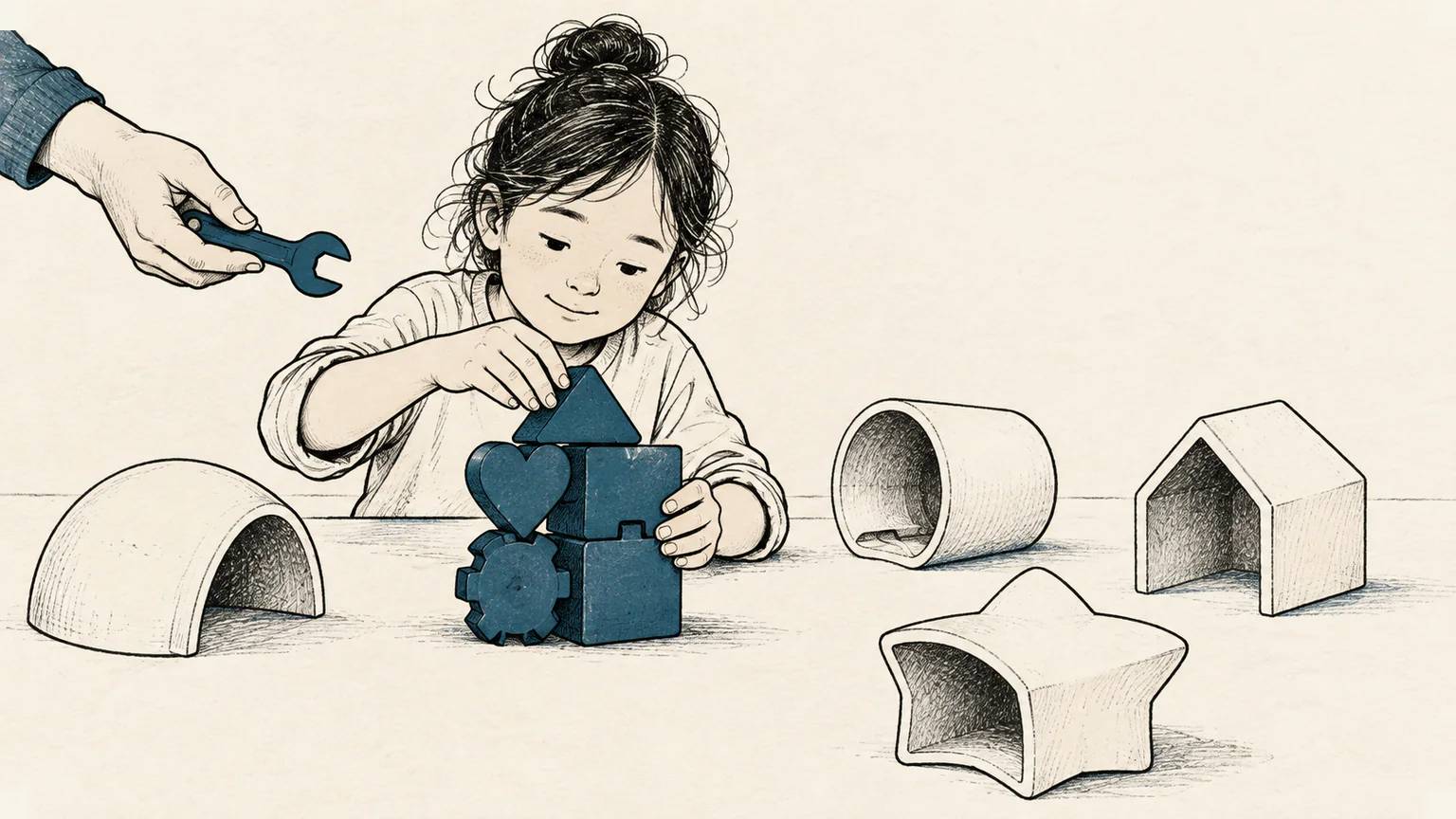
From a parenting angle, here’s how it looks in my head. The skill set I’d like my son to build, beyond grades and even beyond “profession”, includes:
- Learning how to learn
- Problem-solving and seeing cause–effect relationships
- Technology literacy and the ability to work with AI
- Owning the work; motivation to follow through on goals
- Communication and empathy
A profession will be a kind of “shell” built on top of these. The shell can change. The core needs to stay solid.
Why Old Recipes Won’t Fully Work Anymore
When we were kids, the formula was pretty simple:
- A good school,
- A good department,
- A “secure” profession,
- A long career at one (maybe two) companies.
Today the picture is very different.
The WEF’s 2025 report records employers’ expectations of substantial labour-market transformation through 2030. It is useful as a signal of uncertainty, not as a script for a child’s career.
So:
- A good school and a good department still matter. They are not a complete guarantee.
- Learning how to learn, adaptability and human skills matter alongside them.
So What Can We Do as Parents?
For me, everything boils down to one sentence:
I don’t want my son to be a spectator in a world shaped by AI. I want him to be someone who can take an active role in it and keep renewing himself.
Everything else – school choices, career plans, courses, hobbies – feels like details orbiting around this main idea.
Most of the work to build that skill set is, of course, in the realm of pedagogy. But when it comes to “technology literacy and the ability to work with AI”, that’s where I, as his father, want to take an active role.
I’m planning to work on this with my son Eren – small projects, experiments, shared learning – and I’ll share some of that journey on this blog over time.
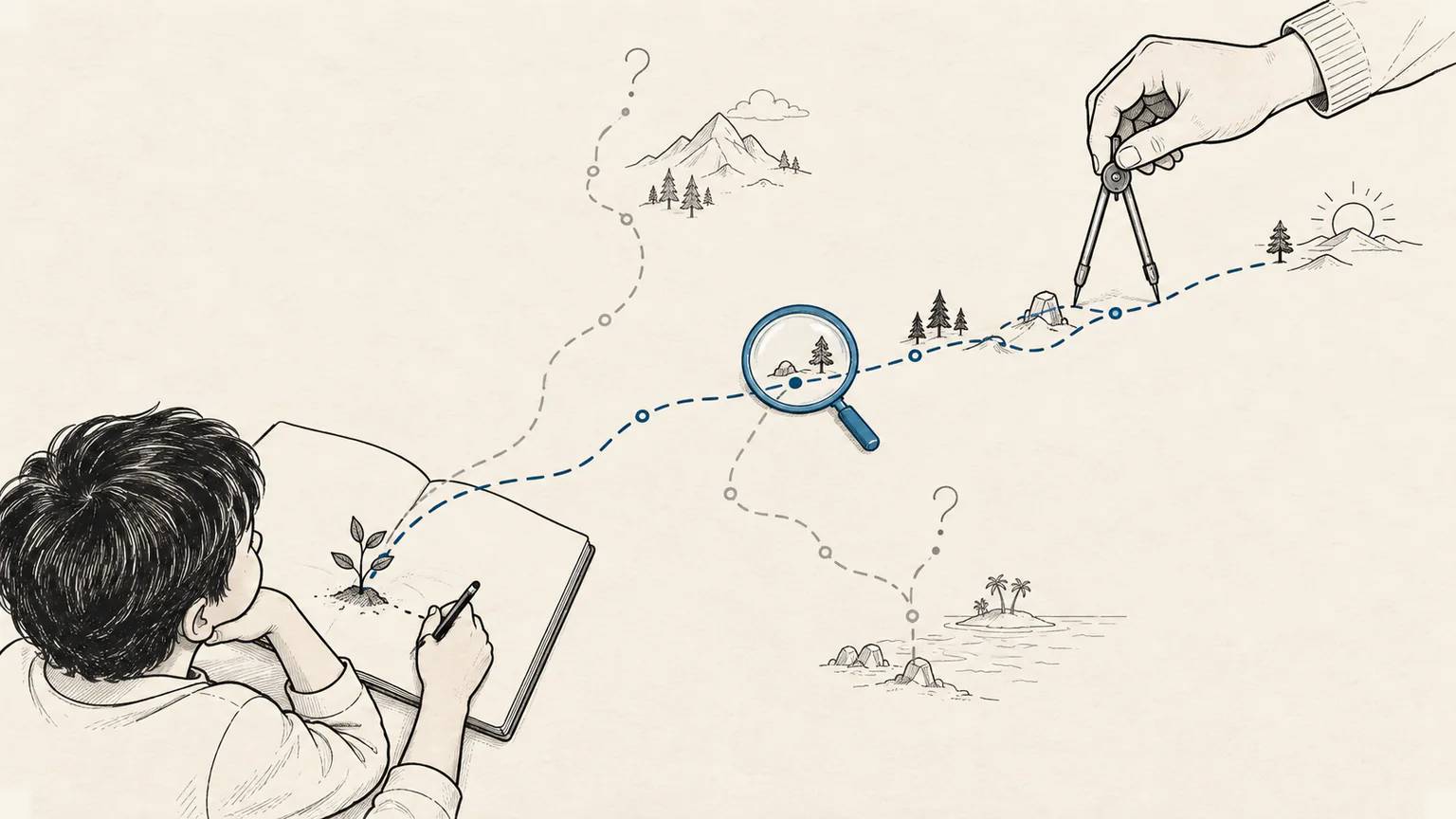
As parents, the question in front of us is basically this:
Are we preparing our children for the next 10–20 years, or for the world we grew up in?
There’s no crystal-clear answer.
But pretending nothing is changing is definitely not the best starting point.
Further Reading
- Future of Jobs Report 2025: A broad picture of the skills employers currently prioritise and their expectations through 2030. It reports employer views, not a prediction of which profession an individual child should choose.
- Artificial intelligence and the changing demand for skills in the labour market: Examines why most workers exposed to AI may not need specialist AI skills, while management, business and digital skills become more important. It concerns labour-market demand, not child development or an educational method.
- From Skills to AI Complementarity: Compares demand and wage patterns for AI-complementary and AI-substitutable skills across 12 million US online job listings published between 2018 and 2023. Job-posting data do not show actual hiring or establish that the results transfer unchanged to other countries and occupations.
If this article was useful
Linking to it from a relevant page on your website or sharing it on social media genuinely helps it reach more people. Thank you for your support.
Linking and brand guidelines →
A small experiment
Loading personal metrics…