Stripe’s OpenRouter Deal: Which Model for Which Job?
Written by Evren BalPublished · 5 min read

Imagine a company that uses AI to prepare drafts for customer messages. A cheaper model becomes available, so the team wants to try it. Another model understands Turkish complaints better. The provider slows down at busy times, so the team also needs a fallback.
Each choice has a reason. Comparing the options, sending each job to the right one, and tracking the results is work in its own right. Stripe’s announced agreement to acquire OpenRouter helps explain why services that take on part of that work are attracting attention.
Why does Stripe want to acquire OpenRouter?
On 19 August 2026, Stripe announced that it had agreed to acquire OpenRouter. Stripe says the deal responds to businesses that need to manage trade-offs between models, speed, and price. Coming from payments and billing infrastructure, Stripe is also investing in how companies manage costs created by AI use.
OpenRouter gives teams access to models from different providers through a single integration. Rather than building a separate connection for every provider, a team can move between models. OpenRouter’s announcement also describes usage tracking, cost management, and model routing as parts of the service. The transaction remains subject to closing conditions.
For a team working with several providers, a platform like this may make it easier to see which models it uses and what it spends on them. That can mean less integration maintenance, easier comparison, and shared records for investigating problems.
The announcements do not, however, offer independent evidence that customers get cheaper or better results. Stripe’s rationale for the agreement and the benefit a company would receive from using the service are separate questions.
A fast answer may not mean the work finished faster
Suppose the fast model in the support system misreads a return-policy exception. It may produce a draft quickly. But once an employee notices the error, they need to review the case again, correct the response, and perhaps wait for approval. The time saved by the model can disappear in the next steps.
If the error reaches the customer, it can create a new complaint, reopen a support case, or trigger the wrong action. The model’s response time may look low while the customer’s issue takes longer to resolve.
The same applies to cost. If a cheaper model needs more human review, the AI bill may fall while total cost rises. Repeated answers, correction work, waiting, and the business effect of mistakes all belong in the calculation.
Choosing well therefore means selecting the model that fits the job. Comparing speed and price alone is not enough until the team has defined what an acceptable result looks like. A straightforward delivery question and a return request with exceptions may not deserve the same evaluation.
The Artificial Analysis Endpoint Accuracy Index also shows why this comparison cannot stop at the model’s name: the same model can produce different results through different endpoints.
When testing a service such as OpenRouter, use examples that represent the company’s real work. Compare the current approach and the proposed routing on those same examples. Look together at the share of responses ready to send to customers, employee correction time, time until the request is closed, and cost per completed task. A platform’s usage report needs to be complemented by records from the later stages of the work.
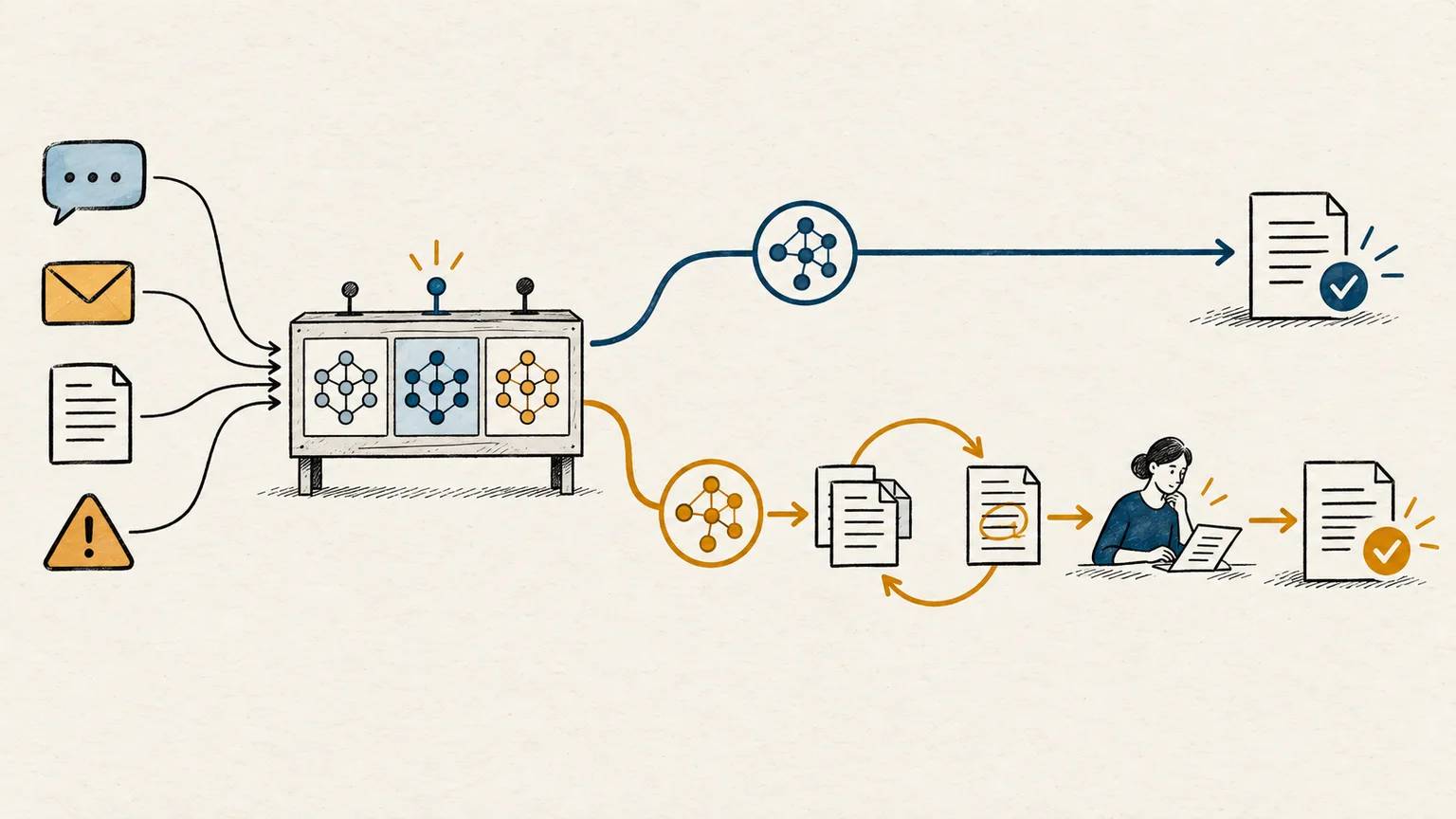
An average is not enough either. Frequent, easy messages may perform well while infrequent exceptions create expensive mistakes. Their outcomes need separate attention.
Shared access and automatic selection are different decisions
Using OpenRouter’s shared access does not require a company to automate model selection for every request. A team can choose models itself or apply clear rules based on message language, document type, or data policy.
In a system that predicts a request’s difficulty and selects a model, the routing decision also needs testing. A wrongly selected model can work without technical error and still produce an answer that is inadequate for the job.
My article on routing requests across multiple AI models explores this distinction in more detail. When assessing a service, be clear about which burden is being delegated: managing access to providers is not the same as deciding which job should go to which model.
As models change, dependence can move to the intermediary
Accessing several models in one place can reduce dependence on a single model provider. But routing rules, usage records, and habits for investigating failures can gradually accumulate around the intermediary platform. Switching models may become easier while switching platforms becomes harder.
That is why a company should establish from the start whether its rules and records can move to another system. It should be able to determine which providers and regions data may be sent to, and test the path it will use if the intermediary service is unavailable.
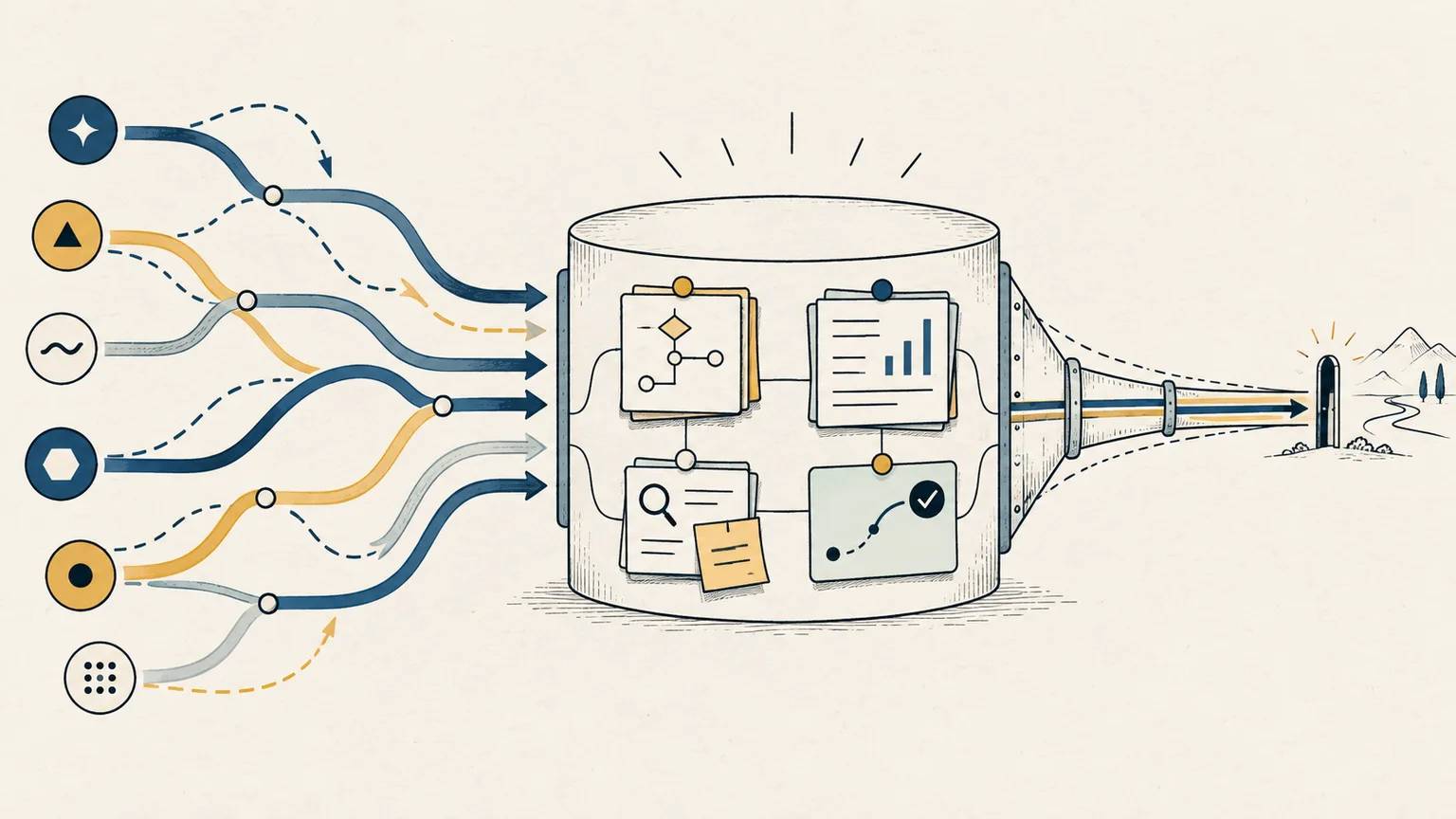
As I argued in Do You Know How Dependent Your Company Is on AI?, changing a connection does not by itself preserve a business outcome. An alternative path must be shown to complete the same work at an acceptable quality. A list of model names is not, on its own, a working fallback.
When can OpenRouter create value?
If one model already produces adequate results, a direct relationship with the provider may be simpler. A larger model catalogue will not fix work that is failing because product information is missing or approval steps are unclear.
OpenRouter-like services can make sense when several providers meet genuinely different needs. The test is whether they reduce the team’s integration and monitoring burden, preserve the quality the work requires, and improve the end-to-end outcome. Service fees and the cost of moving to the platform also belong in that comparison.
Stripe’s rationale for the acquisition rests on this need. A company’s purchase decision should rest on its own records. A system that produces cheaper answers while growing the queue of employee corrections may improve the model bill. To call it a good business choice, the company also needs to see how the request actually ends.
Further Reading
- Ben Thompson: Stripe Acquiring OpenRouter, Aggregating AI?, Flipping the Business Model: The publicly accessible summary frames the deal around a market of different models and the possibility of a platform that aggregates them. The full analysis requires a subscription.
If this article was useful
Linking to it from a relevant page on your website or sharing it on social media genuinely helps it reach more people. Thank you for your support.
Linking and brand guidelines →About this article
- Use of artificial intelligence
- AI-assisted — This Turkish-led draft was prepared with AI assistance from a topic selected by Evren Bal and an agreed writing plan.

A small experiment
Loading personal metrics…