The Same AI Does Not Create the Same Competitive Advantage
Written by Evren BalPublished · 6 min read
A customer asks two suppliers for a quote on an order that must arrive by Friday. Their prices are close. Because the customer's own work depends on that delivery, the date matters as much as the price.
Consider two hypothetical companies. Both have current inventory records. Both have people who understand their work. Both use the same AI model. They ask it to do different jobs.
At the first company, a sales representative learns the delivery date from the operations team. They then ask the AI to write the email to the customer. The model puts the date into a clear proposal. The representative reviews the text and sends it.
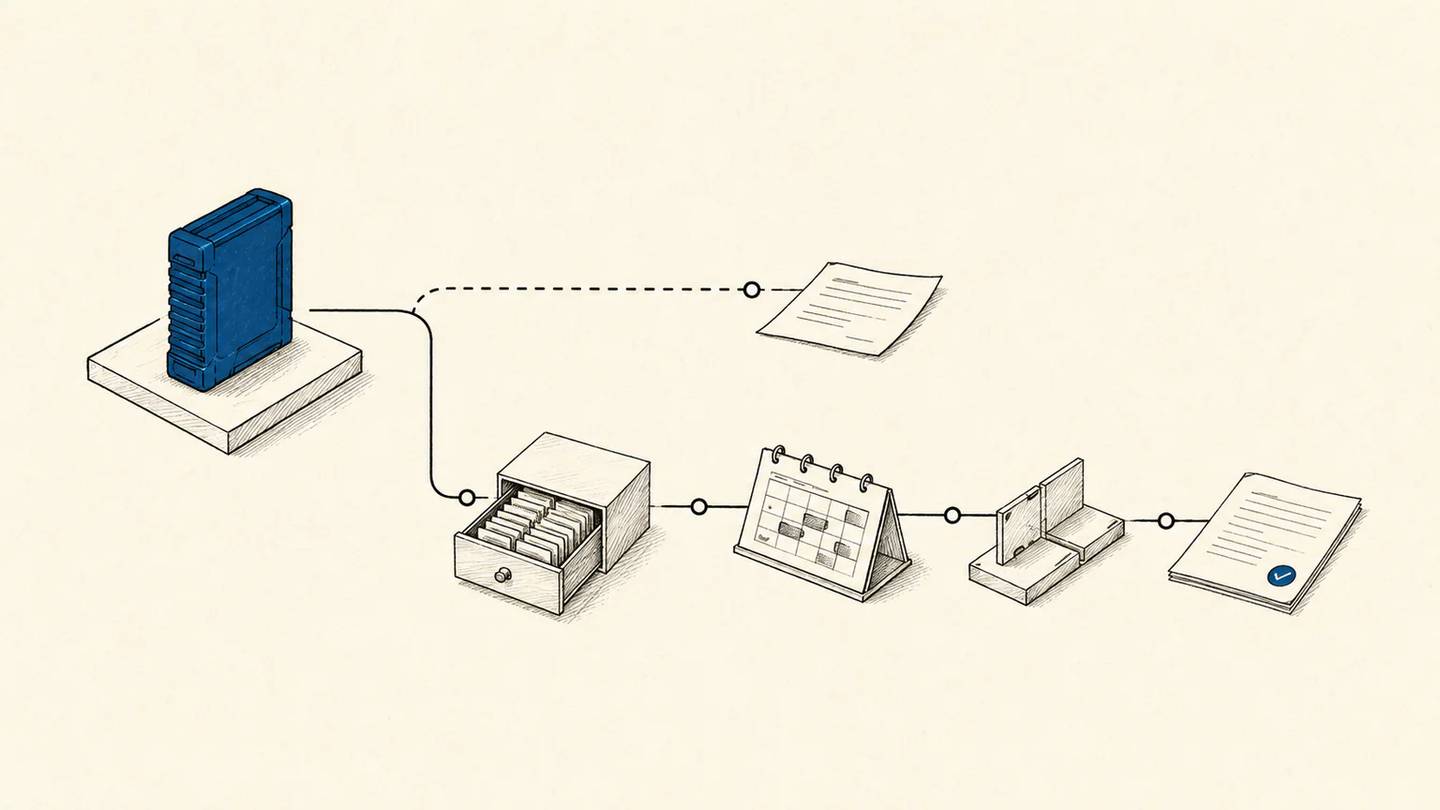
At the second company, the model reads the customer's request and brings together the information needed to make a delivery promise. It can see the available inventory confirmed by the warehouse manager and the shipping plan approved by operations. From those records, it shows the sales representative which date can be offered, and why.
If the records conflict, no date is offered. The request goes to the operations lead for a decision. The sales representative communicates the approved date. Once the order is complete, the team compares the promise with the delivery that actually happened.
Both companies eventually send an email. In the first, AI writes the text that explains a decision. In the second, it helps prepare the decision itself. That is the difference worth examining when we talk about competition.

Customers do not buy the model's name
The first use can still be useful. The representative spends less time on correspondence, and the message may be clearer. But the work needed to determine what can be promised to the customer has not changed. AI arrives after that work is done.
The second company expects something broader. It wants to speed up the checking required to make a reliable promise. The information assembled by the model may shorten the exchange between sales and operations. Instead of searching every record from the beginning, the employee can inspect the basis for the recommendation and the points still unresolved.
Whether that arrangement produces a better result remains a hypothesis. Reviewing the output may take longer than doing the work from scratch. A quick answer can create more problems if the model misses a material detail. The second company still needs to test its system against its own orders.
But it knows what to test: can it give customers a reliable delivery date earlier? That question says more than the number of people using the same model.
Customers do not see the model's name. They see when they receive an answer and whether the order arrives when promised. If a company does those things better than its competitors, technology may have strengthened one reason for customers to choose it.
The accumulation a competitor cannot buy
Access to the same model does not mean access to the same way of working. The second company needs to decide which inventory record it trusts. It also needs to decide when sales must stop offering a date. Those are not features included with a model subscription.
The arrangement does not have to be perfect on the first day. Suppose an order arrives on Monday rather than Friday. When the team reviews it, it discovers that the date in the shipping plan meant departure from the warehouse, not arrival at the customer's site.
If the only response is to ask AI to write an apology email, that order is closed. If the team corrects what the date means and checks that distinction in later recommendations, it is less likely to repeat the same mistake. Sometimes learning is that concrete.
This is not about a model learning on its own. Employees review the outcome, correct the information that was used incorrectly, and change how the decision is prepared. The same model works with sounder information the following week.
Such corrections can accumulate into an advantage that is not easy to copy. A competitor can buy the same model. It still has to learn which information proved misleading, when human intervention is needed, and which promise matters to the customer.
The first company can build that accumulation too. There is nothing wrong with starting by drafting copy. The limit is treating frequent employee use of the tool as proof of competitive strength.
Research does not make that connection automatically either. The OECD's work on AI and competition finds no meaningful association between the use of non-generative AI and increased market power in data from France and Portugal. Its descriptive findings on generative AI point both to opportunities for smaller firms and to the continuing advantages of firms with stronger existing capabilities. Wider access to the tools does not make accumulated know-how irrelevant.
The study is exploratory and does not establish cause and effect. Its Portuguese indicator for generative AI does not measure actual use either. It estimates how exposed jobs may be to the technology from workers' occupations. It therefore cannot support a direct conclusion for companies in Turkey, or prove the delivery example above.
Put the outcome beside the usage report
Active-user counts and completed pilots can be useful in a management meeting. They show whether a tool is being adopted. They do not show that a company is serving customers better or becoming meaningfully different from its competitors.
For the delivery example, three outcomes are more revealing: does the customer learn a dependable date sooner? Are promises kept more often? Do extra shipping and compensation costs caused by wrong dates fall?
To see that, the recommendation before the order and the result after it need to be kept together. It is not enough to assess selected successes. Faster handling of easy orders can conceal more mistakes in difficult ones. The cost of new control and maintenance work also belongs in the calculation.

The share of the improvement attributable to AI needs separate attention. If the company made usable inventory information available to sales for the first time, part of the gain may come from that change. If an adjustment to the existing order software could produce the same benefit, a more complex system is unnecessary. The model's contribution should be judged by the work it actually does, such as understanding the request and making the relevant information easier to review.
Even an improvement against a company's own past does not, by itself, show that it has moved ahead of competitors. Other companies may be getting faster too. A competitive claim needs a difference that appears in customer choice, service reliability, or the ability to do the work profitably.
That is why a company that does not have to rethink its delivery process from scratch whenever a new model appears has something valuable. It knows which information is correct, who makes the decision, and where the outcome can be seen. It can test the model again inside that work.
That accumulated capability deserves attention in the next investment decision. If preparing a customer promise still sends the same people chasing the same records, the company may have settled for better-written emails. If it learns why a promise was kept or broken and adjusts the next decision, it has begun to build something beyond the tool it purchased.
If this article was useful
Linking to it from a relevant page on your website or sharing it on social media genuinely helps it reach more people. Thank you for your support.
Linking and brand guidelines →About this article
- Use of artificial intelligence
- AI-assisted — AI assisted with source research, drafting, and editorial checks. Final meaning and publication decisions belong to Evren Bal.