AI's Value Is Not Always More Work
Written by Evren BalPublished · 8 min read
💡 Summary: Key Takeaways
- Minutes saved are not, by themselves, a business outcome. The 19-, 26-, and 43-minute figures reported for the same tool show how much the result depends on context and measurement.
- We do not have to fill every released minute with more work. Less overload and less work outside normal hours can create room for greater care and higher quality.
- Sometimes the most important contribution of AI is not time saved at all. It can make observation, quality control, and management visibility economically possible at a scale that human effort alone could not sustain.
If an employee saves 43 minutes a day with AI, what should the company do with that time?
The question appears simple. Multiply 43 minutes by the number of employees and working days, and you have an annual capacity estimate. Convert that figure into money, full-time equivalents, or additional output, and the result looks impressive. But all the calculation has done so far is scale an assumption.
For me, the more important decision is how that released time should change the way the company works. Time does not have to be filled with more work before it becomes valuable.
The 43-minute figure comes from an NHS England Microsoft 365 Copilot pilot involving 30,000 employees across 90 organisations. The organisation used the result when announcing that the tool would be made available to 505,000 employees. The NHS announcement describes the saving as roughly five weeks per employee each year. It does not explain the pilot's comparison group, response rate, or how those minutes were measured.
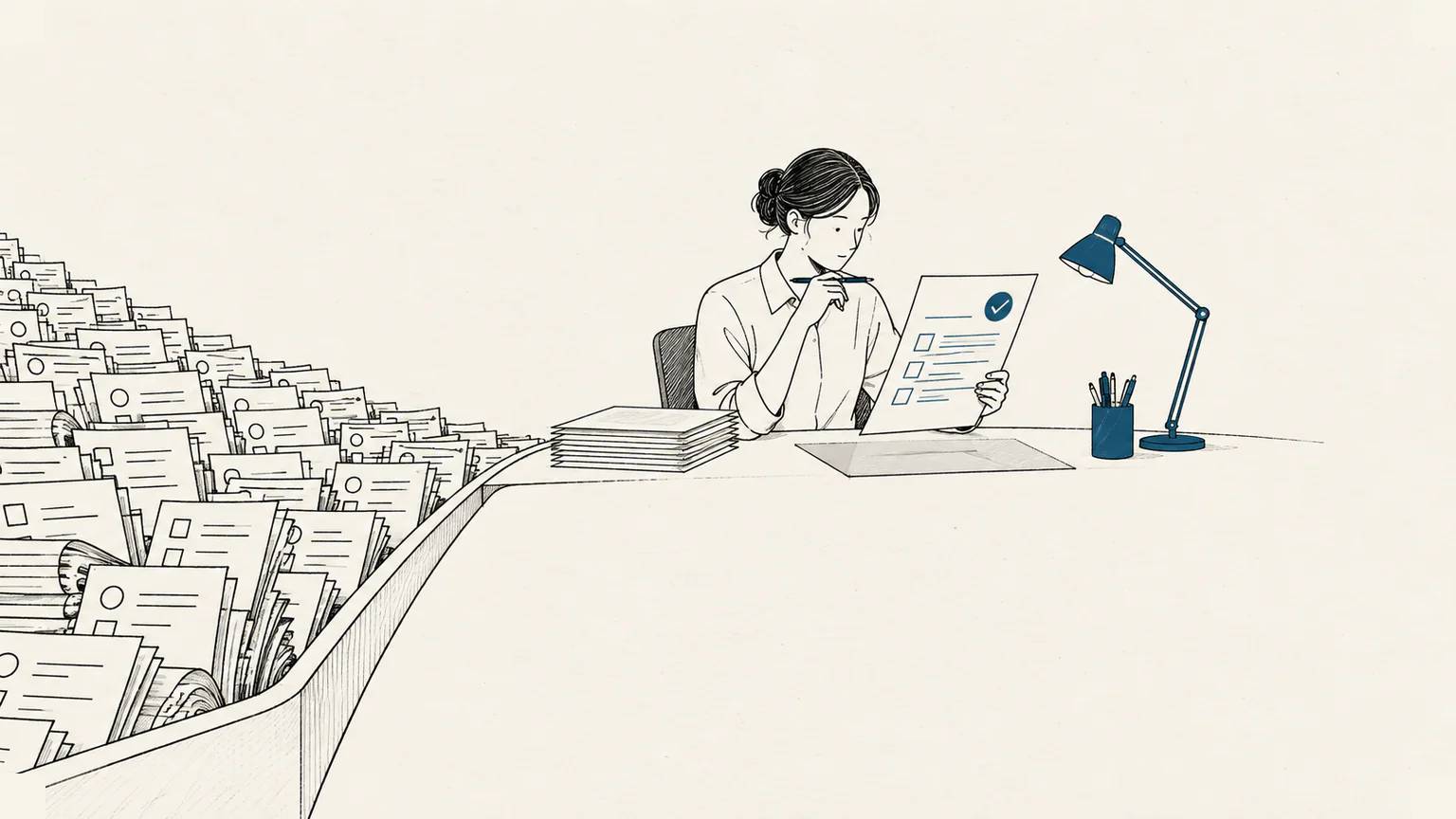
This number is not enough to make a decision. We first need to understand how the minutes were measured and what they become inside the company.
Minutes are not a fixed product feature
Evaluations of the same tool across UK government organisations produced quite different results. In the Department for Work and Pensions trial, users reported saving an average of 19 minutes a day. In the cross-government GDS experiment, the figure was 26 minutes. The NHS announcement reports 43.
One of these numbers does not have to be right and the others wrong. The samples, tasks, periods of use, and measurement methods differ. Much of the evidence also depends on users estimating their own time savings. The GDS report explicitly says it could not determine how the reported 26 minutes were spent.
There is therefore no universal answer to “How many minutes a day does this tool save?” Better questions are: for which task, for whom, at what quality level, and with how much additional checking?
In my previous article on how companies can create value from AI, I separated what a model can do from the business result a company can produce. This article addresses a narrower but often overlooked part of that distinction: speeding up a task and deciding what the released time means for the company are not the same thing.
In my experience, value is not limited to more output
Every AI project we have implemented at the company where I work has produced gains in speed and efficiency. For me, however, the more important results have been higher quality and greater management visibility.
AI did not reduce employee numbers. Achieving the same quality and management capability with human effort alone would have required a larger team and investments we could not economically justify. AI made some previously inaccessible capabilities possible.
I do not have public data that would allow me to convert this experience into minutes or a financial return. I cannot present a reliable calculation without disclosing company processes and figures, so I will not invent a saving rate. I can still state which outcome matters more to me: not loading the same people with an endless stream of additional work, but creating an operating environment in which they can do better work and managers can see more clearly what is happening.
Not every released minute is waiting for another task
Productivity discussions often treat employee time as a resource that should always be filled to the edge. If a tool makes a task faster, another task is expected to occupy the space immediately. If that does not happen, the benefit is assumed to have disappeared.
For someone who is already overloaded, released time can have value before it produces one more completed task. They may check their work more carefully. They may understand a customer's context instead of moving past it superficially. They may make fewer decisions in a hurry. They may finish within working hours what would otherwise spill into the evening.
A six-month randomised field experiment involving 7,137 knowledge workers at 66 firms produced an interesting result. Employees who used Microsoft 365 Copilot spent about two fewer hours a week on email and did less work outside normal hours. The researchers did not detect a measurable change in the amount or composition of their tasks.
It is possible to read this as evidence that AI did not produce greater productivity. I think that interpretation is incomplete. If employees perform the same work with less activity outside normal hours, there is a real benefit even if they do not complete more tasks. Additional measurement would be needed to establish the financial, employee-experience, or quality effects, but the absence of more output does not make the improvement worthless.
Overload is not only an employee wellbeing issue. A team that is always rushing also has less room to check its work, think, and notice exceptions. If released time reduces that pressure, it creates more room for quality. This does not mean that everyone who uses AI produces better work; quality must be measured separately. The narrower point is that filling every opening with another task may remove the very space in which a speed gain could become a quality gain.
Sometimes the real gain is what management can finally see
Time calculations can also hide one of AI's more important contributions. Some systems do not accelerate work that people already perform. They make work possible that people could never perform at the same scope.
In my article on the new operating capacity that can make companies dependent on AI, I used the example of a manager trying to read, classify, review for quality, and prioritise everything produced by a team of 30 or 40 people. One person cannot do this continuously and comprehensively. At best, they sample the work or focus on the problems that are already visible.
A well-bounded AI system can inspect all of those outputs, monitor defined patterns, surface exceptions, and direct a manager's attention to where it is needed. The human still makes the final decision. The system does not replace the manager; it expands the area the manager can observe.
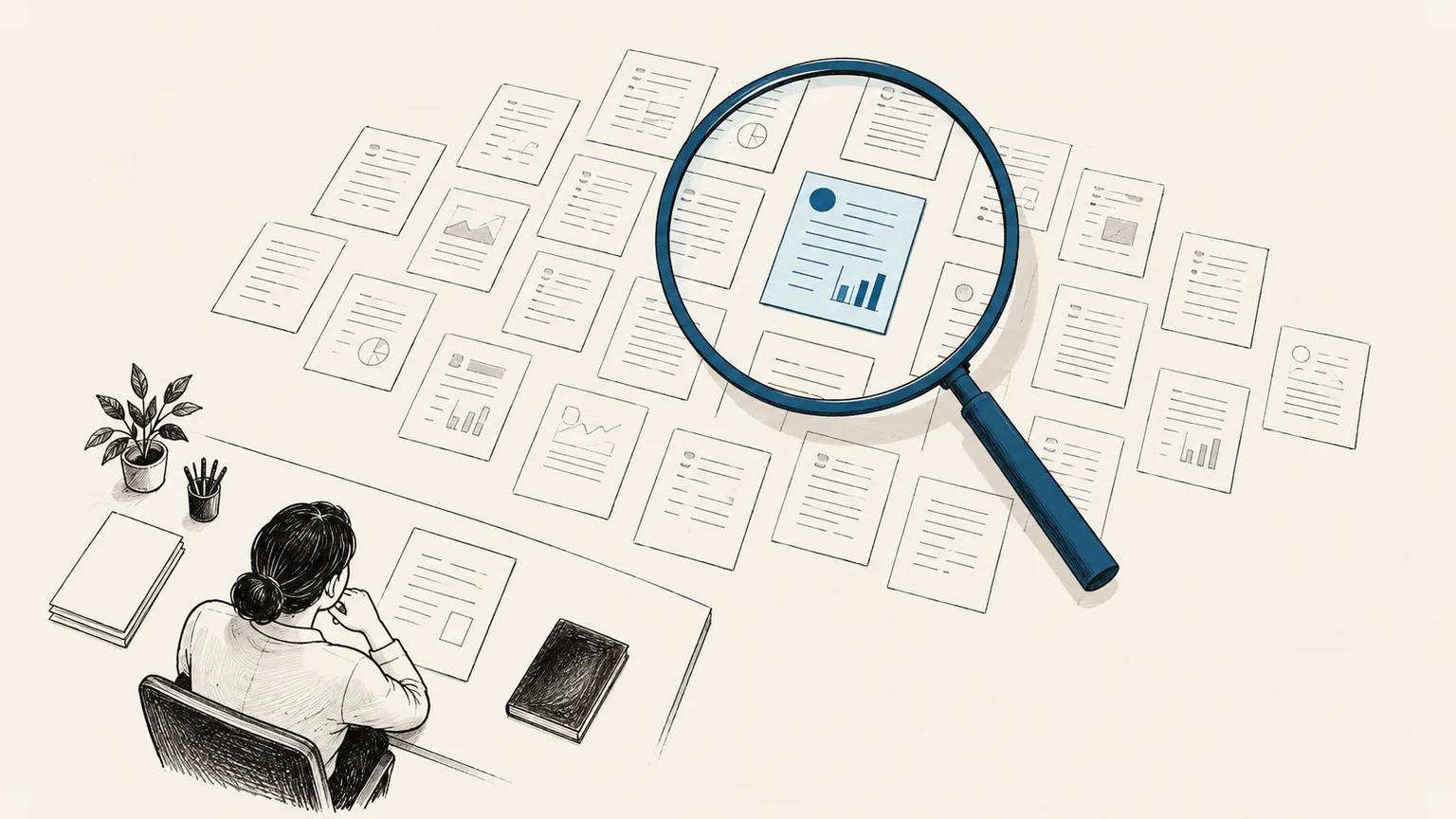
In this case, “How many minutes did we save?” is almost irrelevant. We are not comparing a task that once took three hours with one that now takes one. We are establishing quality control and management visibility that were previously uneconomic.
That capability does not produce value automatically either. If nobody acts on the issues it surfaces, if the system generates noise, or if it does not improve decisions, we have merely created another reporting layer. But the outcomes we need to measure are different from time saved: are we detecting more problems earlier? Are we finding quality deviations more consistently? Can managers direct their attention to more important decisions?
Name the outcome before counting the time
It is easy to take every positive signal found at the end of an AI project and call all of them success. We can count the same saved minutes as lower cost, additional capacity, higher quality, and employee satisfaction at their full value. The calculation then tells the same benefit several times.
We need to name the intended outcome before introducing the tool. If the goal is more completed work, measure output and quality together. If the goal is less overload, look at work outside normal hours, backlog, and employee experience. If the goal is quality, track errors, rework, and exceptions. If the goal is management visibility, evaluate problems found earlier and decisions improved, not the number of reports the system generated.
Several outcomes can improve at the same time. I have no objection to that. My objection is to assuming that one self-reported number of minutes proves all of them.
Where a company directs the time released by AI is not a technology decision. It is a management decision about what kind of company it wants to build. Some organisations will turn that time into more output. Some will respond to customers faster. Some will reduce errors or move employees away from constant overload. Others will establish observation and management capabilities they did not previously have.
My priority is not to fit more work into the same day. It is to create an operating environment in which the same team can work at a higher quality and management can see more clearly what is actually happening. If AI creates room for that, we have not lost value simply because we chose not to fill every released minute again.
Further Reading
- The AI Productivity Paradox, Part 1 and Part 2: Chris Parsons considers the conditions under which the time reported by the NHS could become value. The series is a useful practitioner interpretation, not an independent evaluation of the pilot's measurement design or causal effect.
If this article was useful
Linking to it from a relevant page on your website or sharing it on social media genuinely helps it reach more people. Thank you for your support.
Linking and brand guidelines →About this article
- Use of artificial intelligence
- AI-assisted — This article is based on Evren Bal’s views and experience. AI-assisted tools were used during the research and editorial development process.

A small experiment
Loading personal metrics…