Would We Still Buy This Backlink If It Sent No Ranking Signal?
Written by Evren BalPublished · 11 min read
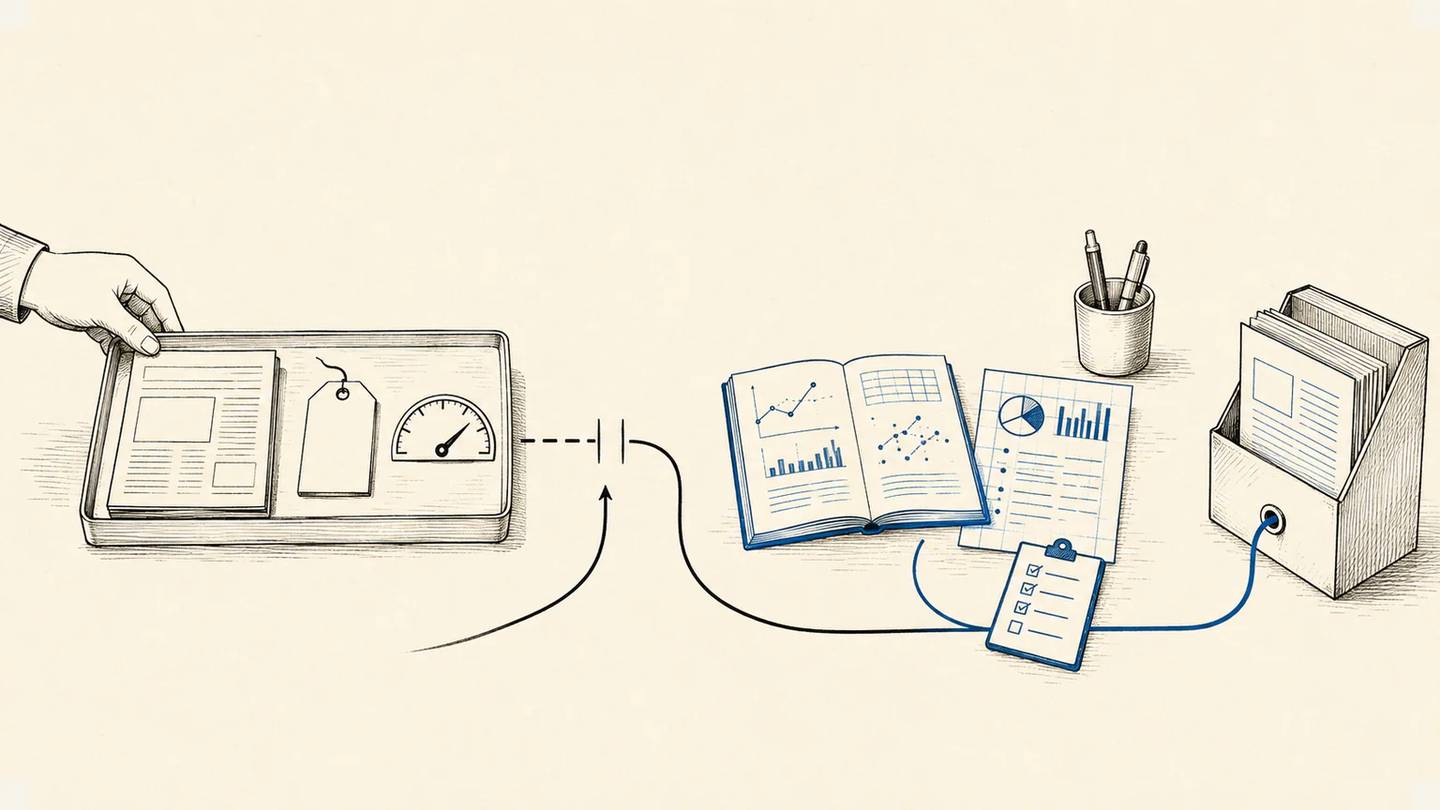
“Does Google know we bought this backlink?”
That may be one of the most common questions in a backlink sales pitch. An SEO consultant or agency recommends a link from a particular site. It may be a well-known newspaper with a high DR or DA score, and the article will look “editorial.” So you quite reasonably ask: how would Google know that we paid for it?
The short answer is this: Google does not have to identify every paid link immediately and with 100% accuracy. It does not claim to offer that guarantee. It says that it assesses link spam through algorithmic systems and, when necessary, manual actions.
That does not lead to the conclusion that buying backlinks is safe.
The harder problem is that, from the outside, it is hard to know whether a specific link worked or how Google evaluated it. Even so, the market often presents a backlink not as part of a marketing strategy, but as a ranking signal you can purchase.
A backlink and buying a backlink are not the same thing
Being featured on a website is not automatically a bad thing. If a newspaper genuinely reports on your company, product, research, or work, the feature may have value for your brand and distribution. Readers may read the article, discover your company, and visit your site. That can be a legitimate public-relations or content-distribution expense.
But if the only goal is to send Google a link signal, the meaning of the same transaction changes.
Google has drawn this line since at least 2007: paid placements for advertising or traffic are one matter; buying links to manipulate PageRank or search rankings conflicts with its policies. Its current spam policies list paid links, articles containing links, and providing goods or services in exchange for links among examples of link spam.
So “the newspaper is well known and the link is real” is not enough. The relevant questions are the context and purpose of the link.
The distinction looks like this:
- I want to be featured in the newspaper. I am paying to reach its audience and explain my brand. The link is part of the placement, but it is not the only reason I am buying it.
- I want to look stronger in Google's eyes. I am paying for the article and link for that reason. The reader, the content, and the distribution are secondary.
The first may be a media-buying or PR decision. The second is a renamed form of ranking manipulation.
What does “a very high-quality link” mean?
The phrase “this is a very high-quality link” is often used without explaining what quality means.
Does the source site's audience overlap with yours? Does the article fit the publication's normal editorial flow? Do readers click the link? Does it help them answer a question? Will the article remain useful for years, or is it one of many pages created mainly to sell links?
Instead, many proposals are presented through metrics: Domain Rating, Domain Authority, estimated traffic, dofollow status, keyword count, and price. None of these metrics is completely meaningless. They can help with an initial assessment. But none of them, by itself, proves that a link is valuable for your business.
There is a more basic test:
If this link passed no ranking signal to Google, would we still want to be in this article?
If the answer is no, what we are probably buying is not media visibility but the expectation of an invisible algorithmic advantage. The person saying “we have to get this backlink” is often trying to persuade you with the site's prestige and SEO metrics rather than explaining that distinction.

Google's position is not new
Backlink manipulation is not a problem Google discovered yesterday. For years, Google has tried to preserve the role of links in search while building systems against their artificial use to influence rankings.
In 2019, Google expanded the nofollow attribute with sponsored and ugc options. The aim was to describe more clearly whether a link appeared in an advertising, sponsored-placement, or user-generated-content context. Google also explained that it treated these attributes as hints rather than strict commands.
In 2021, it reminded site owners to qualify paid and sponsored links appropriately. In its 2022 link spam update, it said that SpamBrain could help neutralize link spam at a broader scale. Its current link best-practices documentation also explains that links can help discovery and understanding, while how they were obtained still matters.
The 2024 site reputation abuse policy update is another part of the same picture. Google separately addresses third-party content published to take advantage of a powerful site's reputation. That policy does not say that every paid news placement is forbidden. Advertising and native-advertising placements intended to reach readers are not automatically site reputation abuse. But the purpose, context, and presentation of the relationship between content and links still matter.
Google's message is not that links no longer matter. It is more limited, and less comforting: buying links to manipulate rankings can violate the rules, and systems may neutralize those patterns over time.
Google cannot know every paid link
We should be realistic here. If an editor publishes a paid article as though it were an ordinary article, and the payment relationship is not visible from the outside, an algorithm may not be able to identify it with certainty every time.
Google does not say, “We catch every paid link immediately.” Detection may be algorithmic, manual, part of a spam pattern recognized later, or it may never happen. That uncertainty may also explain why some purchased links appear to work.
But “not detected” and “within the rules” are not the same thing. A method does not become a reliable long-term growth strategy just because it has not produced a visible penalty today.
It is also very difficult to prove from the outside that a particular link produced a ranking effect. During the same period, the content may change, internal linking may improve, the domain may mature, other sites may link to it, brand searches may increase, competitors may move, and the query itself may change.
If rankings rise after buying a link, it is easy to credit the link. But without separating the other variables happening at the same time, that conclusion is storytelling rather than measurement. I have discussed the gap between search visibility and commercial value in a programmatic SEO experiment for the same reason. An increase in visibility does not explain a business result by itself.
Some purchased links may work
This should be said plainly. Some paid links probably do provide a benefit. Otherwise, it would be difficult to explain why this market has remained at this scale for so long.
A link may bring referral traffic, put the brand in front of a journalist or potential customer, or increase branded searches even if it does not provide the expected Google ranking signal. Those are real benefits. The purchase should then be measured accordingly: how many qualified visits arrived, what audience did we reach, how many people became aware of the brand, and how many commercial conversations started?
If the report only says “a dofollow backlink was secured from a high-authority site,” it is showing you a deliverable, not a result. We also do not know which part produced the benefit: the article itself, the newspaper's audience, the brand visibility, or the link.
Connecting every positive movement to the backlink without making that distinction means buying the agency's explanation instead of measuring the agency's work.
Competitive pressure is real
“Then everyone should earn links organically and wait” is not an easy answer either.
In competitive sectors, an arms race can develop. If a competitor has 500 referring domains and you suspect that a significant share of them were purchased, sitting back and waiting for natural links can be commercially frustrating. A short-term advantage in the search results may genuinely exist.
I understand that pressure. When a company is spending real money, it is not enough to talk only about ideal behavior. Competitors, growth targets, and time pressure have to be part of the decision too.
But competitive pressure does not mean an agency's proposal should go unquestioned. It means the uncertainty should be spelled out. If an agency says, “the competitor is buying, so we need to buy too,” it should answer these questions:
- What is the goal of this spending: referral traffic, brand visibility, PR, or a ranking signal?
- Would we still buy the placement if the link were marked sponsored or nofollow?
- Which metrics and time window will we use to evaluate the effect?
- How will we separate the link's effect from content, internal linking, and other SEO changes?
A strategy does not become high quality simply because it labels a link “high quality” if the proposal cannot answer these questions.

Earning links organically is not passive waiting
Organic link earning is rarely discussed among SEO agencies and companies. When it is discussed, it is often reduced to one sentence: “Create good content and people will link to it.” That advice is not enough for most companies in practice.
Earning a backlink organically means building a system that gives another person a reason to cite your work because they independently find it useful. You first need to produce something worth citing.
It might be research or an analysis based on your own data, processes, or a clearly defined problem. It might be a calculator, checklist, or decision framework that makes someone's work easier, a study that tests a common assumption in an industry, or a clear, reliable, current resource that others can add to their own articles.
Then the resource needs to reach the right people. You can contact relevant journalists, editors, communities, experts, and publishers. The goal is not to say “give us a link,” but to make useful information visible to people who can use it. If a link follows, it is because the other party believes it adds value for their readers.
This approach is neither fast nor easy. Not every piece earns links. Some projects receive less attention than expected. But at least you know what you are building, who it is for, and which assumption you are testing. I made the same point about not creating content only to chase visibility in the context of AI visibility. The problem is the same with backlinks: once the metric becomes the goal, the underlying value can disappear.
When an agency asks for a backlink budget
An agency recommending a backlink is not automatically a bad sign. Some placements genuinely reach your target audience. Some digital-PR work can be meaningful for a brand. Competitive pressure cannot be ignored in every sector.
What I would want to see is a proposal that does not stop at “we will acquire this many backlinks.”
I would ask the agency: “Apart from buying these links, what will you do to help the company earn backlinks organically? What asset will you create? Who would cite it, and why? Which publisher, journalist, or community will you approach with which data? Six months from now, what will the company still own because of this work?”
If there is no answer, the agency is offering a procurement operation, not a strategy. It may find links on better sites, buy more expensive placements, and produce more regular reports. But the core recommendation remains the same as the one from someone selling SEO for a few hundred lira a month: “we need to buy backlinks.”
A higher price does not turn a purchasing tactic into a strategy by itself.
The decision: buy the purpose, not the backlink
I do not want to reduce every backlink purchase to a blanket prohibition. Paid work for genuine media visibility, access to a target audience, or a PR outcome can make sense. A link can be part of that work.
But if the only reason to pay for the link is to send Google a signal, I would not treat it as a normal growth tactic. Google's inability to catch it every time does not make the purchased link a sound investment. The fact that some links appear to work does not mean we know which links work, under what conditions, or for how long.
The test I would use with my own team or an agency is simple:
If this backlink passed no ranking signal to Google, would we still pay for it?
If the answer is yes, the work probably has media or distribution value. If the answer is no, we are not buying a backlink; we are buying a ranking expectation we cannot measure.
I would first make clear what result we expect this spend to produce, and then use the budget to create something people would want to cite. Earning links organically is not easy. But difficulty is not a reason to avoid building a strategy.
If this article was useful
Linking to it from a relevant page on your website or sharing it on social media genuinely helps it reach more people. Thank you for your support.
Linking and brand guidelines →About this article
- Use of artificial intelligence
- AI-assisted — This article is based on Evren Bal's views and personal observations. AI-assisted tools were used during the research and text-development process.

A small experiment
Loading personal metrics…