When Is One AI Model Enough?
Written by Evren BalPublished · 8 min read
💡 TL;DR: Key Takeaways
- One capable general-purpose model is often a sensible starting point. Add another only when it produces a measured improvement in quality, cost, speed, data control, or resilience on the real workload.
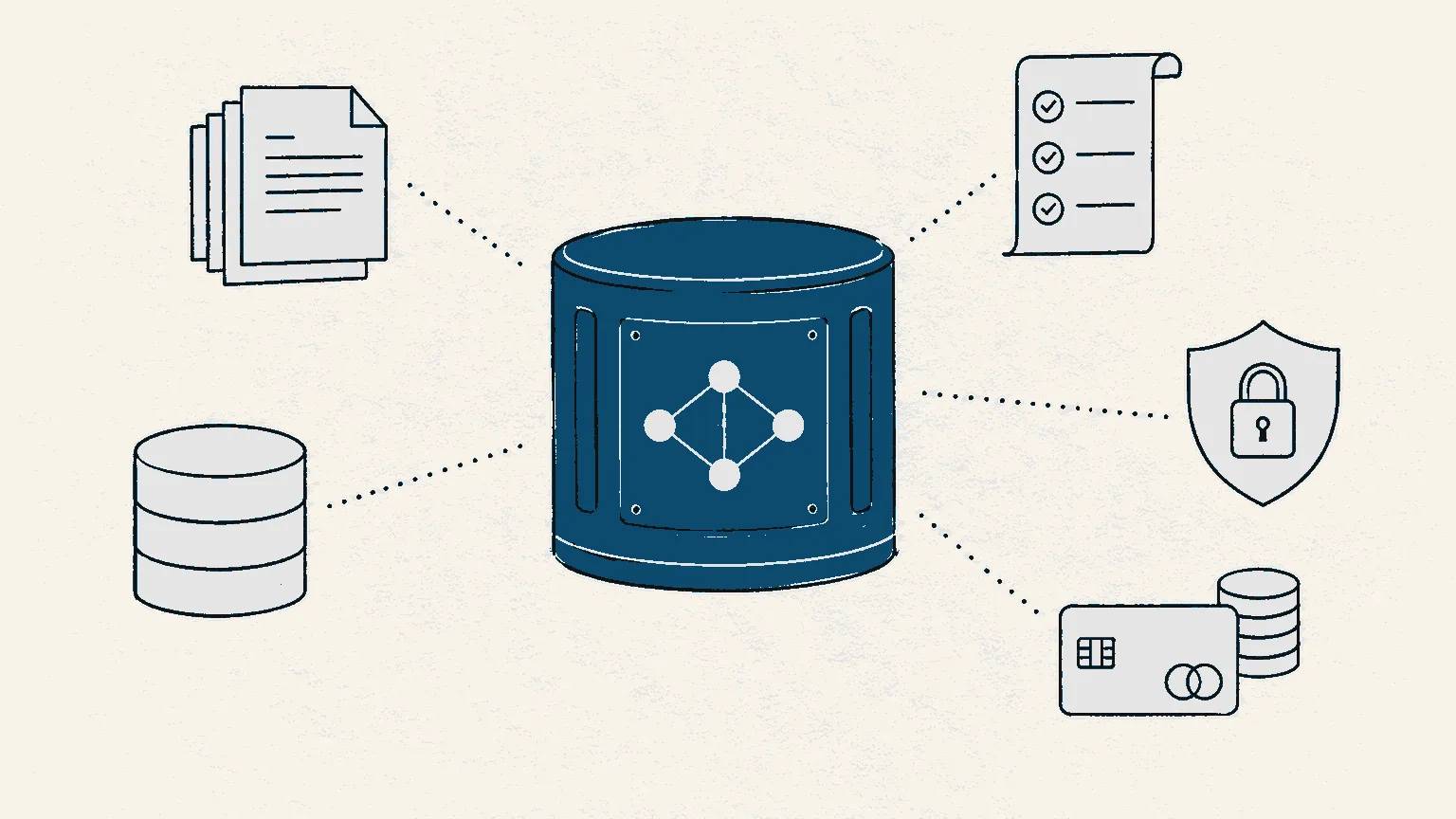
- Using one model does not mean handing the whole system to that model. Information sources, business rules, permissions, and transactions can remain in other parts of the software.
- A single product interface does not prove that only one model is running behind it. Your architecture should follow the work your company needs to do, not the number of interfaces a provider exposes.
Imagine that you are building an AI system for customer support. It must read an incoming message, understand what the customer wants, find the relevant information, and prepare a response.
You could assign each task to a different model. One classifies the message, another writes the answer, and a third checks the result. On paper, that may look like the more advanced architecture.
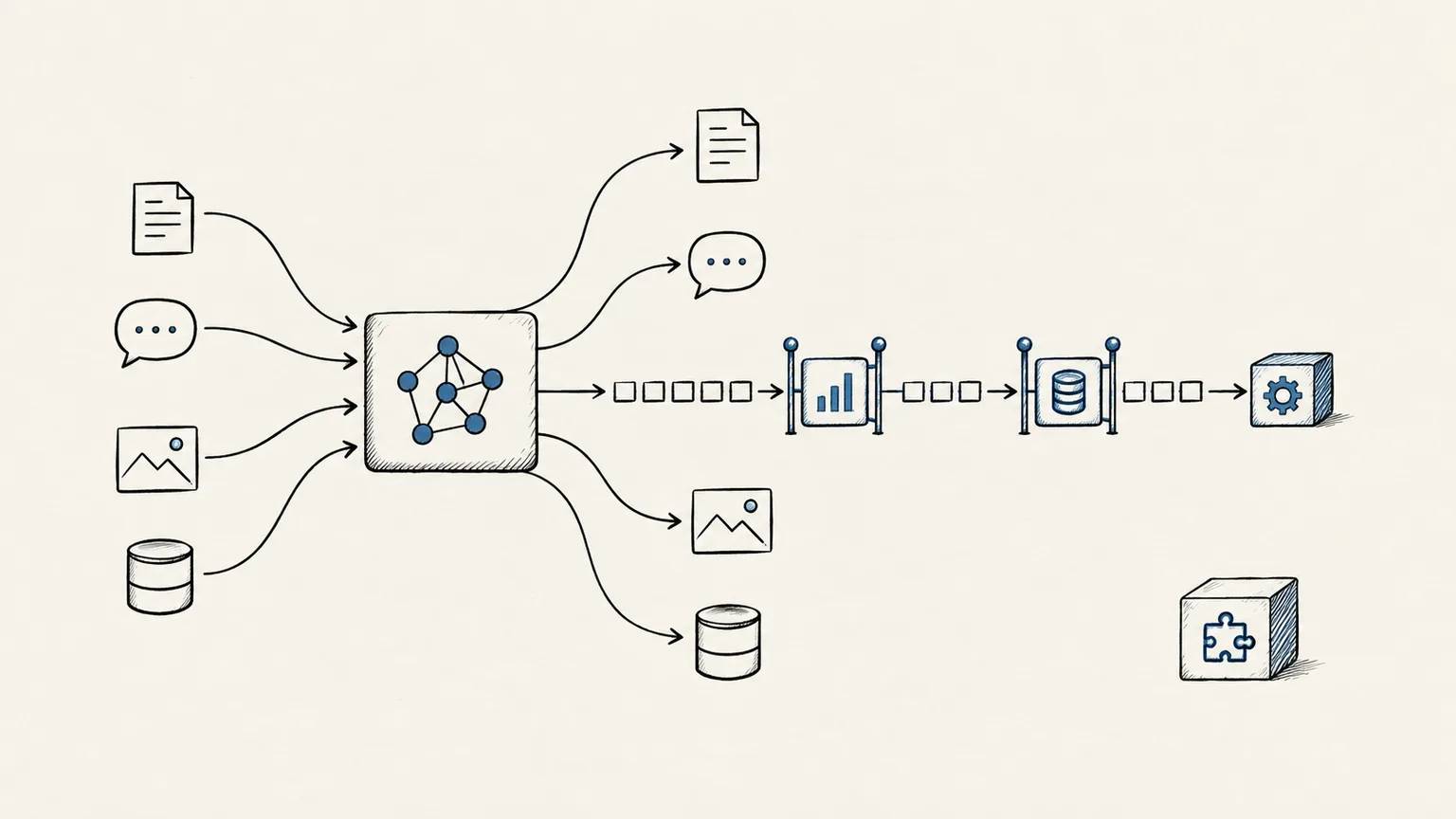
Modern general-purpose models can already perform several of these tasks together. The same model may understand the message, identify a refund request, extract information from a supplied source, and draft a suitable reply.
Would a second model materially improve the system, or would it simply create another component that the team has to operate?
That is the first decision this article addresses: can the system stay with one model, or has a second model earned a place? If you have already established that several models are useful, the next question is which request should go where. I examine when an explicit rule can make that choice and when a separate routing system may be justified in the next article.
One model and one system are not the same thing
First, we need to be clear about what “one model” means.
A user may see one chat window or one API while the provider runs different models behind it. In its GPT-5 system card, OpenAI describes a system with a fast model for most questions, a deeper reasoning model for harder ones, and a routing layer that decides which to use. The product appears unified to the user; the underlying model path is not.
The question for a company is more practical: can one model understand the customer message, interpret the relevant document, and prepare a response at the required level of quality?
In the support example, the answer may be yes. The model understands the message and drafts the reply. A search system finds the product document. An API retrieves the current order. Software applies the refund rule. The authorized payment system moves the money.
Those components are not all separate AI models. Starting with one model does not mean forcing every source of information, rule, and authority into the model itself.
A general-purpose model can be a strong baseline
One model is a useful baseline when it performs a group of related tasks well enough. If the same model can understand the message, extract the necessary information, and write the response, splitting those jobs across models from the outset may add little value.
The team has one input and output contract to maintain. Model changes require a smaller evaluation surface. When something goes wrong, there are fewer model boundaries to inspect and fewer versions whose behaviour must remain compatible.
As general-purpose models improve, they can also absorb work that previously required a separate component. In a 2026 study of business-document understanding, researchers compared vision-language models with pipelines that first use optical character recognition, or OCR. OCR converts text in a scanned document into machine-readable text. For some of the documents and models tested, the vision-language model produced comparable results directly from the page image, without that separate stage.
That does not make OCR obsolete. Handwriting, multiple languages, poor scans, or a process where one wrong character has serious consequences may lead to a different result. It does show why a specialist component should not remain in the architecture merely because it used to be necessary.
I previously explained why an AI project should begin with the business outcome rather than model selection. The same order applies to model count. First define what the work requires, where the current approach falls short, and which improvement would matter.
When does a specialist model earn its place?
A general-purpose model is a sensible starting point. It is not always the right final design.
Suppose the support system receives millions of messages each month. Most belong to ten stable categories such as refunds, delivery, payment, and membership. A small model trained specifically for that classification task may deliver the same accuracy much faster and at a lower cost. It now has a narrow responsibility and a measurable reason to exist.
A 2025 study covering eight text-classification tasks found that small task-adapted models could match or outperform large general-purpose models on some tasks. The amount of training data required varied substantially by task. The finding does not mean that smaller models are always better. It means that specialization can create measurable value when the work is narrow and repetitive.
For some problems, a general-purpose language model is not the natural starting point at all. A forecasting model may be better suited to predicting next month's sales. An optimization method may be the right tool for choosing delivery routes. A language model can explain the result or help interpret exceptions, but it should own the underlying calculation only if it can outperform the established method.
In the fine-tuning article, I separated information, explicit rules, and patterns that must be learned from examples. The distinction continues here. A specialist model is not useful because a company wants the model to “know” its documents. It becomes useful when evidence shows that it performs a defined job better than the general model.
Do not judge the second model by its price list alone
A cheaper model does not automatically make the full system cheaper. A second model brings its own integration, evaluation examples, monitoring, error handling, and version management. If employees have to correct more of its mistakes, the apparent saving in the provider's price table may disappear quickly.
Processing one hundred requests cheaply is not enough. How many produced a usable result? How much human time went into correcting the failures? What does each usable result cost after the model, integration, and control work are included?
| Reason to add a second model | Evidence to look for |
|---|---|
| Better results | A durable improvement on representative work, especially in error types that matter to the business |
| Lower cost | Total cost per usable result, including integration, evaluation, and ongoing operation |
| Higher speed or capacity | Latency and throughput during peak demand |
| Data kept in a particular environment | Evidence of where data is processed, stored, and accessible |
| Resilience during an outage | Prior testing on the same workload with acceptable quality maintained |
Without evidence in at least one of these areas, the extra model is closer to an assumption than a solution.
More models create more responsibility as well as more options
Return to the support system with three models. The first may classify the request incorrectly. The second may produce the wrong response even with the right category. The checking model may then reject a correct answer. When the final result is poor, the team must inspect the answer and the handoffs between models.
Updating one model can change its relationship with the other two. Input formats, failure behaviour, and cost tradeoffs need to be tested again. Adding another provider can improve resilience in theory. A fallback that has never handled real requests is still an untested uncertainty on the day of an outage.
When I wrote about company dependence on AI providers, I argued that portability is not merely a matter of API compatibility. The alternative must preserve the required business outcome. A multi-model design does not remove that responsibility. It makes the question appear more often.
Anthropic makes a related point in its engineering guide to building effective agents: start with the simplest approach that works, and add complexity only when it creates measurable value. The guide does not prescribe a model count. It places the burden on the team adding complexity to show why that complexity is necessary.
For work that understands messages and documents and prepares responses, beginning with one capable general-purpose model is often reasonable. A second model should enter the system only when the team can show which problem it solves, what it improves, and why the benefit is worth the additional operating burden.
If removing a model from the architecture does not change the business result, it is worth asking why that model is there.
You can find the other decisions about models, information, authority, and evaluation in the guide to designing an AI system for your business.
If this article was useful
Linking to it from a relevant page on your website or sharing it on social media genuinely helps it reach more people. Thank you for your support.
Linking and brand guidelines →
A small experiment
Loading personal metrics…