Writing with AI Means Thinking About Your Archive, Too
Written by Evren BalPublished · 6 min read
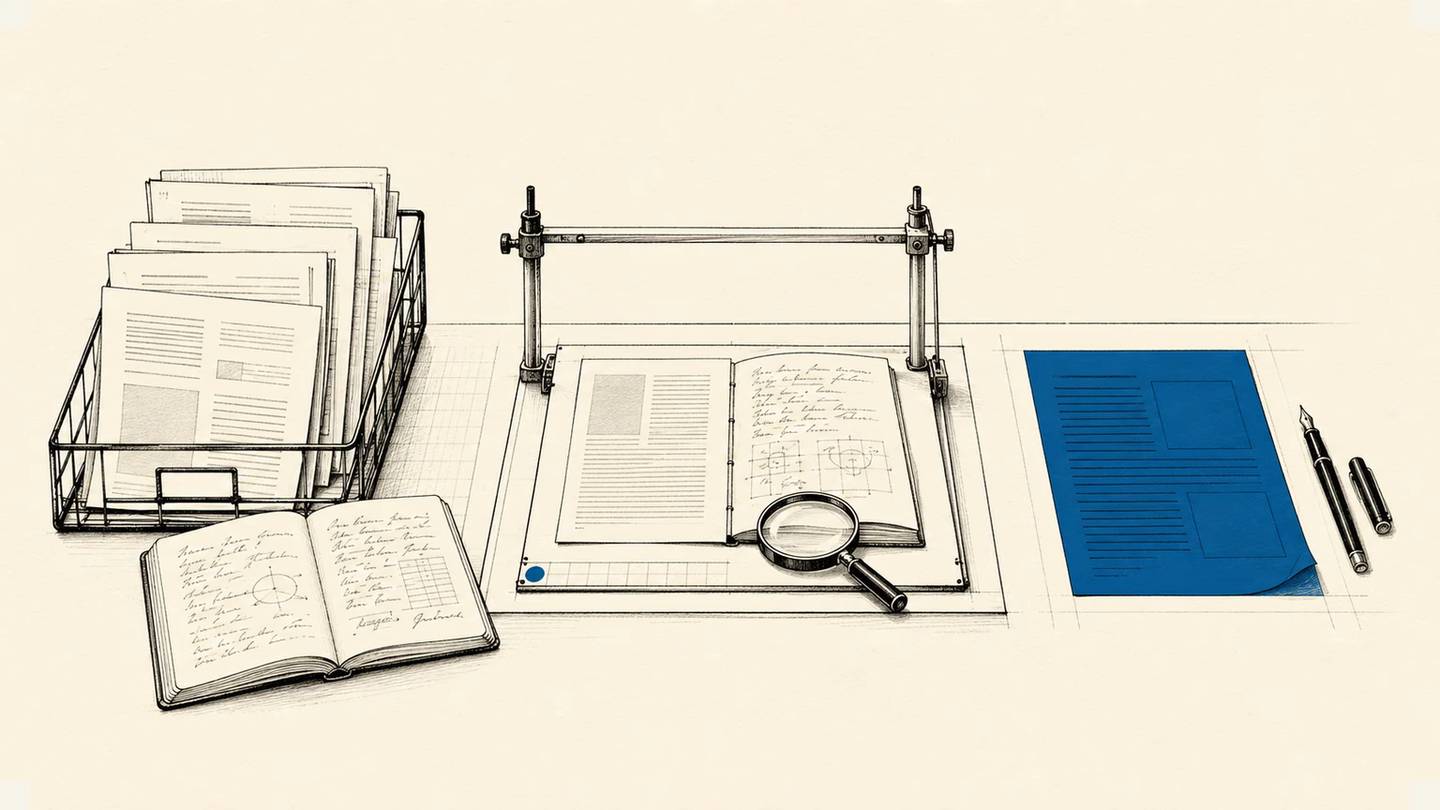
In a recent Platformer article, Casey Newton describes turning his reporting archive into an AI-assisted knowledge base. Taking inspiration from an idea by Andrej Karpathy, he processed old articles into connected Markdown pages about people, companies, and concepts. When he starts reporting on a new development, those pages help him recover the earlier story.
The system extends beyond the archive. Newton saves new reporting as it arrives, and a script on his computer brings it into the wiki. Old context and new developments can therefore meet in the same place. He is also clear that he still opens the original source before relying on a detail.
What I found most useful was the restraint in his account. The experiment has helped his own work, but he does not present it as a finished system for everyone to copy. Pages grow too long, code breaks, and AI-generated text has to be made readable. The maintenance work is part of the story, not an inconvenient detail left out of it.
My own website is not an automatically generated wiki. But the underlying need feels familiar: when I use AI to prepare an article, I do not want the work to begin with only the prompt I wrote that day and the sources I happened to read that week. I want earlier articles and the reasoning behind them to remain available as I work.
The published site sits on an editorial workspace
The published articles on this site live as Markdown files. Nuxt Content turns those files into pages. Each one carries practical information such as its date, language, subject tags, and draft status; I can work with the file itself rather than entering a separate content-management interface.
I also use AI while researching sources, weighing article ideas, developing drafts, and editing the text. Alongside the published material, a separate editorial workspace holds research notes and article briefs. Those notes can record what a source actually supports, the limits of a claim, and the angle I intend to take.
That distinction matters. A published article is the version of an idea I decided to put before readers. A research file may contain the trail that led there: an unresolved question, a useful objection, or a source whose claim I chose not to adopt. When a new piece of research appears, that context can be more useful than the article title alone.
Keeping these materials in a form that both I and an AI tool can read lets the archive inform the next piece of writing. It does not make the right connection automatically. The relevant files still have to be found and read. But the material is available when I need to bring it into a new article.
“I have already written about this”
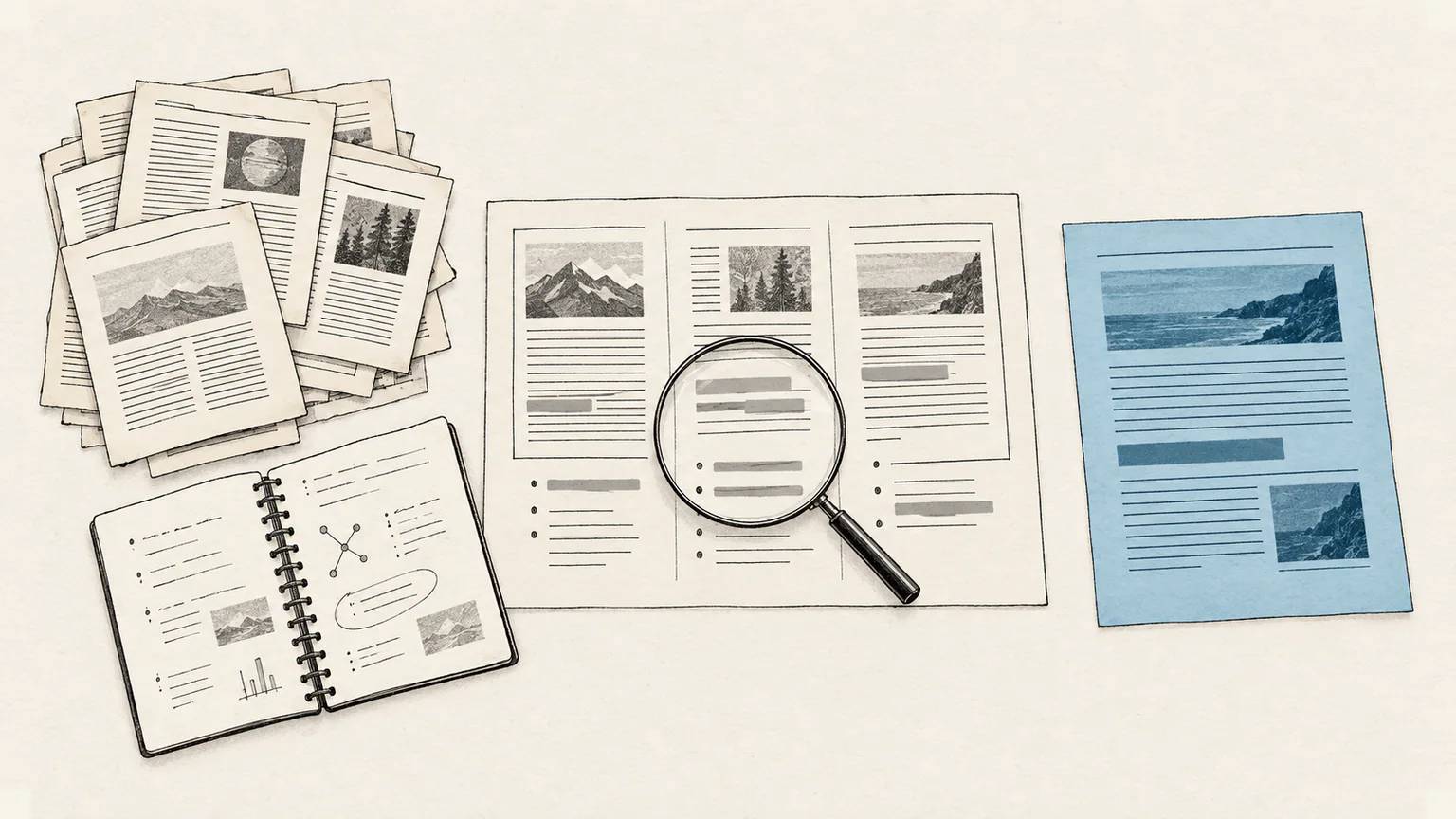
That need came up while I was reviewing newly published pieces from sources I follow. One proposed topic reminded me of an earlier article, Who Captures the Productivity Gains from AI?. Instead of treating the new source as an automatic prompt for another article, I asked whether it brought a genuinely different fact or perspective to the argument I had already made.
The earlier article examines why an employee or a service provider who becomes more productive with AI does not necessarily receive the economic benefit. It looks at the difference between salaried work and hourly billing, and asks who captures the initial gain. Not every subsequent article about “AI and productivity” is therefore a new editorial opportunity for me.
If a new source makes the same point through another example, a second long article may add little. If it identifies a condition I left out, the older article may deserve an update. If it offers a different explanation, then a new piece that refers back to the first can be worthwhile. Each choice depends on what the two texts actually say.
Finding a file is only the first step. A search for “productivity” can surface relevant material, but two articles with similar vocabulary may still make different arguments. I expect more from AI assistance than a few automatically inserted links to old posts. The connection has to matter to the new line of thought.
This does not mean every article should assume that its reader has worked through the entire archive. A short explanation may be necessary again, with a link for readers who want the fuller argument. The point is to avoid presenting a conclusion as a new discovery when I have already examined it at length under a different headline.
A research note is not the same as my view
There is another boundary in how I want AI to use older material. Saving a source author's argument because it is interesting is not the same as endorsing it in my own writing. A research note, a draft, and a published article do not carry the same authority simply because they happen to sit in the same repository or use the same words.
A new source may challenge an earlier view. In that situation, I do not want AI to smooth the disagreement away simply to produce a consistent voice. The useful question is whether the new claim and the earlier reasoning can be assessed together. If something changes my mind, saying so is more valuable than pretending I have always held the same position.
This is why the purpose and provenance of a file matter alongside its text. An index can make material easier to retrieve, but it cannot decide on its own whether a claim belongs to a source, a working hypothesis, or my published position.
The current setup is enough for now
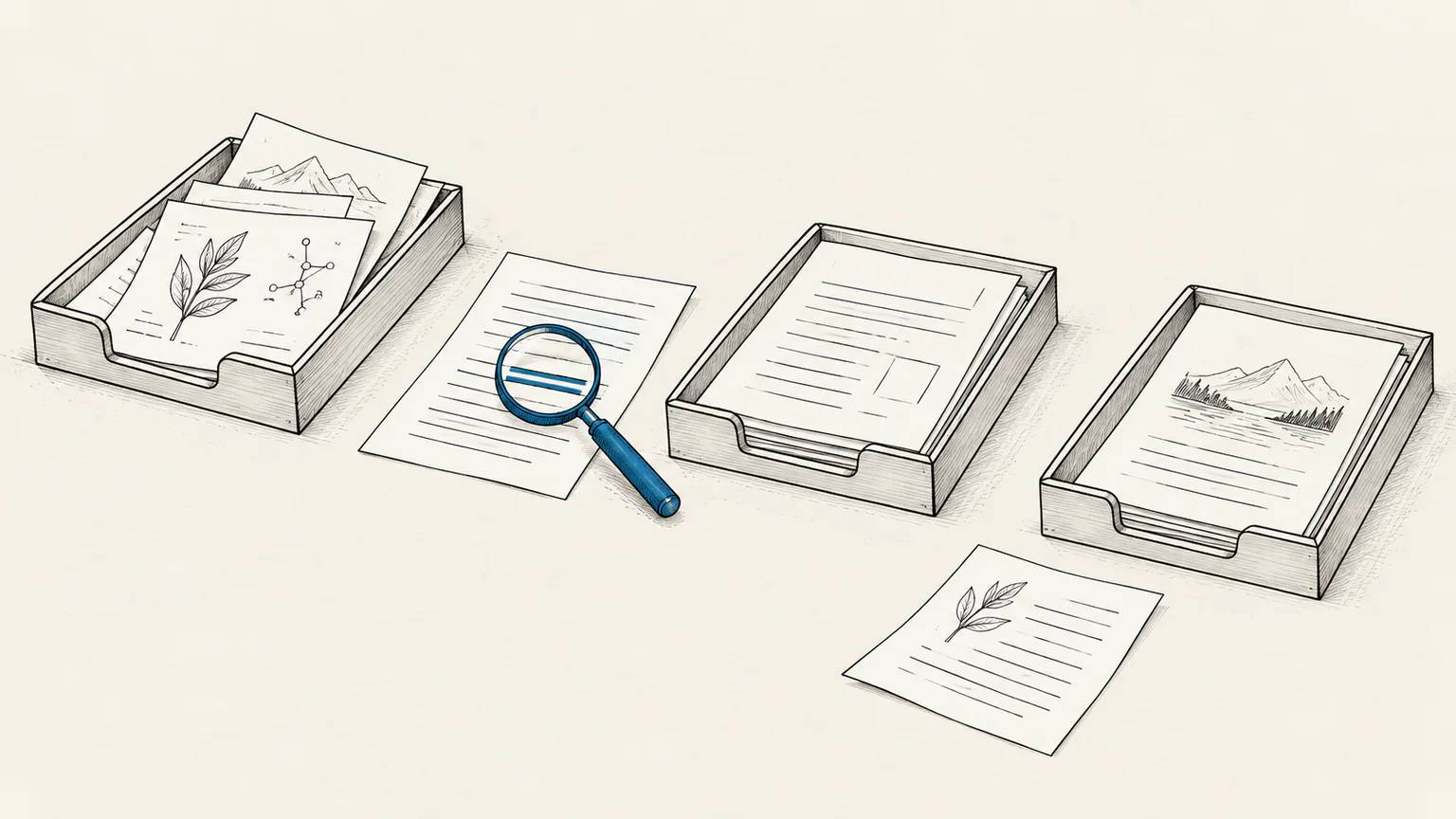
I have not yet encountered a serious problem caused by the size of the archive. The current structure is sufficient for the site at its present size. For a personal blog, I do not see a reason to begin by building a comprehensive retrieval system or a vector database just because AI is involved.
If finding related articles or connecting research notes becomes difficult, I would first identify where the friction actually is. A simple full-text search, more consistent metadata, a small database, or a script that builds an index may be enough. None of those options requires abandoning Markdown as the primary home for the writing.
The more immediate question is whether the system helps me make better editorial decisions. A good source does not always justify a new draft. Sometimes it belongs in an older article; sometimes it changes the frame for the next one; sometimes it confirms that I have already said what I have to say. AI research support should help with that decision as much as it helps produce more text.
If this article was useful
Linking to it from a relevant page on your website or sharing it on social media genuinely helps it reach more people. Thank you for your support.
Linking and brand guidelines →About this article
- Use of artificial intelligence
- AI-assisted — This article is based on Evren Bal’s views and working experience. AI-assisted tools were used during the research and editorial development process.

A small experiment
Loading personal metrics…