CIO, CTO, and IT Director: What the Title Misses
Written by Evren BalPublished · 13 min read
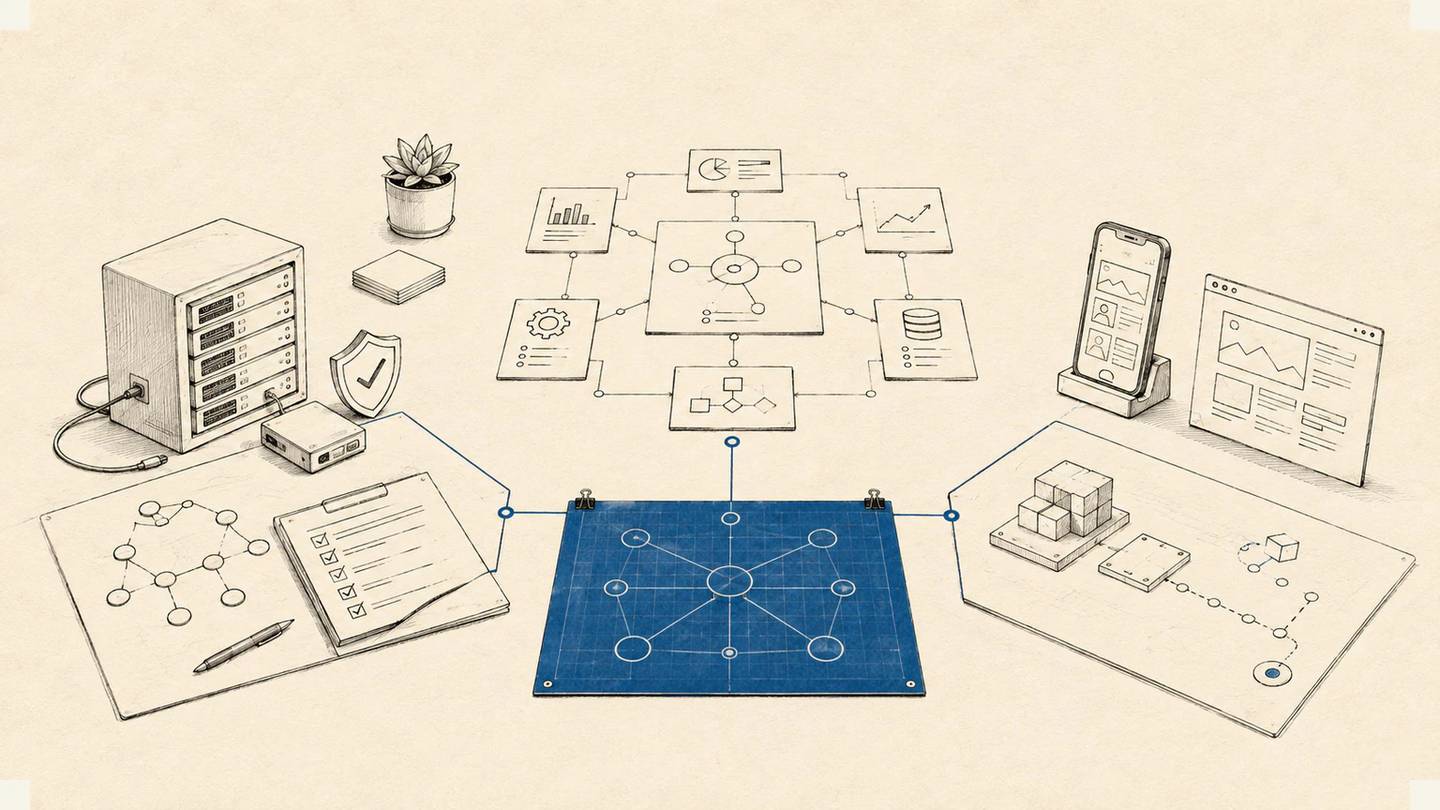
You may meet a CTO whose week is filled with ERP issues, firewall rules, licence renewals, and laptop purchases. At another company, that work falls to an IT manager. At a third, the IT Director takes part in board-level discussions about data priorities and digital transformation, carrying CIO responsibility whether the title says so or not.
Judge these people by their titles alone and you can draw the wrong conclusion. You may assume that a CTO must own product development, that a manager must run a narrow operation, or that an IT Director sits one level below a CIO. None of that is printed on a business card.
Knowing the difference between a CIO and a CTO is useful. Understanding a technology leader's actual role also requires looking at their mandate, their decision authority, and the outcome the company expects from technology.
That is the more useful starting point: what is this person's responsibility, and what does the company use technology for?
One title, a different mandate
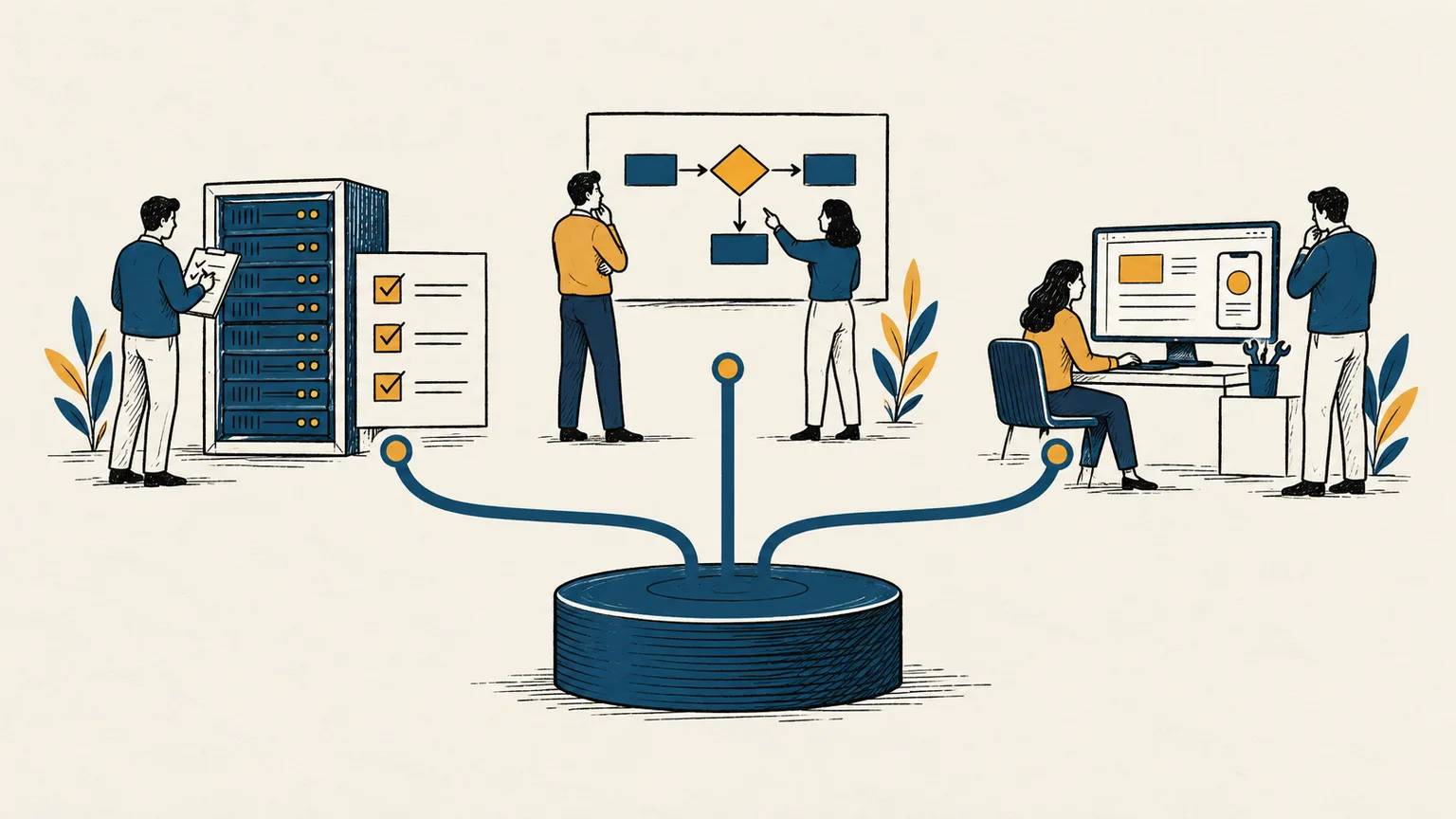
IT Manager, IT Director, CIO, CTO, Technology Director: there is no universal mapping between these titles and a fixed set of responsibilities. Even companies in the same group can use the same title for different responsibilities.
That mismatch can reflect how a company evolved. Imagine a team that originally managed computers, networks, and accounting software. Over time, ERP, customer data, ecommerce, and process automation are added to its remit. The role and its responsibilities have changed. The title and decision authority may not have kept pace.
The reverse is possible too. Someone may be called CTO while their mandate and budget authority remain concentrated in internal IT operations. Calling that person “not really a CTO” does not explain much. It is more useful to understand what the company has placed under that title.
Nor does attending an ERP meeting define a CTO's role. In smaller organisations, everyone may need to get involved in day-to-day work. A Tuesday calendar is not a job description. The questions that matter are where someone has final authority and which outcomes they are accountable for.
That makes a few questions more useful than the title itself:
- Who do they report to? Are they present when strategy is set, or brought in after decisions have been made?
- What does their budget cover? Do they manage approved spending, or can they set priorities between investments?
- Which teams report to them: internal IT, enterprise applications, data, product technology, software engineering?
- If they are responsible for digital transformation, can they change processes with business units?
- How is success measured: service quality, better operations, process improvement, or the outcome of customer-facing technology?
The reporting line and the size of a budget are clues. Neither defines the role on its own. An IT leader can report directly to the CEO and still spend most of their time running operations.
Run, transform, build
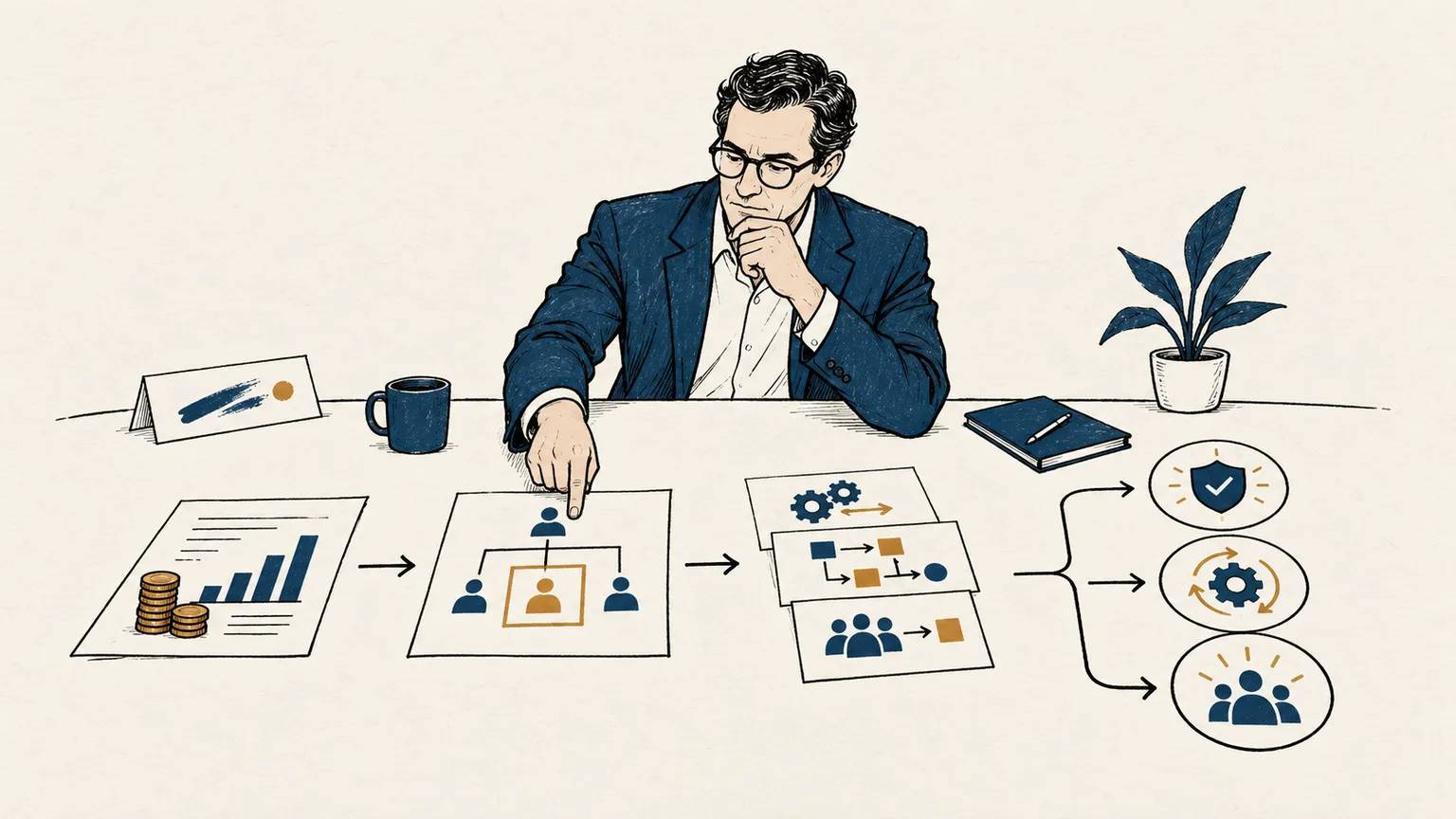
Three verbs make the centre of gravity easier to remember: an IT Director runs, a CIO transforms, and a CTO builds.
They are not universal role boundaries. They are a working model. All three create value, all three can make strategic decisions, and all three depend on reliable systems. “Run” does not mean an IT Director cannot innovate; “build” does not mean the other roles do not create value.
| Role | The central question | Primary focus | Typical responsibilities |
|---|---|---|---|
| IT Director | How do we keep the company's technology working properly? | Reliable operations and service quality | Infrastructure, enterprise-application operations, security operations, teams, and vendors |
| CIO | How do we use technology to run and change the company better? | Business processes, information, and investment priorities | Technology and data strategy, enterprise architecture, transformation, and governance |
| CTO | What do we build with technology, and how does it create an advantage? | Product, platform, and technical capability | Product technology, engineering organisation, architecture, and technical roadmap |
The difference between running a company's technology and changing how it operates is the starting point for this table. The more important distinction is which decisions each role makes about the same technology.
IT Director: responsible for keeping work moving
The IT Director is responsible for making the company's IT operation reliable, secure, and manageable. Infrastructure, networks, systems, ERP and CRM operations, user support, and security operations may all sit within the role.
The management side includes vendors, licences, budgets, service-level commitments, and the team's capacity. Backup and business continuity belong here too. A backup that appears to have run and a restorable backup are not the same thing.
It is a mistake to reduce this work to “daily technical tasks.” If orders cannot be processed because no one can access the ERP, keeping technology running is a direct business outcome.
In a large organisation, an IT Director may lead across locations, a broad application portfolio, and several managers. They may decide how services are delivered, when to use external providers, and which risks are worth reducing at what cost. Those are strategic decisions.
The distinction from a CIO needs care. An IT Director may manage the operational risk of an ERP migration. A CIO brings the case for the migration to management: why it is needed, how it ranks against other investments, and what business units must change. One person can hold both responsibilities.
CIO: how technology investments change the company
CIO stands for Chief Information Officer. What distinguishes the role is how technology and information shape the way the company is run.
ERP, CRM, and data platforms may all be on a CIO's agenda. But the conversation is not limited to implementation and licences. Why do sales and finance keep different customer records? Which decision cannot rely on the stock data available today? What cost does one business unit's requested system impose on the rest of the company?
A CIO's technology strategy connects those questions to company priorities. Enterprise architecture establishes how systems and data work together. Data strategy and analytics determine which information supports which decisions. Governance makes clear who decides what, how risk is managed, and how investments are assessed.
An ERP can work without incident while management still lacks a dependable view of inventory. If different warehouses record the same movement in different ways, a new server will not solve the problem. Data-entry practices, process, and ownership need to change. This is where the CIO's relationship with business units becomes decisive.
That is why defining a CIO as a more senior IT Director misses the point. Setting investment priorities across the company and managing change between business units requires a different kind of authority.
The CIO cannot make that change happen alone. Finance, sales, or operations must own their processes. Giving a CIO responsibility for transformation while ruling out any change to how business units work separates responsibility from authority at the outset.
CTO: the technical side of the promise to customers
CTO stands for Chief Technology Officer. In a product- and platform-led organisation, the CTO determines what the company will offer through technology and how it can deliver and sustain that service.
Software engineering, architecture, the technical roadmap, and platform decisions can sit at the centre of the role. Can the system handle increasing usage? Can the team deliver a new feature without degrading the existing service? Which technical dependency is constraining product evolution? These are business decisions as much as technical ones.
Developer productivity cannot be measured by lines of code alone. The ease with which a team can ship reliable changes affects how quickly a product can evolve. That is where the CTO's responsibility for building an engineering organisation begins.
A CTO does not need to develop a SaaS product. A hospital's digital patient experience, a bank's customer platform, or a retailer's proprietary ordering system can fall within a CTO's remit. Technology may not be sold as a standalone product, yet still be part of the service promised to customers.
Reducing the CTO to the manager of a software team therefore misses the role. The CTO is also responsible for how decisions about product, platform, and engineering capacity affect the company's ability to compete.
“Build” does not mean building everything in-house. Buying a component that does not differentiate the company may leave engineering time for work that does. The CTO needs to see what that choice means for the product, cost, dependencies, and future change.
The distinction changes with the company
At a SaaS company, the CTO's remit can largely overlap with the core business. The product, the service customers receive, and the ability to keep generating revenue depend on the same technical system. There may be no CIO. Employee devices and internal applications may sit with a separate, small team.
At a bank or a large holding company, the CIO and CTO may be different people. The CIO may lead enterprise IT, shared data standards, and transformation investments while the CTO focuses on technology platforms and engineering. In some structures, the CTO reports to the CIO and leads infrastructure and architecture. “The CTO owns the customer” does not explain every one of these organisations.
It is also possible for a CIO to have several IT Directors. One may own infrastructure, another enterprise applications, and another a region or group company. The hierarchy is real there. It cannot be transferred automatically to the same title at another company.
At a manufacturing company, ERP, plant systems, production data, and integrations can put the CIO or IT Director in a highly central position. If there is a CTO, the remit may move toward product technology, R&D, or production methods. It may extend beyond software. How plant systems are shared between IT, operations, and engineering needs separate attention.
In a company of around one hundred people, one executive may carry much of the IT Director, CIO, information-security, and digital-transformation work. If the company develops a product, CTO responsibility may be added as well. The number is an illustration of scale, not an organisational rule.
Combining roles in one person is not inherently wrong. The need to separate them depends less on headcount than on complexity, risk, and decision load. When operational interruptions consistently crowd out transformation work, or nobody can make a decision about product architecture, the current allocation may no longer be enough.
Who owns AI?
AI makes these boundaries more visible and, at times, more blurred. The same technology can make an employee's work easier and become part of the service offered to customers.
If the aim is to improve employee productivity, automate internal operations, or improve decision quality, the CIO's area comes to the foreground. Who changes the workflow, how employees move to the new way of working, and how the result is measured matter more than the model alone.
Enterprise access, licences, integration, and service operation may fall to the IT Director's team. Company-wide data use, security, and AI governance are also shared CIO and IT concerns. Information security, legal, and the relevant business units cannot be left outside these decisions.
If AI is part of the product offered to customers, the CTO's responsibility expands. An AI platform or model built for the product makes engineering, architecture, quality evaluation, and operating cost part of the technical roadmap. In another organisation, however, a CIO's team may build an internal AI platform.
Consider an AI system that responds to customers. The CTO's team may develop the product behaviour and technical structure; the CIO may coordinate integration with enterprise data sources and business processes. The IT team may own access and operation, while the relevant business unit owns the promise made to customers.
That example is not resolved by naming one title the owner of AI. A leader must be accountable for the initiative's outcome. The responsibilities for data, process, security, and technical operation must be assigned clearly alongside that leader. Working together does not mean leaving ownership ambiguous.
As with starting an AI project with the business problem rather than model selection, responsibility design should not begin with the tool. First define the work that needs to change. Then establish which authority, team, and controls that change requires.
Which responsibility is missing in your company?
It is easy to start a hiring discussion by saying, “We need a CTO.” A better first step is to write down which decision cannot be made today, or which work has no owner.
If technology investments are scattered, every business unit chooses its own systems, and ERP, CRM, and data have drifted apart, CIO responsibility is needed. The same is true when nobody owns digital transformation or connects the technology budget to business outcomes.
The person needed is not simply someone who has managed large projects. They need to set priorities with business units and, when necessary, argue for postponing an investment or not making it at all. Leadership needs to make room for that authority. Otherwise, a new CIO will continue managing accumulated requests under a more senior title.
When infrastructure and IT operations have grown, and vendor and team management have become difficult, the need for an IT Director becomes clearer. Repeated outages, unclear security ownership, and compliance obligations that are not being met can point to the same need. A CEO or CIO trying to make time for strategy may need an operations-focused technology leader with authority to make day-to-day decisions.
Measuring success in that role only by cost reduction can be misleading. A cheaper contract that causes longer outages or excessive dependence on one vendor may increase the company's overall risk.
When software and platforms have become part of the value offered to customers, CTO responsibility becomes more important. If the engineering organisation is growing, architecture decisions are constraining product development, or rising demand is harming service quality, someone needs to own the technical direction. If the company wants to differentiate through technology, someone also needs to define which capability creates that advantage.
These are not automatically three separate job advertisements. Expanding an existing leader's authority, appointing a second operations leader, or outsourcing appropriate services may be sufficient. When the problem is unclear responsibility, solve that first.
A useful starting point is a one-page role definition: What problem will this person solve? Which decisions can they make? Which teams will they lead? Are they responsible for technology's internal use, for creating new customer value through technology, or for both?
Set the budget and success measures alongside those answers. You will have a usable role definition. Write the title at the top of the page last.
Further reading
- IBM Institute for Business Value: The CTO Revelation. Useful for examining how CIO and CTO responsibilities are distributed across different organisations. It is a global executive study from 2021, not a current job standard for every organisation.
- AWS: CTO, the evolving role of the Chief Trade-Off Officer. Discusses the CTO's role in architecture, team autonomy, and build-versus-buy decisions. It is a 2023 executive perspective from a cloud provider, not an independent organisational standard.
If this article was useful
Linking to it from a relevant page on your website or sharing it on social media genuinely helps it reach more people. Thank you for your support.
Linking and brand guidelines →About this article
- Use of artificial intelligence
- AI-assisted — Evren Bal supplied the central thesis, examples, and editorial choices. AI assisted with drafting and adapting this English version from the approved Turkish article.