Headless CMSs: An Overview of Popular Alternatives to Contentful and WordPress
💡 Quick Summary (TL;DR):
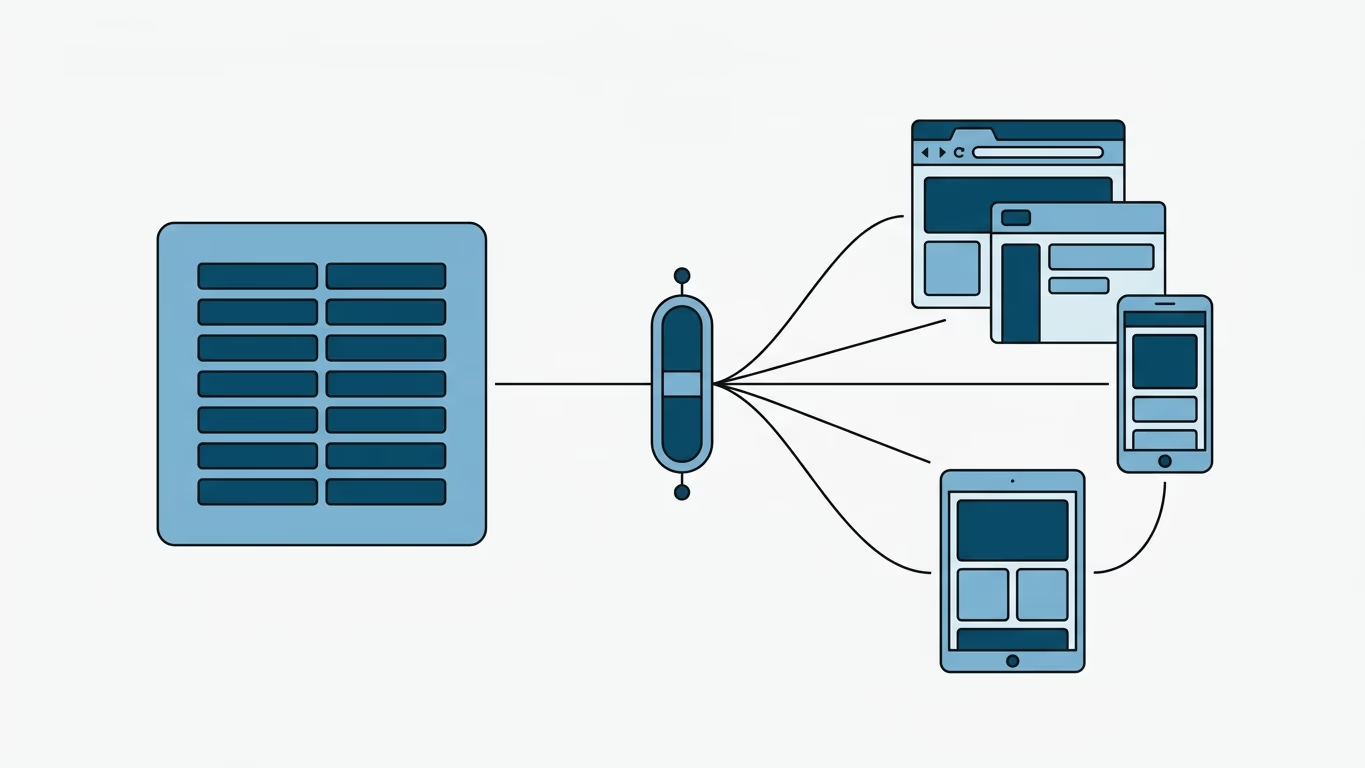
- Headless CMS Concept: Decouples content creation (backend) from the presentation layer (frontend), delivering content via APIs (REST or GraphQL).
- Open-Source Freedom: Self-hosted solutions like Strapi and Headless WordPress give developers complete control over data ownership and infrastructure costs.
- Proprietary SaaS Alternatives: Closed-source services offer managed environments but require subscription fees and lock you into their cloud ecosystems.
Headless CMSs have grown in popularity in recent years as more and more companies have moved towards a decoupled architecture for their websites and applications. These systems allow for greater flexibility and scalability, as the frontend and backend are not tightly coupled, and the content can be easily repurposed for different channels such as websites, mobile apps, and IoT devices.
While Contentful and WordPress are among the most popular headless CMSs, there are many other options available that offer unique features and capabilities.
Popular Headless CMS Comparison
| CMS | Hosting Model | Primary API | Open Source? | Best For |
|---|---|---|---|---|
| Strapi | Self-hosted / Cloud | REST / GraphQL | Yes | Developers needing self-hosted control |
| WPGraphQL (WordPress) | Self-hosted | GraphQL | Yes | Migrating traditional WP to Jamstack |
| Contentful | SaaS (Cloud) | REST / GraphQL | No | Enterprise, Multi-brand setups |
| Sanity.io | SaaS (Cloud) | GROQ / GraphQL | No | Real-time collaboration, Custom Editors |
| Hygraph | SaaS (Cloud) | GraphQL (Native) | No | Highly structured/relational content |
1. Open-Source Headless CMS Options (Recommended)
For projects that require absolute control over data ownership, custom database architectures, and no licensing fees, open-source self-hosted options are the ideal choice.
Strapi
Strapi is a highly customizable, open-source, Node.js-based headless CMS. Since it is self-hosted, you retain complete ownership of your database (supporting PostgreSQL, SQLite, MySQL, and MariaDB) and can deploy it on any server (AWS, DigitalOcean, Heroku, etc.). It generates both RESTful and GraphQL endpoints automatically and features an intuitive admin dashboard with role-based access controls.
- Official Link: https://strapi.io/
Headless WordPress (via WPGraphQL)
WordPress is the most popular content management system in the world, and it is frequently decoupled to act as a headless CMS. In this architecture, the familiar WordPress admin dashboard is kept for content editors, while the frontend is built from scratch using frameworks like Nuxt, Next.js, or Astro.
Rather than using the standard REST API, developers recommend using WPGraphQL, an open-source plugin that exposes a schema-driven GraphQL endpoint, allowing for much more efficient data retrieval and relation mapping.
- Official Link: https://wpgraphql.com/
2. Proprietary SaaS Alternatives (Closed-Source)
If you prefer a fully managed service and want to avoid maintaining database servers, several commercial SaaS providers are available. These systems are proprietary and operate on subscription pricing:
- Contentful: A cloud-based headless CMS popular in enterprise projects. It provides robust content modeling options and global CDN delivery, but licensing costs can escalate quickly for larger teams.
- Sanity.io: A SaaS platform featuring a customizable React-based editor dashboard (Sanity Studio). It supports real-time collaborative editing and queries via GROQ or GraphQL.
- Hygraph (formerly GraphCMS): A GraphQL-native SaaS platform designed for complex applications that require rich, highly relational content structures.
- Prismic: A SaaS CMS focused on marketing-heavy sites. It uses reusable visual blocks (called "Slices") to allow non-technical editors to assemble layouts easily.
- ButterCMS: A lightweight, SaaS-based blog and content engine designed for fast integration into existing websites.
Note: Since these SaaS options are proprietary, you do not own the backend code, and your project's scaling costs will depend entirely on their api quota and user seat pricing.
Frequently Asked Questions
What is a headless CMS?
A headless CMS separates the backend content repository (the "body") from the frontend presentation layer (the "head"). Content is stored in the CMS and delivered over HTTP APIs, allowing developers to build any frontend experience they prefer.
What are the main benefits of going headless?
Decoupling content management from presentation provides several benefits:
- Tech Stack Freedom: Developers can use modern frameworks (Nuxt, React, Svelte) instead of PHP templates.
- Omnichannel Delivery: The same API content can power a website, a mobile app, and a smartwatch.
- Security & Scale: Static frontends are significantly harder to exploit than dynamic database-driven CMS instances.
Is a headless CMS more expensive than a traditional CMS?
It depends. While open-source self-hosted solutions like Strapi or Headless WordPress carry only standard server hosting costs, SaaS solutions operate on tier-based pricing. While they offer free developer tiers, enterprise pricing can grow quickly as api traffic, seats, and content records scale.
Can I build a multilingual website with a headless CMS?
Yes. Open-source systems allow you to implement localization using specific translation plugins or manage separate locales directly in your custom data schemas. SaaS options usually provide built-in localization systems as part of their paid features.
Conclusion
Choosing a headless CMS depends on your hosting preferences, team structure, and query languages. For maximum database control and zero license fees, Strapi or Headless WordPress (via WPGraphQL) are ideal open-source choices. If you prefer a managed, zero-maintenance setup and have the budget for SaaS subscription tiers, proprietary options like Contentful or Sanity are viable alternatives.