PHP-ML in a PHP Application: A Bounded Decision Guide
Written by Evren BalPublished Updated · 7 min read
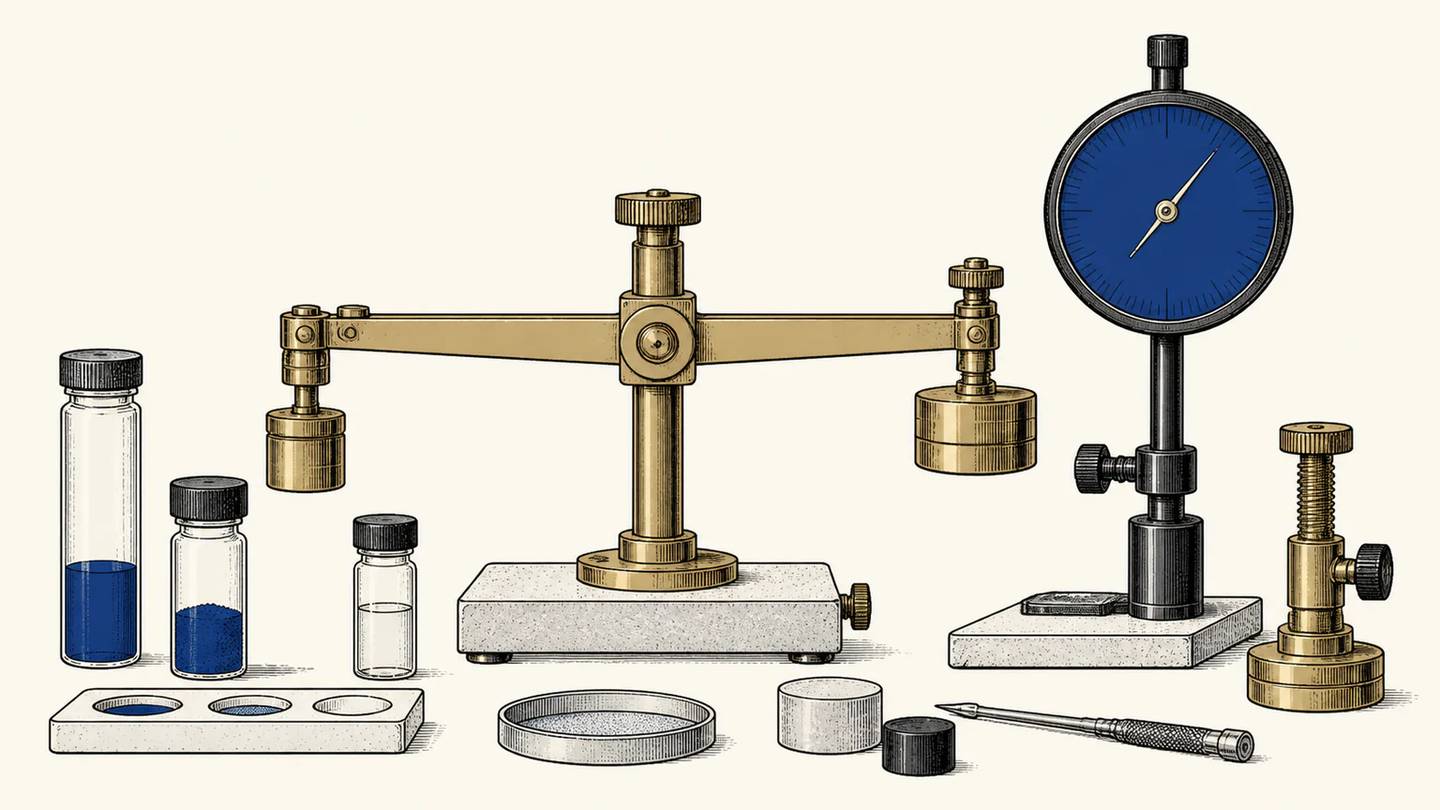
Adding machine learning to a PHP application is rarely a language-choice problem first. It is a decision about the work being improved, the evidence available for that decision, and who will own the model once it affects production behaviour.
PHP-ML can keep a small, well-bounded model close to an existing PHP application. That can be useful when the model solves a narrow task and the team can test, deploy, observe, and revise it within the application's normal operating model. It is not a reason to force every machine-learning workload into the web process.
💡 Quick Summary (TL;DR):
- PHP-ML is a Composer package: Its official package listing documents classification, regression, clustering, preprocessing, feature extraction, evaluation, and model persistence capabilities.
- Use it for a bounded workload: A small prediction or classification task can be a reasonable fit when its data, latency, failure behaviour, and ownership are clear.
- Treat maintenance as part of the decision: The latest tagged release is 0.10.0 from November 2022. Validate it against the PHP version and dependencies you operate; do not infer current suitability from a successful install alone.
- Separate the model path when the boundary matters: If training, model releases, specialised runtimes, independent scaling, or monitoring need their own lifecycle, a separate service or managed API is usually the cleaner operating choice.
Start with the workload, not the library
The useful first question is not whether PHP can run a model. It is what changes if the prediction is wrong, late, unavailable, or no longer representative of current data.
PHP-ML is worth considering when all of the following are true:
- the task is narrow enough to explain and test with representative data;
- the application can tolerate the model's latency and resource use in the chosen execution path;
- model files, features, and the decision threshold can be versioned with an explicit owner; and
- a simpler rule, existing SaaS capability, or process change would not solve the problem more reliably.
For example, a modest internal classification task may belong close to the application if the result assists a human decision and a safe fallback exists. That is different from placing an opaque, high-consequence decision in an HTTP request simply because the rest of the product uses PHP.

What PHP-ML currently provides
The PHP-ML package listing documents classifiers including SVC, k-nearest neighbours, Naive Bayes, decision trees, and ensemble methods; regression, clustering, preprocessing, feature extraction, cross-validation, metrics, and model persistence are also listed. Its current metadata requires PHP ^8.0.
The project's tag list identifies 0.10.0, released on 9 November 2022, as the latest tagged release. That does not prove the package is unusable. It does mean a production decision should include a compatibility check, dependency review, and a plan for what happens if the library no longer fits the application's supported runtime.
Install the package with Composer:
composer require php-ai/php-ml
A small model is still an operating responsibility
The official documentation uses a compact k-nearest-neighbours example. The code below is useful as a feasibility check, not as a production model: the sample data is illustrative, and a real decision needs representative training data, a held-out evaluation method, an agreed error tolerance, and a fallback path.
use Phpml\Classification\KNearestNeighbors;

// Illustrative feature vectors and labels.
$samples = [[1, 3], [1, 4], [2, 4], [3, 1], [4, 1], [4, 2]];
$labels = ['a', 'a', 'a', 'b', 'b', 'b'];

$classifier = new KNearestNeighbors();
$classifier->train($samples, $labels);

$prediction = $classifier->predict([3, 2]);
// 'b'
PHP-ML also documents model persistence. Persisting a trained model can prevent retraining during every request, but it introduces another release artifact to control: record the model version, the feature schema it expects, and the evaluation that justified shipping it. A model that loads successfully can still make poor decisions after its input data or operating context changes.
Choose the boundary that the operation can support
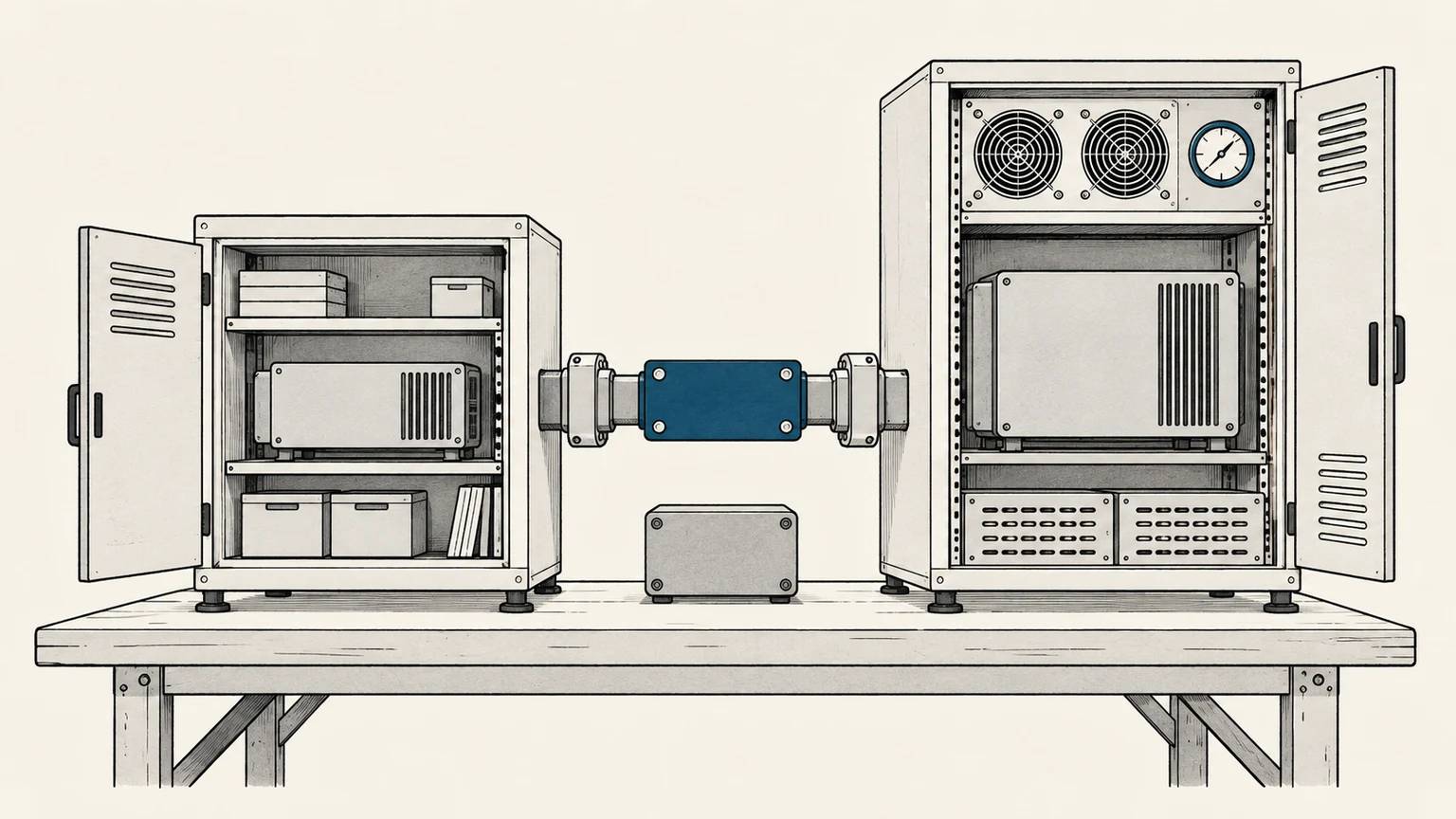
There is no universal hierarchy in which a native PHP library, a Python service, or a cloud API always wins. They move different responsibilities to different places.
| Decision factor | PHP-ML inside the PHP application | Separate model-serving service or managed API |
|---|---|---|
| Deployment boundary | Model code and application release can move together. | Model release can have its own runtime and release process. |
| Failure handling | The application needs a timeout, fallback, and resource budget in its own execution path. | The integration needs an API contract, timeout, retry policy, and degraded-mode behaviour. |
| Scaling | Application and model demand share an operating boundary. | Model capacity can be operated independently when that separation is justified. |
| Change control | Feature schema and persisted model need explicit versioning alongside the application. | API/schema compatibility and model-version rollout need explicit contracts. |
| Team ownership | Works when the application team can evaluate and maintain the model. | Works when model/runtime ownership needs a distinct lifecycle or specialist tooling. |
The table is a decision aid, not a performance benchmark. Measure the actual request path, data volume, error cost, and recovery behaviour before choosing an architecture.
When a separate path is the more responsible choice
Use a separate model-serving service or managed API when the model needs a runtime, deployment cadence, scaling profile, or monitoring practice that should not be coupled to the PHP application's request lifecycle. The same is true when training and evaluation must be performed by a different team or through tools the PHP application should not own.
That choice adds integration work. It needs an interface contract, authentication, request limits, observability, and a failure mode that the product can tolerate. But those are visible responsibilities. Hiding them inside a web process does not remove them.
A practical decision before adopting PHP-ML
Before putting PHP-ML into a production path, answer these questions:
- What operational decision will the prediction improve, and what is the cost of a wrong answer?
- Can a rule, process change, or existing product capability solve the same problem with less risk?
- Which data and feature schema will the model receive, and who detects when that contract changes?
- How will the team evaluate the model before release and observe it after release?
- Does the package's release and compatibility posture fit the PHP runtime and maintenance policy you actually operate?
- What happens when the model, its persisted file, or its dependency fails during a request?
If those questions do not yet have concrete answers, the responsible next step is usually not to add a library. It is to clarify the workflow and decision first.
Further Reading
- PHP-ML package metadata and feature list: The first place to check the package's current PHP requirement, Composer installation details, and supported algorithm families.
- PHP-ML release tags: Useful for checking release cadence and the most recent tagged release before making a production decision. A tag date alone is not evidence of security or quality; it is a signal for assessing maintenance risk.
- PHP-ML documentation: The official reference for examples, model persistence, and evaluation tools. Its examples show what can be implemented; they do not replace production data, the cost of errors, or a monitoring plan.
Changes Made in This Article
- 28.08.2026: Reframed the article as a bounded architecture decision guide; removed unsupported performance comparisons and broad deployment claims; verified current package metadata and release status against official PHP-ML sources; retained the Composer installation and a documented, illustrative classifier example; added operational, maintenance, fallback, ownership, and model-versioning considerations.
- 20.06.2026: Add TL;DR summary box, correct codebase dependencies (remove Python libraries references), add proper code example imports, include a performance comparison table, and fix FAQ redundancy. Added translation link key.
If this article was useful
Linking to it from a relevant page on your website or sharing it on social media genuinely helps it reach more people. Thank you for your support.
Linking and brand guidelines →
A small experiment
Loading personal metrics…