PHP Generators: A Beginner's Guide to Iteration
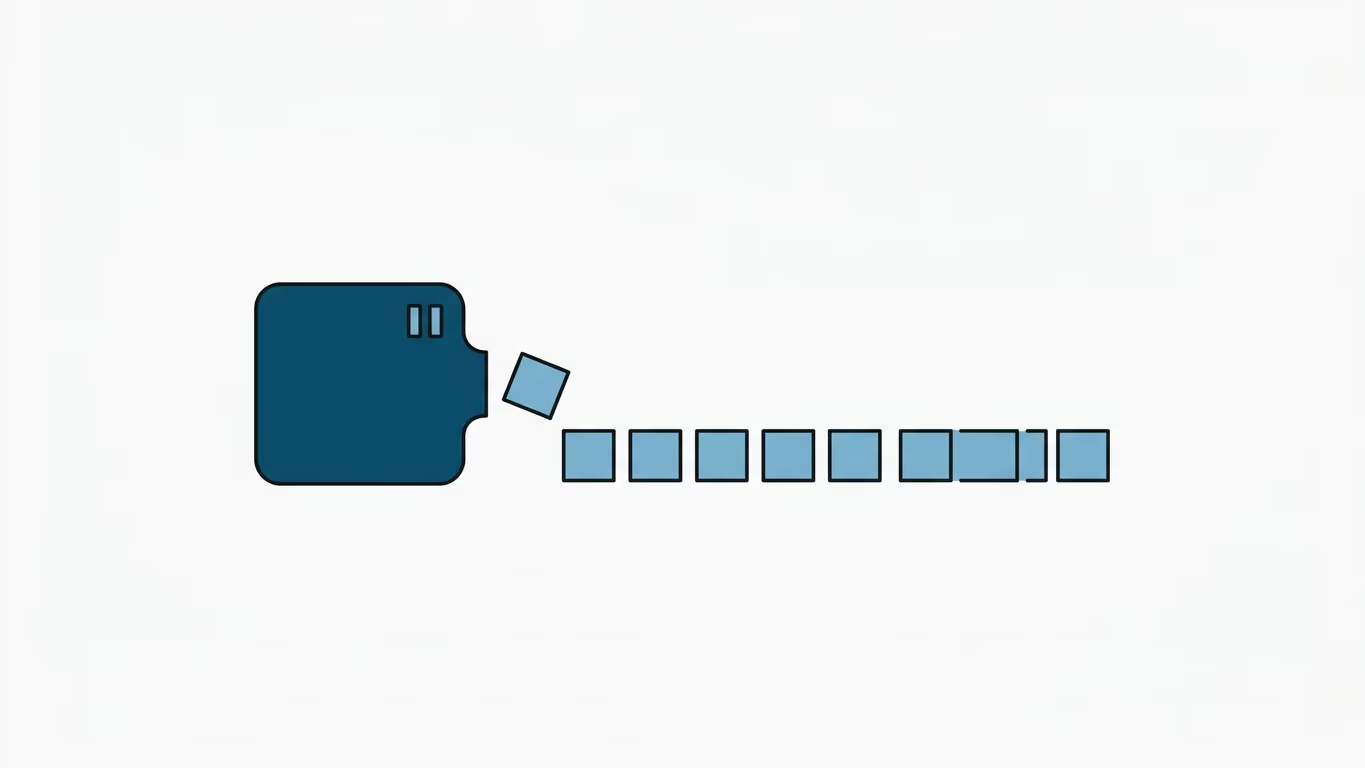
💡 TL;DR:
- What: PHP Generators provide a simple, memory-efficient way to implement iterators without the overhead of implementing the
Iteratorinterface or loading entire datasets into memory.- How: They use the
yieldkeyword to pause execution and return values one-by-one, resuming only when the caller requests the next value.- Use Case: Best suited for processing large log files, database cursors, or generating infinite sequences where traditional arrays would cause
Memory Limit Exceedederrors.
PHP generators are a powerful and useful tool in the PHP language. They allow developers to create iterators that can be used to iterate over large datasets without having to load the entire dataset into memory at once. This can be especially useful when working with large datasets or when memory constraints are a concern.
Generators are created using the yield keyword, which allows a generator function to pause execution and return a value to the caller. The generator function can then be resumed at a later time, allowing the developer to iterate over the values returned by the generator.
Traditional Arrays vs. PHP Generators
| Feature | Traditional Array / Iterator | PHP Generator (yield) |
|---|---|---|
| Memory Usage | High (stores all elements in memory at once). | Extremely Low (only stores current state and value). |
| Performance | Fast for small datasets; can cause OOM crashes for large datasets. | Efficient; executes lazily as values are consumed. |
| Implementation | Easy for arrays; complex for full Iterator classes. | Very simple (just a function with yield). |
| State Retention | Yes, you can traverse back and forth. | Forward-only traversal (one-pass iteration). |
1. A Simple Generator Example
Here is an example of a simple generator function that yields the numbers from 1 to 10:
function numberGenerator() {
    for ($i = 1; $i <= 10; $i++) {
        yield $i;
    }
}
To use this generator, we can simply iterate over it using a foreach loop:
foreach (numberGenerator() as $number) {
    echo $number;
}
This will output the numbers 1 through 10.
2. Memory Comparison: Arrays vs. Generators
To understand why generators are so valuable, let's compare them to the traditional way of generating a range of numbers.
If we want to generate a range of one million integers, storing them in a traditional array will quickly consume megabytes of memory:
// Traditional approach: loads all elements into memory
function getRange($limit) {
    $result = [];
    for ($i = 1; $i <= $limit; $i++) {
        $result[] = $i;
    }
    return $result;
}

$numbers = getRange(1000000); // Consumes ~30-40MB of memory
Using a generator, the memory consumption remains virtually constant (a few kilobytes), regardless of the size of the dataset, because it only generates the next value on demand:
// Generator approach: yields values one by one
function getRangeGenerator($limit) {
    for ($i = 1; $i <= $limit; $i++) {
        yield $i;
    }
}

foreach (getRangeGenerator(1000000) as $number) {
    // Consumes < 1KB of memory because it only keeps the current number
}
3. Creating Infinite Sequences
Generators can also be used to create infinite sequences, such as an endless stream of random numbers or an infinite Fibonacci sequence. To do this, the generator function simply needs to run indefinitely and yield values as needed:
function fibonacci() {
    $a = 0;
    $b = 1;
    while (true) {
        yield $a;
        [$a, $b] = [$b, $a + $b];
    }
}
Overall, PHP generators are a valuable tool for any PHP developer to have in their toolkit. They allow for efficient iteration over large datasets and can be used to create a wide variety of sequences and iterators.