Getting Started with DevOps: Understanding the Principles and Adopting the Tools
💡 Quick Summary (TL;DR):
- What is DevOps?: A cultural and technical paradigm that bridges the gap between software development (Dev) and IT operations (Ops) to deliver software faster and more reliably.
- Core Pillars: Key practices include CI/CD (Automated Testing & Deployment), Infrastructure as Code (IaC) (Configuring systems via code), and continuous Monitoring & Observability.
- Culture First: While tools like GitHub Actions, Terraform, and Docker are critical, DevOps is fundamentally about collaboration, breaking down organizational silos, and continuous feedback.
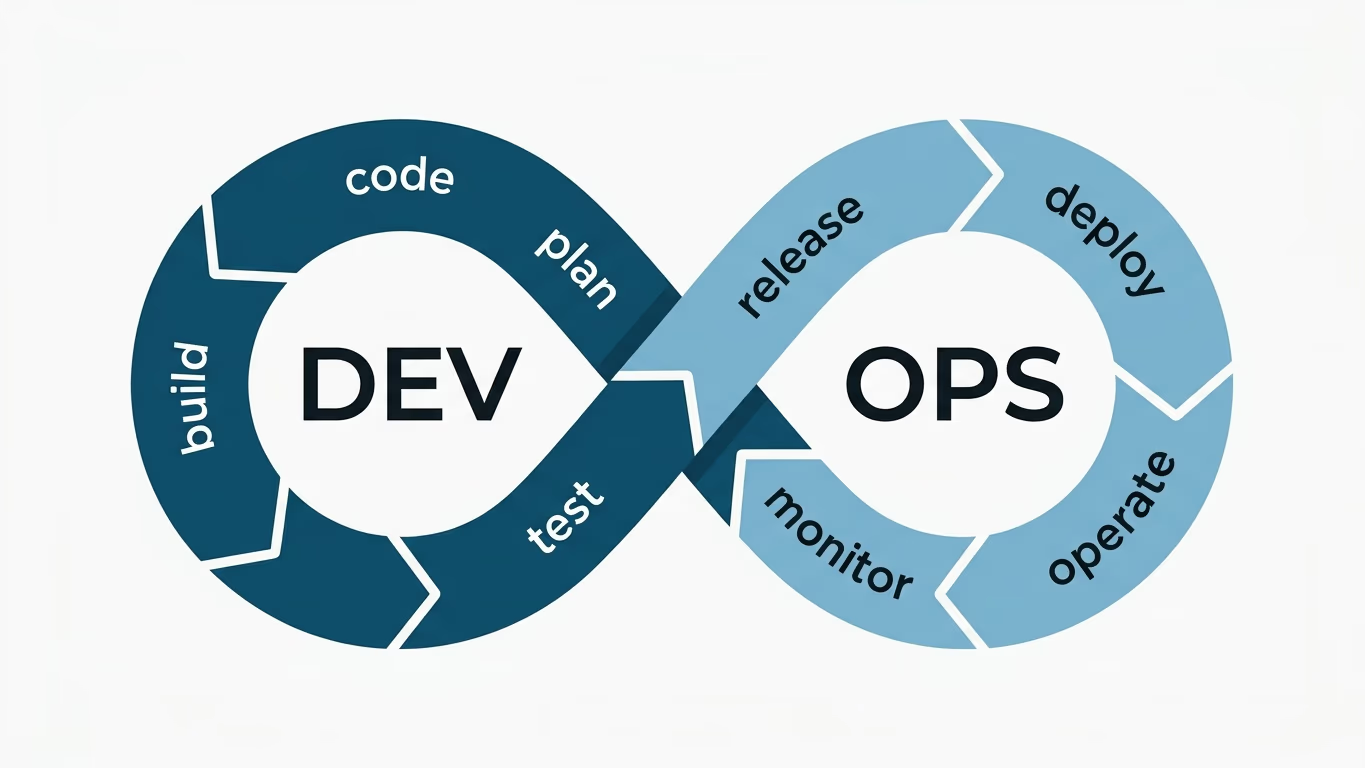
DevOps is a set of practices and tools that aim to bring development and operations teams together in order to improve the speed and reliability of software delivery. The goal of DevOps is to automate and optimize the entire software delivery pipeline, from code development to deployment and ongoing operations.
DevOps Lifecycle Phases and Common Tools
| Phase | Purpose | Modern Industry Standards | Legacy / Traditional |
|---|---|---|---|
| CI / CD | Automated build, test, and deploy pipelines | GitHub Actions, GitLab CI, CircleCI | Jenkins, Travis CI |
| Infrastructure as Code | Provisioning and managing infrastructure via code | Terraform, Pulumi, Ansible | Chef, Puppet |
| Containerization | Packaging applications with all dependencies | Docker, containerd | Virtual Machines (VirtualBox, VMware) |
| Orchestration | Managing container clusters at scale | Kubernetes (K8s) | Docker Swarm, Nomad |
| Monitoring & Logging | Real-time observability and log aggregation | Prometheus, Grafana, OpenSearch | ELK Stack (Elasticsearch) |
Core Principles of DevOps
1. Continuous Integration and Continuous Delivery (CI/CD)
CI/CD involves automatically building, testing, and deploying code changes as soon as they are committed to a shared repository in order to quickly identify and fix any issues. This is typically done using tools such as GitHub Actions, GitLab CI, or Jenkins, which automate the entire process from code commit to production deployment.
2. Infrastructure as Code (IaC)
This approach allows for the management and provisioning of infrastructure—such as servers, databases, and network configurations—to be done through code rather than manual GUI configurations. By using tools like Terraform or Ansible, teams can manage infrastructure consistently, roll back changes easily, and spin up identical environments for testing and production.
3. Monitoring and Logging (Observability)
Monitoring and logging are crucial components of a successful DevOps strategy. By collecting and analyzing real-time data on system performance, usage patterns, and error rates, teams can proactively identify and resolve issues before they impact customers. Popular solutions such as Prometheus, Grafana, and OpenSearch are widely used to gather, store, and visualize metrics and log data.
4. Collaboration and Communication
One of the most important aspects of DevOps is collaboration. It brings together development, operations, and other business teams to work in a more agile way, breaking down silos and enabling cross-functional teams. This is supported by a culture of experimentation, learning, and continuous improvement, as well as by practices such as blameless post-mortems and pair programming.
5. Shift-Left Security (DevSecOps)
DevOps requires a robust security strategy that is integrated throughout the entire software delivery pipeline. Security must be considered at every step—from development and testing to deployment—in order to prevent vulnerabilities, protect against threats, and ensure compliance with industry regulations. The use of automated security testing and continuous vulnerability scanning helps ensure that systems remain secure.
Frequently Asked Questions
What is the main goal of DevOps?
The main goal of DevOps is to improve the speed and reliability of software delivery by automating and optimizing the entire software delivery pipeline, from code development to deployment and ongoing operations.
How does DevOps improve collaboration between teams?
DevOps improves collaboration by breaking down organizational silos and enabling cross-functional teams. This is supported by a culture of experimentation, shared responsibility, and practices like blameless post-mortems and collaborative coding.
How does DevOps help to improve security?
DevOps improves security (often called DevSecOps) by integrating security checks directly into the CI/CD pipeline. By automating security tests and compliance scans, vulnerabilities are detected early in the development cycle before the code ever reaches production.
What are some of the most popular DevOps tools?
Popular tools include GitHub Actions and GitLab CI for continuous integration; Terraform and Ansible for Infrastructure as Code; Docker and Kubernetes for containerization and orchestration; and Prometheus and Grafana for monitoring and observability.
How does DevOps differ from Agile?
While Agile focuses on delivering high-quality software in small, incremental releases, DevOps focuses on automating and optimizing the entire software delivery pipeline, from code development to deployment and ongoing operations. Agile is mainly focused on development and testing stages, whereas DevOps covers the entire software delivery process from development to production.
How does DevOps relate to cloud computing?
DevOps and cloud computing are closely related, as cloud platforms provide the flexible infrastructure and API-driven services needed to implement DevOps practices like continuous delivery, infrastructure as code, and auto-scaling.
Can DevOps be used with legacy systems?
Yes, DevOps can be used with legacy systems. Even though it may be challenging to implement automated testing and containerized deployments on legacy monoliths, many DevOps principles—such as improved collaboration, configuration management, and automated monitoring—can still be applied to increase efficiency.
How does DevOps relate to containerization?
Containerization (using tools like Docker) provides a way to package and deploy software in a consistent and repeatable manner. Containers ensure that software runs the same way regardless of the environment (local machine, staging, or production), providing consistency across all stages of the DevOps pipeline.
Can DevOps be implemented in a small company?
Yes, DevOps can be implemented in a small company. In fact, smaller teams often find it easier to adopt DevOps practices because they have fewer communication barriers and can establish automation and collaboration habits from day one.
Conclusion
DevOps is a set of practices, tools, and cultural philosophies that bring development and operations teams together to deliver software faster and more reliably. While adopting modern tools is essential, organizations must also foster a collaborative culture built on trust, experimentation, and continuous learning to fully unlock the power of DevOps.