AI and organisational memory
AI and Organisational Memory
AI can make documents quicker to retrieve. But what an organisation knows does not live only in files: the reasons behind decisions, exceptions, and the judgment of people who do the work are part of that memory too. This guide brings together the questions that help keep that knowledge usable.
Use this guide if you are considering a knowledge-management initiative, an AI assistant, or a change to roles and teams, and need to establish what knowledge matters to which work and who is responsible for it.
A developing guide I am bringing together the existing articles and open questions here. New findings and published articles may change later versions of the guide.
Read the guide from the startKnowledge helps when people can find it and assess it
Making a folder, archive, or conversation history searchable can be useful. A search result alone, though, cannot establish that the information still applies to today's work or tell someone which decision is right.
Before adding a source to a system, ask which task is slowed by missing knowledge. Then establish what the record says, when it applies, and who should be consulted when it is incomplete. Without those distinctions, AI may retrieve the right file but present an old condition as today's rule.
- Purpose
- Which decision or work step needs this record? The mere existence of a file is not a reason to put it into a system.
- Source and context
- Is this a published decision, a working note, a draft, or somebody else's claim? Different types of text do not carry the same authority.
- Ownership and maintenance
- Who notices when the information changes, updates it, or retires it? The answer matters more as the archive grows.
This does not mean every organisation should begin with a large knowledge base or a complex retrieval system. Find the real friction first; consistent naming, clearer records, or simple search may be enough.
Related article
An article on archives and AI-assisted writing
Writing with AI Means Thinking About Your Archive, Too
It examines why older articles, research notes, and published positions are not the same thing, and how an archive can support a new editorial decision.
Opens in a new tab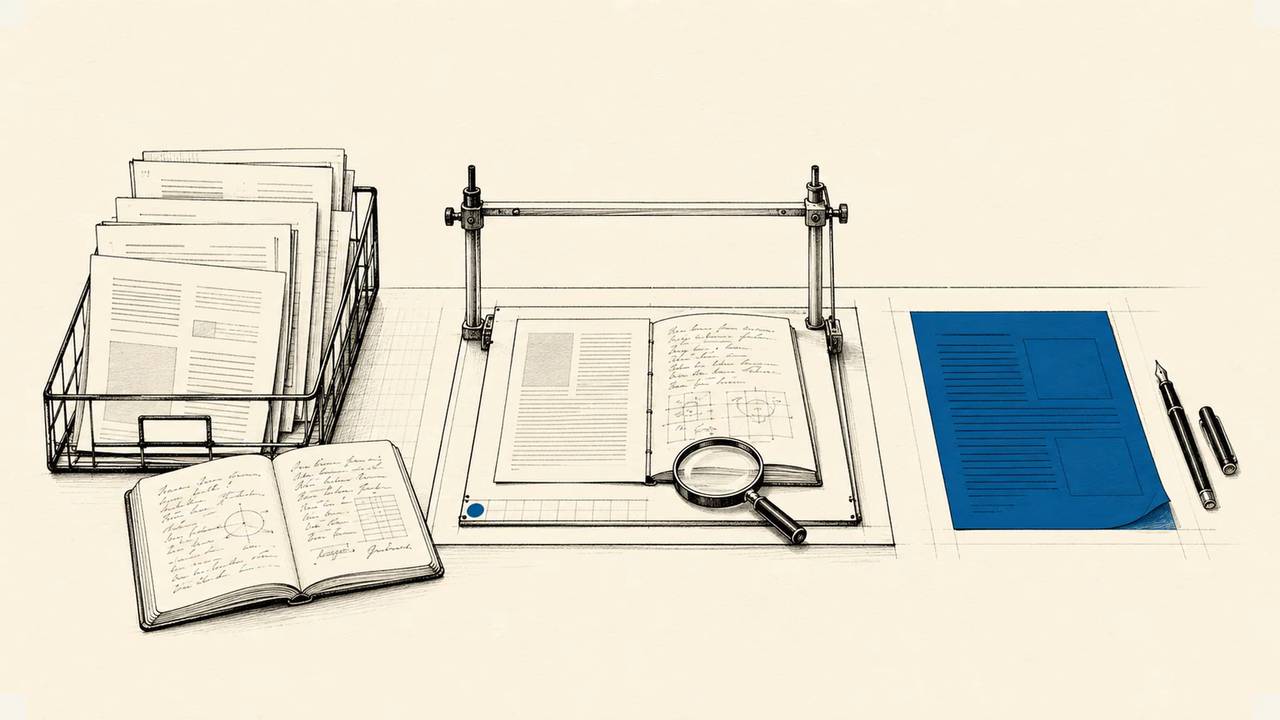
Protecting memory is more than keeping a person or a file in place
Experience often explains why work is done in a particular way, which exception matters, or how a change will affect another team. That context can disappear when a role changes, automation arrives, or an employee leaves.
The person does not have to leave for the loss to occur. If nobody consults them, they are not given time to pass on their previous responsibilities, or the new way of working has no place for transfer, the organisation can stop benefiting from what they know.
- Who knows why, not just how the work is done?
- The customer problem that a critical check once prevented, the reason for an exception, or the operational effect of a technical choice may not appear in a task list.
- What will the new owner learn from real cases?
- Passing on files is a starting point. Working alongside the experienced person for a period can expose missing context and unclear responsibility in the work itself.
- Who does an AI-enabled method depend on?
- A recurring prompt, assistant in a personal account, or small automation may affect other people's work. The purpose is not automatic approval; it is to understand the dependencies.
Related article
An analysis of role change and lost experience
Protect Organizational Memory During an AI Transformation
It explores why retaining employees and continuing to benefit from their judgment are different problems during an AI transformation, and why people who know the work need to help design the transition.
Opens in a new tab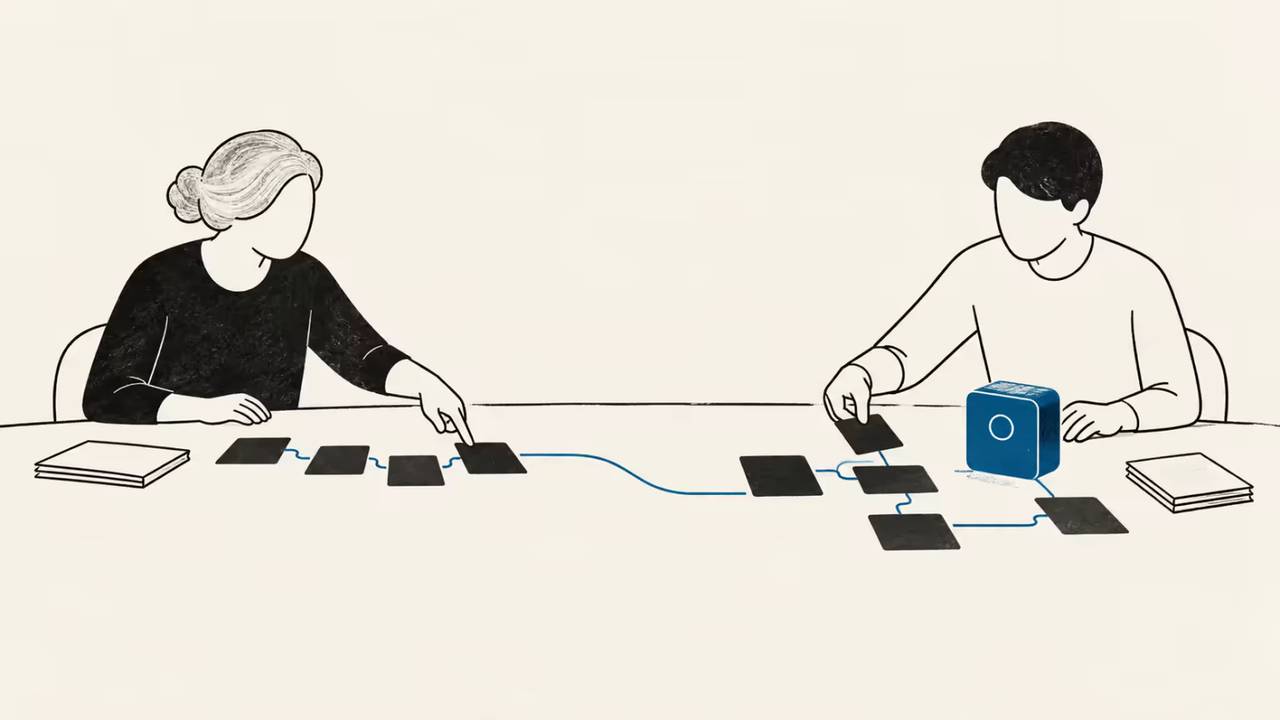
An inventory creates visibility before it passes judgment
An initial record can describe the work being done, the method used, who relies on the result, and where the work runs. Recording a method does not mean that it is approved, safe, or ready for shared use. It provides the material for that later assessment.
Related article
A field note on making employee-built AI workflows visible
How Employee-Built AI Systems Become Organizational Memory
It sets out what a voluntary first inventory can reveal, what it cannot yet show, and why the next assessment should follow the findings.
Opens in a new tab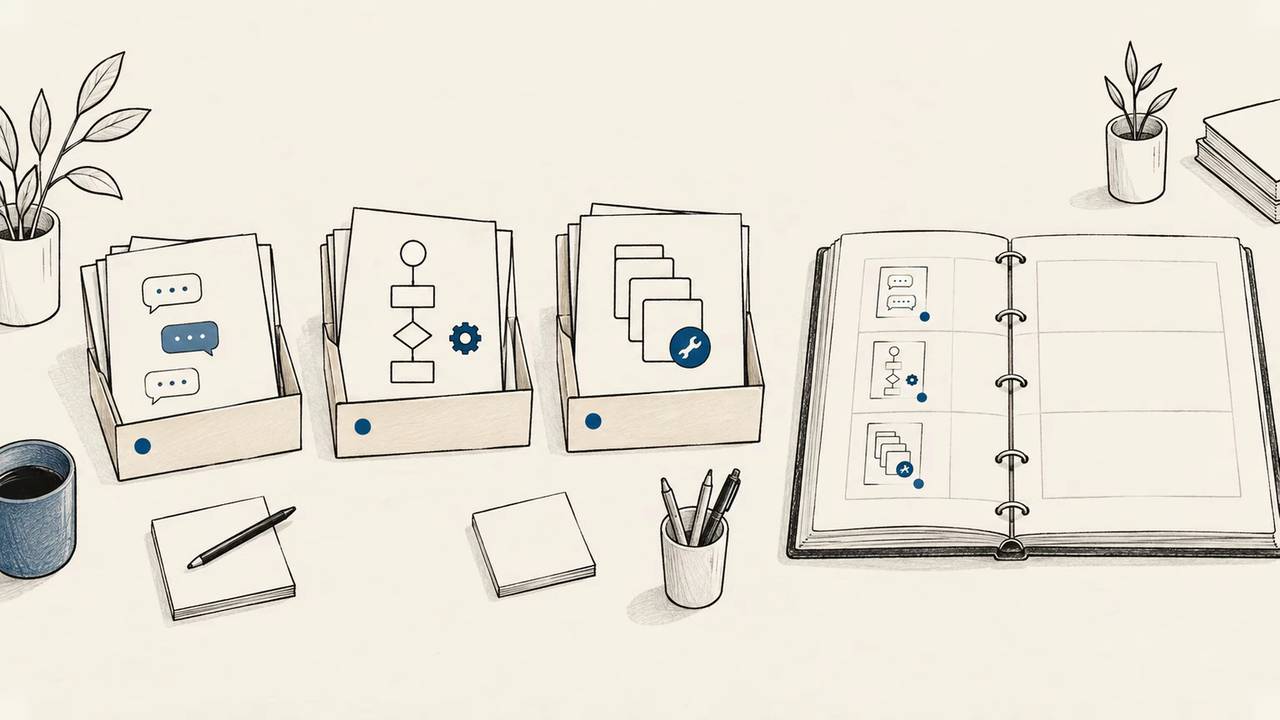
The aim should be a better decision, not simply faster search
AI-supported access to knowledge can speed up the search and summary of past documents. To improve the outcome of work, the information also needs to be used in the right context, alongside current records and human judgment where it is needed.
Finding an old customer proposal, for example, does not prove that the same condition applies today. The reasoning behind the decision, current records, and responsibility when there is uncertainty need to be visible together. That is why a project can begin with one repeated task held up by missing knowledge rather than loading the whole archive.
The number of documents added to a system cannot establish that the project succeeded. Completion time, returned corrections, repeated research on the same issue, and feedback from people who know the work can be more meaningful signals of change.
01
Name the decision
Which decision in which piece of work is delayed, exposed to error, or researched again and again?
02
Separate the knowledge required
Which record is authoritative, what information must be current, and who checks when it is incomplete?
03
Check the work outcome
Look at rework, delay, and decision quality alongside search time; do not count system use alone.
Related article
An analysis of knowledge management from documents to decisions
Why Searching Company Knowledge with AI Is Not Enough
Using proposal preparation as an example, it examines why faster search is not the same as improved work and how a small experiment can be tested.
Opens in a new tab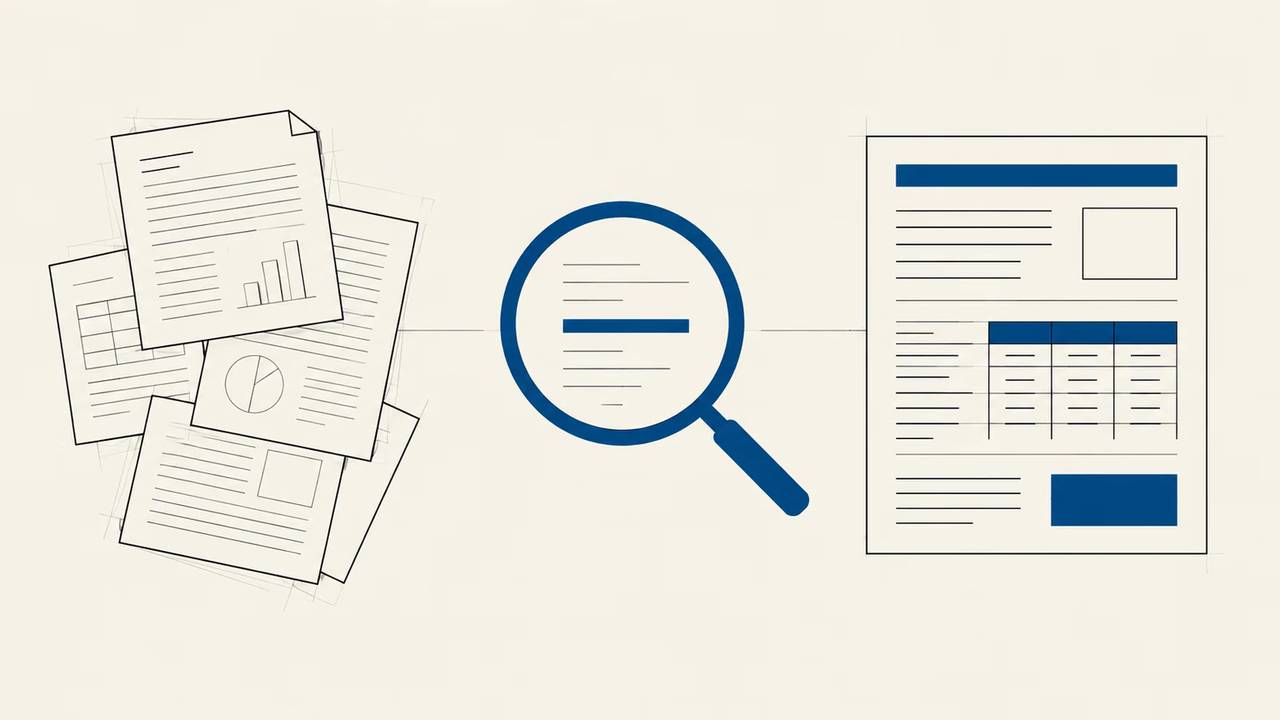
A reusable note for handing knowledge over
When a workflow, role, or AI-enabled method is handed over, the aim is not simply to send the current file. The new owner needs to know how to continue the work, what to check, and who to ask when the situation is uncertain.
- Work and decision
- State what work the method supports, what it does not do on its own, and who uses the result.
- Inputs, sources, and boundaries
- Record what information it uses, where current information comes from, what data must not be used, and known exceptions.
- Checks and responsibility
- Make visible where the result is checked, who decides when something changes or fails, and which account or system the method depends on.
- Test it with a real case
- Where possible, work through a real case with the new owner. Missing context often surfaces sooner than it does from reading a list.
This is not a standard or a complete checklist for every situation. The risk and context of the work may require more detail. It is a usable starting point for moving a handover conversation beyond files, toward decision reasoning and responsibility.
Return to the guide sectionsAll articles in this guide
These articles approach the same question from different angles. Each appears here when it is published and visible in the current language.
Opens in a new tab
Working knowledge
Protecting memory
Knowledge and decisions
Where to go next?
This guide opens one part of the decision. These two related topics can help you examine another part of the same decision.
Building Organisational Capability with AI
Is knowledge becoming the team’s capacity to make better decisions?
Examine which work habits and responsibilities must change beyond giving people tool access.
How to Design an AI System for Your Business
How does organisational knowledge enter a system’s context safely?
Consider information sufficiency, access boundaries, and the evaluation arrangement together.
Writing beyond the guides
Other essays on AI, software, operations, and business decisions sit outside these guides too.
Browse all essays