How Employee-Built AI Systems Become Organizational Memory
Written by Evren BalPublished · 5 min read
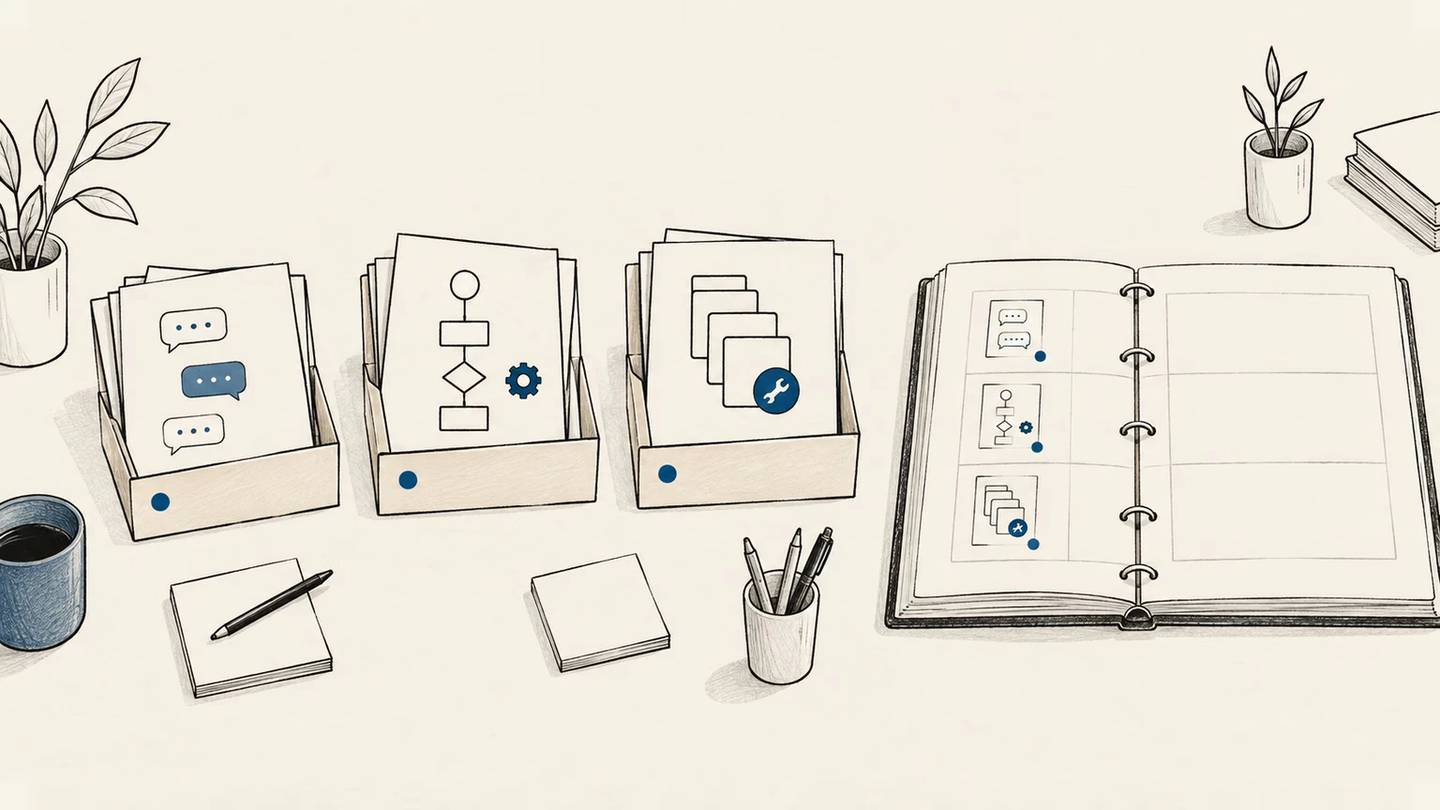
Steve Buckner describes an easy-to-miss loss when an employee leaves in his AI Rollout Framework article: the AI workflow that person built. In his example, an employee shortened weekly reporting with AI. The method was never documented and no one else understood how it worked. When the employee left, the team returned to the old process. Even with the reports in hand, they had to rediscover how inputs were prepared, what instructions were given to the model, and where the output was corrected.
Eric Soon approaches the same problem through knowledge accumulated in individual AI conversations in his Security Boulevard article. He argues that reusable prompts and effective methods need to be discoverable, assessable, and transferable inside an organization. That means more than collecting prompts in a folder: the intended use, owner, and controls need to be clear.
The same idea applies to automations and agents. An employee may build a small system that makes their own work easier. Over time, other people may begin to rely on its output. If the company does not know about that dependency, it cannot see in advance which work will be disrupted when the person is unavailable. The employee does not have to remove anything deliberately. It is enough for the method to remain in a personal account or for no one else to be able to maintain it.
We do not yet know the full picture in our company
At the company where I work, we have centrally built AI systems. We do not yet know as much about how employees use AI conversations, assistants, or agents in their own work. Which work becomes easier? Which methods are reused? Does an automation one person built also support other people’s work? We do not yet have an inventory.
I want to find out how much the problem described in those two articles applies to us. We may find methods that can be shared, or uses that only make one person’s work a little easier. At this stage, both are possibilities worth investigating.
The first step I plan to start tomorrow is to learn what people are doing and create an inventory. I want to map the AI conversations, workflows, automations, and agents people are already using. Shared evaluation, assigning responsibility, and handover belong to a later stage, after we have that picture. I have not carried out this plan yet. The first responses may change what comes next.
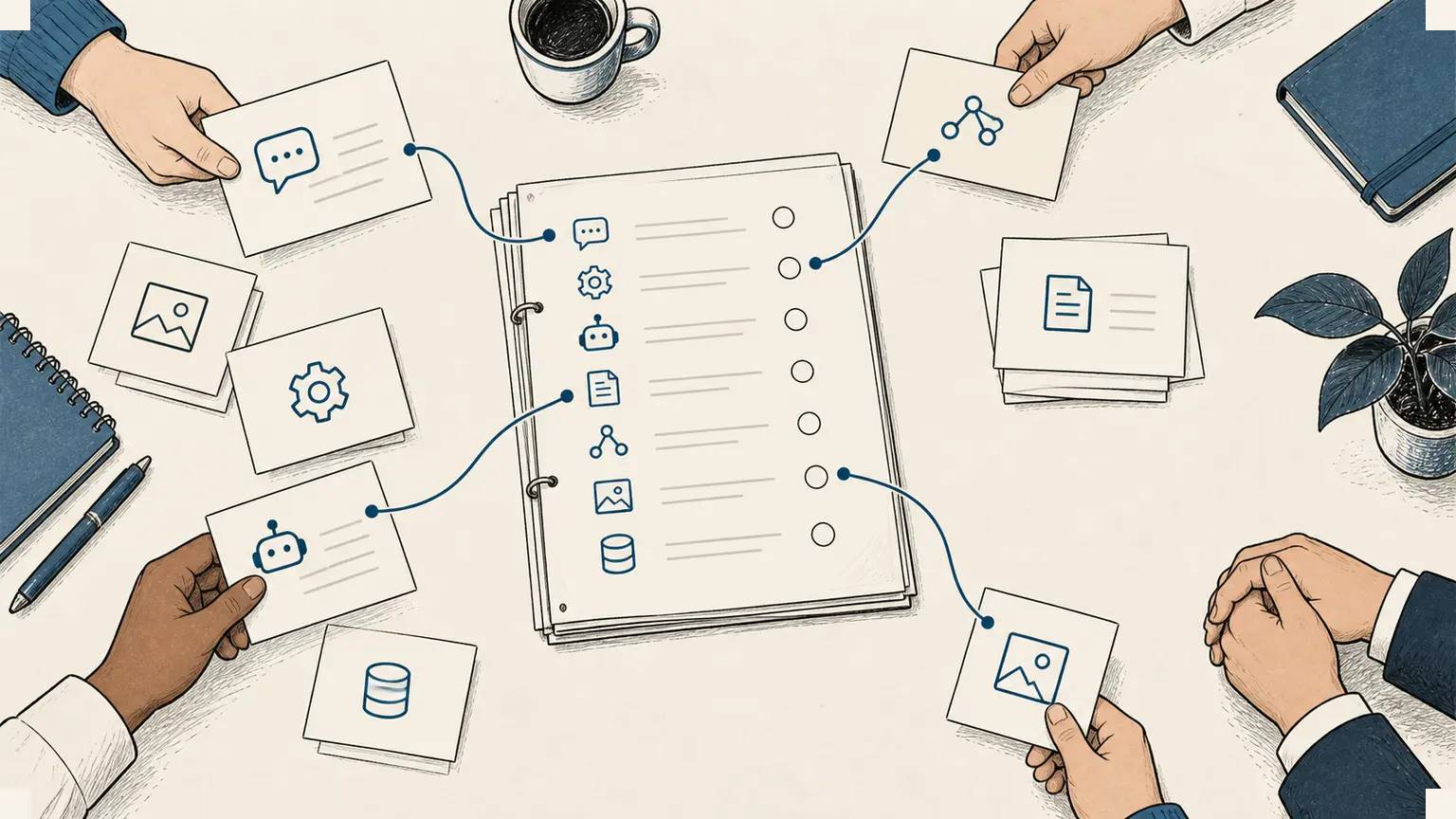
First stage: a voluntary survey and usage inventory
I plan to send every colleague a short survey they can choose to complete. I will ask about the work before I ask for the tool’s name. “I use ChatGPT” can describe anything from occasional email editing to preparing the same weekly report every week.
The introduction needs to explain the purpose: we want to understand methods that make work easier, find examples that may be shared, and identify work that remains tied to one person. It will also state that participation is voluntary, who will see the responses, and how we plan to assess them later.
I expect to use these six questions in the first survey:
- Which part of your work do you ask AI to help with? If you do not use it, you can include that too.
- Which tool do you use? Is it an off-the-shelf chat tool, a prompt or assistant you reuse, an automation you built, or an agent?
- How often does this method help, and who uses the result it produces?
- Does the tool run in your personal account or a company account? What kind of information does it generally work with?
- How would you do the work if you could not use it tomorrow? Could someone else use the same method if you were unavailable?
- Would you like to show how it works using a suitable example? Is there anything that makes sharing or documenting it difficult?
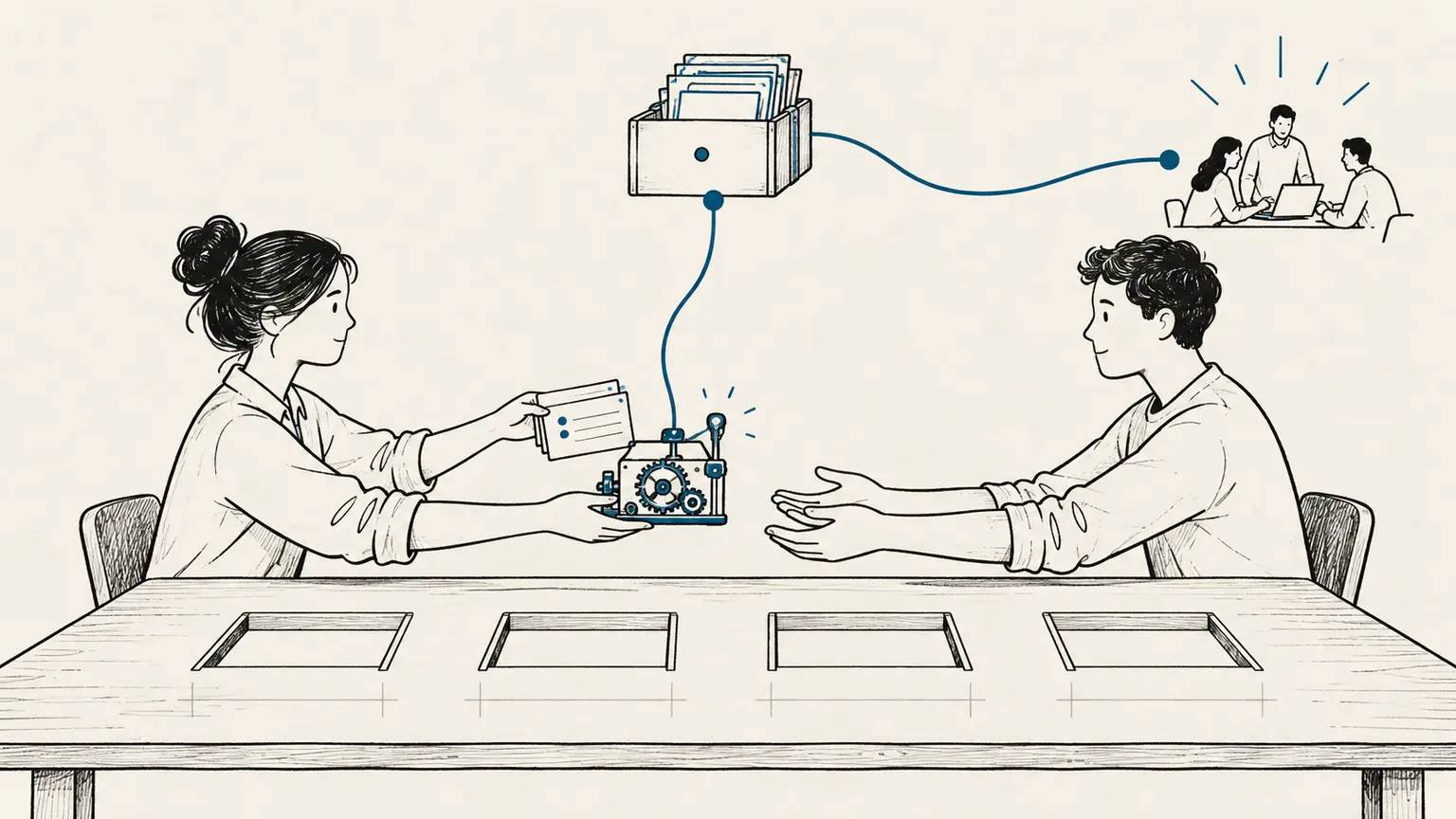
People will not need to know technical terms or explain the entire system to answer. A few sentences describing the work will be enough. A chat used regularly can be worth describing too. I do not want to frame the survey as something only for people who have built an automation or agent.
I will not ask for chat histories, passwords, or real customer data. Saying “I summarise customer meetings” is enough to understand the work at this first stage. There is no need to upload the meeting itself to the form. If someone wants to, we can plan a safe example to demonstrate that can be shared at the assessment stage after the inventory.
If a team does not respond to a voluntary survey, we cannot assume it does not use AI. Some people may not consider what they do worth reporting, while others may hesitate to share it. I will treat the responses as an initial discovery and record where we still lack information. At this stage, an answer such as “it saves a great deal of time” is the employee’s assessment. We will not present it as a measured productivity outcome.
I will collect the responses in an existing shared document or spreadsheet. It needs to show who does which work with which tool and whether that use is ongoing. The initial record will include reported uses ranging from a personal helper to an automation that affects a team. Adding a method to the inventory will not mean that we have approved it or found it ready for shared use.
At the end of the first exercise, I expect to see more clearly who uses what, what work those uses support, and where we still lack information. It is also possible that only a small number of examples will be ready for shared use. I will not choose a large platform or detailed rules for every use in advance. First, we need to learn what we have.
After the inventory, there will be an assessment and response stage that looks more closely at how dependent the company is on AI and the knowledge that accumulates with employees who know the work. Then I want to examine which uses need assessment, clear responsibility, or handover. We may describe that later stage in a separate article once we have findings.
If this article was useful
Linking to it from a relevant page on your website or sharing it on social media genuinely helps it reach more people. Thank you for your support.
Linking and brand guidelines →About this article
- Use of artificial intelligence
- AI-assisted — This article was structured with AI assistance from the company context, observations, and implementation plan shared by Evren Bal. Sources were reviewed and the prose was developed with AI support.

A small experiment
Loading personal metrics…