The Key Differences Between PHP Generators and Iterators
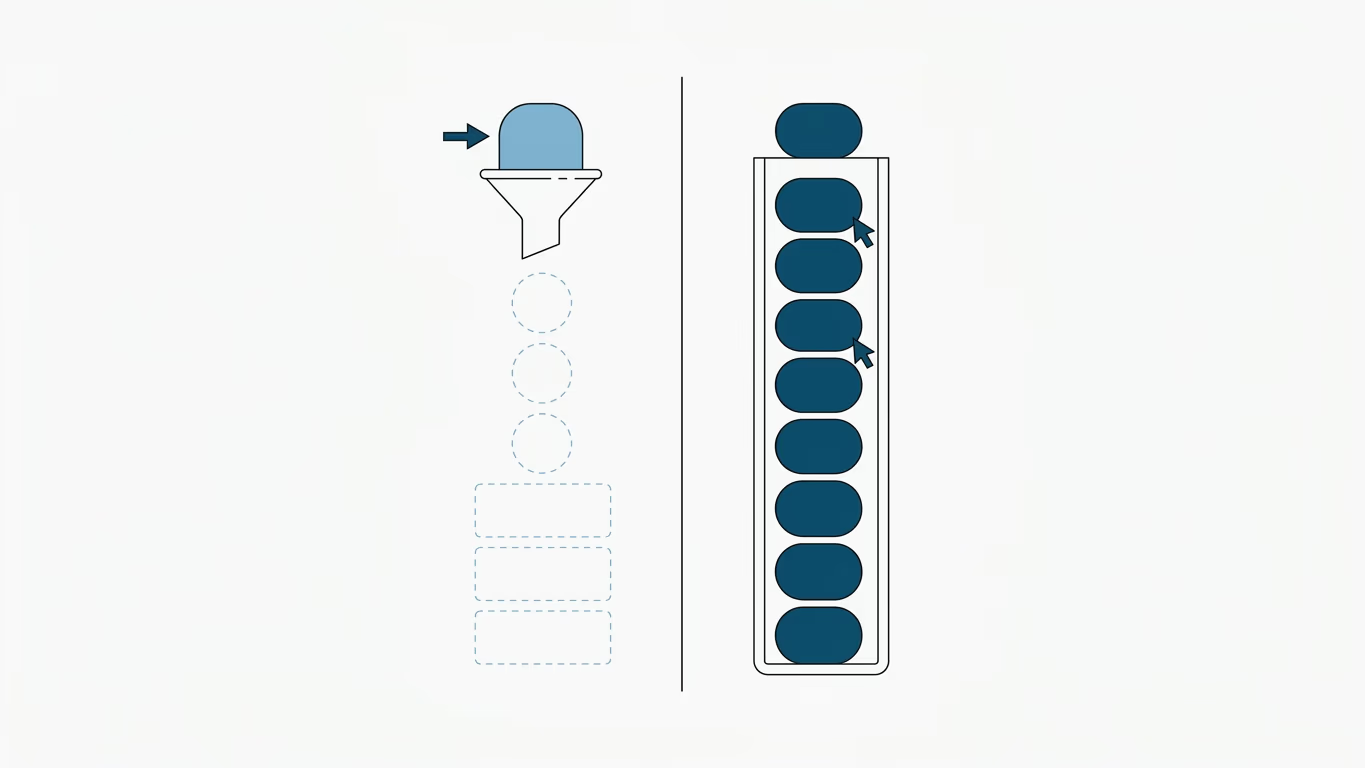
PHP generators and PHP iterators are both tools that can be used to create custom iteration mechanisms in PHP. However, there are some key differences between the two.
💡 Quick Summary (TL;DR):
- Generators: Lightweight, stateful functions that use the
yieldkeyword to return values lazily. Extremely memory-efficient.- Iterators: Classes implementing the
Iteratorinterface (requiring 5 methods). They offer full control and rewindability but require more boilerplate.- Core Choice: Use Generators for simple, lazy data streams (e.g. reading huge files). Use Iterators when you need custom object state management or rewindable loops.
First, let's define what each of these terms means. A generator is a special function in PHP that allows the developer to create an iterator that can be used to iterate over a set of values. Generators are created using the yield keyword, which allows the generator function to pause execution and return a value to the caller. The generator function can then be resumed at a later time, allowing the developer to iterate over the values returned by the generator.
On the other hand, an iterator is an object that implements the Iterator interface in PHP. This interface defines a set of methods that must be implemented in order for an object to be considered an iterator. These methods include rewind, current, key, next, and valid, which allow the developer to control the iteration process and access the values being iterated over.
Implementation Comparison: Code Example
To understand the difference, let's look at how we can implement a custom range generator using both methods.
1. Using a Custom Iterator Class
Implementing the Iterator interface requires creating a class and defining five distinct lifecycle methods:
class RangeIterator implements Iterator {
    private int $start;
    private int $end;
    private int $current;

    public function __construct(int $start, int $end) {
        $this->start = $start;
        $this->end = $end;
    }

    public function rewind(): void {
        $this->current = $this->start;
    }

    public function current(): mixed {
        return $this->current;
    }

    public function key(): mixed {
        return $this->current;
    }

    public function next(): void {
        $this->current++;
    }

    public function valid(): bool {
        return $this->current <= $this->end;
    }
}

// Usage
$range = new RangeIterator(1, 1000000);
foreach ($range as $number) {
    // Process $number
}
2. Using a Generator Function
A generator simplifies this entire process into a single function using the yield keyword:
function rangeGenerator(int $start, int $end) {
    for ($i = $start; $i <= $end; $i++) {
        yield $i;
    }
}

// Usage
$range = rangeGenerator(1, 1000000);
foreach ($range as $number) {
    // Process $number
}
Both methods achieve the same result and run in O(1) memory complexity (they do not load all 1,000,000 numbers into memory at once). However, the generator version requires significantly less boilerplate code.
Detailed Differences
One key difference between generators and iterators is the way in which they are implemented. Generators are created using a special function syntax, while iterators are created by implementing the Iterator interface in a class. This means that generators are generally easier to implement, since they only require the use of a single function rather than a full class. However, iterators offer more flexibility and control over the iteration process, since they allow the developer to implement the full set of iterator methods.
Another difference between generators and iterators is the way in which they are used. Generators are generally easier to use, since they can be iterated over using a foreach loop just like any other iterable object. On the other hand, iterators require the use of the iterator methods in order to control the iteration process. This can make iterators more complex to use, but also allows for more fine-grained control over the iteration process.
Feature Comparison Table
| Feature | Generators | Iterators |
|---|---|---|
| Syntax | Function with yield | Class implementing Iterator |
| Boilerplate Code | Extremely low | High (Requires 5 methods) |
| Memory Footprint | Low (O(1) storage overhead) | Low (O(1) storage overhead) |
| Rewindability | No (Cannot rewind once closed) | Yes (Supports rewind()) |
| State Management | Handled automatically by PHP engine | Managed manually via class properties |
Frequently Asked Questions (FAQ)
- Can you rewind a generator in PHP?
- No, once a generator function finishes yielding or is closed, it cannot be rewound. Attempting to rewind it in a second
foreachloop will throw an exception. If you need to iterate again, you must call the generator function to create a new Generator object.
- No, once a generator function finishes yielding or is closed, it cannot be rewound. Attempting to rewind it in a second
- When should I use a custom Iterator class instead of a Generator?
- You should use a custom
Iteratorclass if you need to attach additional domain logic to the iterator object, if the iteration state is highly complex and depends on multiple custom properties, or if the consumer needs to rewind and repeat the iteration multiple times without recreating the data source.
- You should use a custom
Official Documentation & References
In conclusion, both generators and iterators are useful tools for creating custom iteration mechanisms in PHP. Generators are easier to implement and use, but offer less control over the iteration process. Iterators offer more flexibility and control, but are more complex to implement and use. The choice between the two will depend on the specific needs of your application.
Changes Made in This Article
- 20.06.2026: Added TL;DR summary box, side-by-side code implementation examples, comparison table, FAQ section, official manual links, and LLO (AI visibility) optimizations.